
Welsh Procurement Policy Note (WPPN) 011: Project Bank Accounts Policy – Advice for Welsh Contracting Authorities
This guidance supports the implementation of Welsh Government’s project bank accounts policy.
In this page
Well-being of Future Generations Act’s well-being goals supported by this WPPN
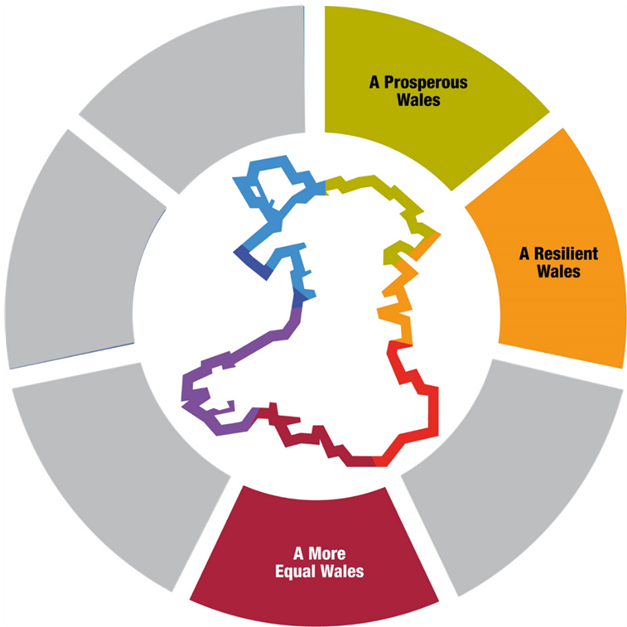
- A prosperous Wales
- A resilient Wales
- A more equal Wales
Points to note
- Version 3 of Welsh Procurement Policy Note WPPN 011: Project Bank Accounts replaces version 2. Version 3 has been updated to include guidance for Contracting Authorities listed in Schedule 1 of the Social Partnership and Public Procurement (Wales) Act 2023 and their associated regulations.
- For procurement processes started prior to the Procurement Act 2023 and Procurement (Wales) Regulations 2024 (24 February 2025), please refer to WPPN 03/21.
- Any policy should be read in conjunction with the:
- Wales Procurement Policy Statement
- The Procurement Act 2023
- The Procurement (Wales) Regulations 2024
- Social Partnership & Public Procurement (Wales) Act 2023
- Social Partnership & Public Procurement (Wales) Regulations 2026
- This note should not be treated as legal advice and is not intended to be exhaustive. Contracting Authorities should seek their own independent advice as appropriate. Please also note that the law is subject to constant change and advice should be sought in individual cases.
- The note assumes a certain level of knowledge of public procurement. It is available via the Welsh Government website and any queries should be directed to CommercialPolicy@gov.wales or via the Welsh Governments’ customer services.
1. Purpose
This Welsh Procurement Policy Note (WPPN) encourages the use of Project Bank Accounts (PBAs) as a means of facilitating prompt payment and providing certainty of payment in public sector supply chains. Use of PBAs supports the Wellbeing of Future Generations (Wales) Act 2015 wellbeing goals of ‘A Prosperous Wales’, ‘A Resilient Wales’ and ‘A More Equal Wales’ in their positive impact on the economy and mental wellbeing by ensuring prompt and fair payment terms that relieve cash flow pressures, particularly on Small to Medium Enterprises (SMEs).
This WPPN sets out advice for Welsh Contracting Authorities (WCAs) on implementing Welsh Government PBA policy. WPPN 010 sets out full details of what PBAs are and guidelines for contractors on how to set up a PBA.
2. Scope
The primary audience for this WPPN is Welsh Contracting Authorities as listed in Schedule 1 of the Social Partnership and Public Procurement (Wales) Act 2023 (SPPP Act).
For those authorities:
This WPPN should be read in conjunction with:
- the SPPP Act and associated Regulations - Social Partnership and Public Procurement (Wales) Act
- statutory guidance: works and workforce clauses notifications
- the model social public works clauses published under section 27 of the SPPP Act.
The terms 'Contracting Authority' (CA) or 'Welsh Contracting Authority' (WCA) are used in this WPPN to align with terminology used in the SPPP Act. Contracting authorities should note that the definition of a Welsh Contracting Authority under the Procurement Act 2023 is broader than the definition of a 'Contracting Authority' under the SPPP Act.
Contracting Authorities should seek their own legal advice where there is any uncertainty as to whether they are covered by the SPPP Act or how the statutory duties apply in their individual circumstances.
Other Contracting Authorities in Wales
Advice relating to Contracting Authorities in Wales that are NOT listed in Schedule 1 of the SPPP Act, is set out separately at Annex 1.
Annex 1 covers:
- when Welsh Government policy expects PBAs to be used by non‑schedule 1 authorities, and
- any applicable exemptions or flexibilities.
3. What are PBAs?
PBAs are ring-fenced bank accounts with trust status that act as a mechanism for making payments to a supply chain. PBAs replace the traditional multi-layered payment terms between tiers in the supply chain with simultaneous payments to the lead contractor and supply chain parties. Traditional payment methods have resulted in sub-contractors commonly having to manage 60-90 day payment terms. Payments via a PBA typically take between 3-5 days from the money being deposited into the PBA following certification of the payment schedule.
4. Why are PBAs needed?
SMEs play a critical role in the delivery of public sector projects through sub-contracting arrangements. Access to finance and cash flow are vital to any business and no more so than smaller businesses with limited resources. PBAs alleviate the time and cost burden of sub-contractors having to chase late payments and dispute resolution proceedings by ensuring timeliness and certainty of payment. Paying local supply chains on time helps these businesses to grow and maintain their business, which in turn supports the local economy with stable jobs and future opportunities for employment.
PBAs also have the benefit of protecting payments in the event of main contractor insolvency. This means in such circumstances sub-contractors who are part of a PBA will still get paid.
Welsh Government is committed to using procurement as a lever for driving economic, social and environmental benefits whilst supporting jobs and growth. Public procurement should help promote Wales as a good place for doing business and should provide mechanisms that allow suppliers of all sizes to flourish. PBAs are a mechanism that supports this ethos.
It is important that the WCA ensures the benefits of PBAs are understood and are communicated to prospective tenderers and throughout the supply chain.
5. Legislative context
5.1 Procurement Act 2023
In this section (5.1), references to WCAs mean contracting authorities as defined in the Procurement Act 2023 which has a wider application than the Welsh contracting authorities covered by the Social Partnership and Public Procurement (Wales) Act 2023.
Under the Procurement Act 2023, section 68 provides that there are implied payments terms in public contracts, which means that any payments arising under the contract must be paid within 30 days. These terms also apply to sub-contracts (section 73) and regulated below-threshold contracts (section 88). WCAs should also be aware that there are some exceptions to this implied term. For example, concession contracts, utilities contracts and contracts awarded by a school are exempt from the implied terms. WCAs should consider whether a PBA could be used in a contract to help achieve this 30-day, or even shorter payment term, since the intention of a PBA is to help ensure prompt payment not just to main contractors, but down the supply chain. PBAs may also safeguard WCAs from legal action under the Late Payment of Commercial Debts (Interest) Act 1998 that allows businesses of any size to claim statutory interest on late payment of undisputed invoices within 30 days.
5.2 Social Partnership and Public Procurement (Wales) Act 2023
PBAs are intended as a tool to support WCAs to meet their statutory requirements regarding prompt payments as set out under the SPPP Act.
Prompt payment is a focus of the socially responsible procurement duties under part 3 of the SPPP Act. The SPPP Act gives rise to the creation of model social public works clauses under section 27 for major construction contracts over £2 million. This states that Welsh Ministers must publish model clauses for major construction contracts, which include clauses on ensuring and enforcing prompt payments. A contracting authority under Schedule 1 of the SPPP Act must include the social public works clauses in applicable contracts or it must notify the Welsh Ministers if it does not intend to do so. Summaries of these notifications and the Welsh Ministers’ responses must be published, and the Welsh Ministers may instruct a Contracting Authority to include the clauses.
6. Sole or Joint Account
There are 2 different types of PBAs: a Sole Account and a Joint Account. The WCA must choose the most appropriate account structure for each PBA on a case-by-case basis.
6.1 Sole Account
Under a Sole Account the WCA applies to open the account and signs a trust deed to establish itself as the sole trustee of the account. The WCA, as sole trustee, administers the account and is solely responsible for instructing the bank to make payments in accordance with an agreed schedule of payments.
6.2 Joint Account
Under a Joint Account both the WCA and the main contractor sign a trust deed to establish themselves as joint trustees of the account and apply to open the account in joint names. As a joint account, both parties will have access to log into and administer the account. Instructing the bank to pay can be done by either party depending on how it is agreed the account will be administered.
7. When should a PBA be used?
Under the SPPP Act, WCAs must include model social public works clauses in all outsourcing services and major construction (above £2 million) contracts and apply these throughout supply chains, notifying Welsh Ministers if they do not intend to include and apply the clauses. These model clauses require the use of a PBA.
- Exemption – Projects valued at less than £2 million
If any sub-contractor wishes to not be part of the PBA, they must complete the subcontractor opt-out form. Once completed this should be sent to the WCA.
If being paid outside a PBA, a mechanism should be in place to pay suppliers promptly by requiring maximum 30-day payment terms for valid invoices to be mirrored down the supply chain for the project / contract. This will ensure that sub-contracts comply with the Late Payment of Commercial Debts (Interest) Act 1998 (as amended by the Late Payment of Commercial Debt Regulations 2002 (SI 1674) and the Late Payment of Commercial Debt Regulations 2013).
8. Nominated Service Providers
Welsh Government has appointed Lloyds, Barclays and NatWest as PBA Nominated Service Providers. Contractors using these banks can expect to receive a high level of support and expertise when setting up their PBAs.
Lloyds
- For organisations with £25 million+ annual turnover
- Enquiries can be made to welshgovPBA@lloydsbanking.com
Barclays
- For organisations with £6.5 million+ annual turnover*
- Existing customers should contact their account manager. New customers should go to Liquidity Management | Barclays Corporate Banking and ‘Request a call back’, stating in the ‘Additional comments’ section that a Welsh Government Project Bank Account is required
NatWest
- For any organisation irrespective of annual turnover
- Enquiries can be made by email to: gig.clientservicesuk@rbs.com and/or telephone: 0345 0303 627
The trust deeds for these banks have been approved by Welsh Government. A typical timescale for setting up an account can be 4 - 6 weeks, including the relevant bank’s Know Your Customer checks.
Whilst these banks are nominated service providers, contractors are advised to carry out their own research to select their PBA provider.
* Under a joint account only one organisation needs to meet this threshold.
9. Actions required by WCAs
8.1 Pre-procurement actions
- Determine whether a PBA is required or appropriate on the project
- Identify the processes required to meet your internal governance requirements:
- Sole or Joint account?
- Who will sign the PBA documentation and how?
- Who will agree payments due to the main contractor and each of their named suppliers?
- Who will be responsible for paying money into the PBA?
- Ensure PBAs are well communicated with internal stakeholders and potential bidders:
- Include information in any relevant procurement about the requirement to use PBAs.
- Prepare a briefing pack for the main contractor and extended supply chain for use in the procurement process. This could include the Project Bank Accounts Digital Flyer.
- Assess the readiness of your organisation. Areas to consider include:
- Changes to standard procurement and contract documents to reference PBAs e.g., checklists, Terms & Conditions.
- Training requirements.
8.2 Procurement process actions
You should communicate your intention to manage supply chain payment terms within the Tender Notice, by stating that:
- A PBA will operate on the project
- Whether the PBA will be set up and administered on a sole or joint basis
- Payment for suppliers outside the Project Bank Account must not exceed 30 days to comply with the requirements of the Late Payment of Commercial Debts (Interest) Act 1998 (as amended by the Late Payment of Commercial Debt Regulations 2002 (SI 1674) and the Late Payment of Commercial Debt Regulations 2013).
8.3 Tender documentation
At the tender stage include clauses in your Invitation to Tender (ITT) documents referencing the use of PBAs and include specific requirements on how the PBA will operate.
Example wording for Tender Notice advert
“A Project Bank Account will operate on this project / framework and is required to adhere to the Minimum requirements for a PBA product at Annex 2 of Welsh Government’s guidance, ‘WPPN 011: Advice for Welsh Contracting Authorities.’ Payment for suppliers outside the Project Bank Account must not exceed 30 days from submission of a valid invoice.”
Open Procedure
If you are using the Open Procedure, you should ensure that PBAs are appropriately referenced in the contract specification and that the initial minimum requirement questions at the start of the tender includes the Question Text as a ‘Yes / No’ - Pass / Fail.
Competitive Flexible Procedure
If you are using the Competitive Flexible Procedure, you should ensure that PBAs are appropriately referenced in the contract specification and at the supplier selection stage include the following question as a ‘Yes / No’ - Pass / Fail.
Use the following question at the supplier selection stage to determine if potential main contractors are willing to use PBAs as a mechanism to ensure fair and prompt payment in line with Welsh Government policy. You should make this a pass/fail issue, i.e., answering ‘no’ will exclude the prospective tenderer from the process.
Question text: If you are a main contractor, the buyer requires, under the contract, that you use a Project Bank Account as the primary method of payment to some or all your sub-contractors. Are you willing to comply with this requirement?
Answer: Yes / No
Supplier guidance: The buyer will only select you to tender if you agree to the use of Project Bank Accounts as the sole method of payment to sub-contractors during the stipulated contractual period. For more information on Project Bank Accounts, please see Procurement policy notes.
Standard documents:
You should include standard clauses in your ITT documents setting out the requirements of a PBA, along with copies of the documentation which the successful contractor will need to complete once the contract is awarded.
If the bank is known when the ITT is issued, you can include the following documents:
- Application to Open a Project Bank Account Form
- Trust Deed
- Joining Deed
- Bank Mandate
It is important to engage with a bank at the earliest opportunity but if the bank is not known when the ITT is issued, you need only attach the Trust Deed.
8.4 Clauses and standard forms of contract
- The Model Social Public Works Clauses have been designed for use with: NEC3 & 4 Engineering and Construction Contract (“ECC”), JCT Design and Build Contract 2016 / 2024, and Bespoke Contracts.
- For any other forms of contract used that may not have PBA clauses already prepared, simple enabling provisions need to be introduced. As a minimum, these should:
- state that due payments are to be routed through the PBA
- provide the details of how the PBA will operate
- provide that payments into the PBA qualify as discharge of payment (up to the amount paid in).
8.5 Frameworks
- PBAs can be used with frameworks. When setting up a framework it should be explicitly stated in the tender documentation that a PBA will be used as the preferred method of payment at call off stage. When calling off from the framework, the normal procedure for setting up a PBA will apply.
- Under the SPPP Act, framework agreements are classified as a contract. Therefore, the works clauses are applicable to all frameworks valued over £2 million and call-off contracts that are valued over £2 million.
8.6 Post Award
The process of opening a PBA should be started as soon as possible after the contract has been awarded and for works projects well in advance of the construction phase to ensure the PBA is ready to be used when construction begins. You should ensure the main contractor contacts a bank to start the application process. Barclays, Lloyds and NatWest have been appointed as Nominated Service Providers and can be signposted as the banks which can provide a high level of support when setting up a PBA. Full details of the Nominated Service Providers can be found in WPPN 011 ‘Guidelines for Deploying Welsh Government PBA Policy’.
Each bank will have its own processes, but they will all need some form of account application to be completed which are usually accompanied by signed Trust Deeds.
The Trust Deed is executed by both the WCA and the Main Contractor (whether the PBA is a sole client account or a joint account). Execution occurs before the first assessment/date for interim payment.
In general, the process of opening a PBA account will require:
- Completion of an account application form and acceptance of the bank’s terms and conditions (T&Cs) for a Project Bank Account - The T&Cs should confirm the account will meet the Minimum requirements for a PBA product (Annex 2).
- Completion of a Bank mandate signed by both WCA and contractor for a Joint Account or the WCA for a Sole Account.
- Once in place the bank or main contractor should be asked to confirm the account meets the Minimum requirements for a PBA product (Annex 2).
- Ensure that the internet banking process is being established - if you are not using your own bank you may need to install software provided by the bank onto specified computers to access third party software to authorise payments for a joint account or to view transactions if sole account.
- The WCA should check that the PBA account balance is £0 after the due date and check that the amounts paid match the agreed payment schedule.
Timescales for opening a PBA will depend upon the bank chosen and whether your organisation and / or the main contractor has an existing relationship with the bank.
10. Legislation
- The Procurement Act 2023
- The Procurement (Wales) Regulations 2024
- Social Partnership & Public Procurement (Wales) Act 2023
- Social Partnership & Public Procurement (Wales) Regulations 2026
- The Well-being of Future Generations (Wales) Act 2015
11. Welsh Government Wales Procurement Policy Statement (WPPS) relevance
Principle 5
We will support Welsh Government policy objectives relating to progressive procurement, such as the Foundational and Circular Economy, through collaborative, place-based (whether national, regional or local) procurement activity which nurtures resilient local supply chains.
12. Additional Information
WPPN 011 ‘Guidelines for Deploying Welsh Government PBA Policy’ supports implementation of this Policy.
An eLearning module on Project Bank Accounts (PBA) is available via the NHS Wales Shared Service Partnership Learning@Wales portal.
A Project Bank Accounts Information Sheet has been created to showcase PBAs and direct people to the WPPNs. This is a useful resource to share with suppliers to support their understanding of PBAs and direct them to useful guidance.
A Project Bank Account Community of Practice group will be set up in 2026. This group will bring supply chains together to discuss and share experiences of PBAs. If you would like to be part of this group, please contact CommercialPolicy@gov.wales.
Model social public works clauses
Schedule 1 Contracting Authorities – Schedule 1 Social Partnership and Public Procurement (Wales) Act 2023
13. Contact Details
Enquiries linked to this WPPN should be directed to CommercialPolicy@gov.wales
Annex 1: Advice for Welsh Contracting Authorities not listed in Schedule 1 of the Social Partnership and Public Procurement (Wales) Act 2023
This appendix applies to Welsh Contracting Authorities that are not listed in Schedule 1 of the Social Partnership and Public Procurement (Wales) Act 2023 (“non‑Schedule 1 WCAs”).
Except where modified by this appendix, non‑Schedule 1 WCAs should have regard to the wider guidance in this WPPN on the operation, administration and benefits of PBAs.
For these authorities, the use of PBAs does not arise from statutory duties under the SPPP Act. Instead, the requirements set out below reflect Welsh Government policy.
Use of Project Bank Accounts
Project Bank Accounts are a condition of funding on all Welsh Government construction and infrastructure projects and any other contracts deemed appropriate by Contracting Authorities, which are fully, part or grant funded by Welsh Government.
PBAs are promoted as best practice to support fair and prompt payment throughout supply chains in the wider Welsh public sector, including where Welsh Government funding is not provided.
Where Welsh Government funding is involved, non‑Schedule 1 WCAs should ensure that the requirement to operate a PBA is clearly set out in procurement and contract documentation.
Exemptions
A PBA is not applicable to a Welsh Government funded construction and infrastructure project where any of the following exemptions apply:
- Exemption 1 – Low value projects
Projects valued at less than £2 million. - Exemption 2 – Short duration projects
Projects that are shorter than 6 months in duration. - Exemption 3 – Predominant self‑delivery
Where a main contractor gives a firm undertaking to self‑deliver over 75% of the contract.
Where an exemption is applied, Contracting Authorities should consider whether alternative arrangements are appropriate to support prompt and fair payment throughout the supply chain.
If any sub-contractor wishes to not be part of the PBA, they must complete the subcontractor opt-out form. Once completed this should be sent to the WCA.
If being paid outside a PBA, a mechanism should be in place to pay suppliers promptly by requiring maximum 30-day payment terms for valid invoices to be mirrored down the supply chain for the project / contract. This will ensure that sub-contracts comply with the Late Payment of Commercial Debts (Interest) Act 1998 (as amended by the Late Payment of Commercial Debt Regulations 2002 (SI 1674) and the Late Payment of Commercial Debt Regulations 2013).
PBA account structures
Non‑Schedule 1 WCAs may adopt either a sole account or a joint account PBA model.
Sole account
Under a Sole Account the WCA or main contractor applies to open the account and sign a trust deed to establish itself as the sole trustee. The sole trustee administers the account and is solely responsible for instructing the bank to make payments as per the agreed schedule of payments on the due date. If set up by the main contractor, then copies of PBA statements and ‘read only’ access to the online account must be provided to the WCA to ensure payments can be monitored and match the agreed schedule.
Joint account
Under a Joint Account both the WCA and the main contractor sign a Trust Deed to establish themselves as joint trustees and apply to open the account in both names. As a joint account, both parties will have access to log into and administer the account. Instructing the bank to pay can be done by either party depending on how it is agreed the account will be administered.
Whilst both approaches ensure prompt payments, the joint account offers the best possible protection of payments. This approach allows the WCA to authorise payments, which eliminates the risk of irregular activity from the main contractor. WCA are encouraged to use this approach to fully protect supply chains.
Annex 2: Minimum requirements for a PBA product
The Welsh Government’s minimum requirements for a Project Bank Account:
- The account must be linked to a Trust Deed so that the money is ring-fenced.
- The banking service provided should not materially alter the operation of the Trust Deed or the PBA.
- Bank will need to confirm that any PBA product or service they offer is governed by the Trust Deed, this action is covered by point 5.
- To be a beneficiary of the PBA, a sub-contractor must complete a Joining Deed to confirm their agreement to be paid via the PBA.
- Joining Deeds should be separate from the Trust Deed.
- If any sub-contractor wishes to not be part of the PBA, ask them to complete the subcontractor opt-out form. Once completed this should be sent to the WCA.
- Dual agreement is to be required before the payment is to be made, i.e. the main contractor or WCA knows that it can only act when both parties have agreed the sums due as set out in the schedule of payments. Once agreed neither party can alter the payment without the agreement of the other party.
- The bank must be informed and acknowledge that a Trust Deed exists and that operation of the payments are governed by this Deed.
- Main Contractor must request the Bank acknowledge in writing that the account will operate as a PBA. Key features covered by points 1,9,10, 11 and 12.
- Transactions must be easily available for the WCA to view from the bank report no more than one day after payment.
- Main Contractor to ensure the WCA has either access to the account via the on-line banking system (this may be set up as read only access) or that the bank will send or make available an account statement the day after the due date for payments to be made out of the PBA.
- All of the contractors and sub-contractors signed up to the PBA Trust Deed should be paid at the same time, once authorisation has been given by the Trustee(s), payments are made typically made within 3-5 working days.
- Payments from the PBA should only be able to be made to the contractor and other named supplier beneficiaries.
- WCA checks on account statements to ensure only named beneficiaries (the contractor and sub-contractors who have completed Joining Deeds) are paid from the PBA.
- No cheque facility is to be made available on the account.
- No overdraft facility is to be available on the account.
- Confirmation is to be obtained from the PBA bank that monies are held in Trust and that they cannot be used to offset any other contractor/supply chain liabilities.
- There is an obligation on the main contractor to inform the WCA and appropriate members of the supply chain and trustees of any changes to the PBA with respect to alteration to any terms and payment authorisations.