
Child Poverty Strategy for Wales: progress report 2025
Summary of our progress against the Child Poverty Strategy objectives to help prevent and mitigate child poverty.
In this page
Ministerial foreword
No child should grow up hungry, cold or without hope for the future. Ending child poverty is not just a policy goal, it’s a moral imperative. And it remains an absolute priority for the Welsh Government.
The economic shocks of recent years: the pandemic, the cost-of-living crisis, and more than a decade of austerity have hit vulnerable families hardest. Rising prices, insecure work and stagnant wages have pushed too many households to the brink. Children and young people have borne the brunt, missing out on opportunities, stability, and the simple security of knowing their families can make ends meet.
But we have not stood by. We have acted with compassion and determination to protect families, strengthen our communities and give every child in Wales the best possible start in life. From emergency support to long-term investment in childcare, education and fair work, our response has been clear: when families need help, this Welsh Government steps up.
Since 2022 alone, we have invested more than £7 billion to put money back into the pockets of families across Wales. That includes our Single Advice Fund, which has unlocked over £200 million in unclaimed benefits; our Discretionary Assistance Fund, providing vital help in times of crisis; and universal free school meals for every primary school child, more than 50 million meals served since 2022.
We’ve funded over 100 million free breakfasts in primary schools over the past decade. We’ve raised Education Maintenance Allowance to £40 a week. We’ve given families up to £200 through our School Essentials Grant to help with uniforms and equipment. And we’re investing £250 million every year to help 260,000 households with their Council Tax bills, more than 1 in 5 homes across Wales.
We pay the Real Living Wage to all NHS and social care workers. We welcome the UK Government changes to the National Minimum Wage which mean that up to 160,000 eligible workers in Wales will benefit by an increase of £1,400 per year.
We’ve helped nearly 55,000 young people into education, training or work through our Young Person’s Guarantee. And we’re expanding Flying Start and the Childcare Offer so more parents can work, and more children can thrive. The voices of children, young people and families in our lived experience exercise make clear that these policies are working.
But we also know too many families are still struggling. Too many children are growing up in poverty. And while we are using every lever we have in Wales, the most powerful levers, control over tax and welfare, remain in Westminster hands.
That’s why our Child Poverty Strategy for Wales 2024, published in January 2024, sets out not only what we will do, but what we are calling on the UK Government to do. We have consistently made the case that policies such as the 2-child limit and the benefit cap deepen hardship for families. We will continue to work with the UK Government as they review these measures, to ensure every child has the chance to thrive.
Our 2024 Strategy sets out our long-term ambitions across government and how we will work across departments and with partners to reduce child poverty and ensure every child, young person and their family in Wales can prosper.
It provides a framework through which we deliver policies and programmes that support the outcomes we want for children and young people now and into the future. That is why this progress report focuses on the commitments set out in the Strategy and reflects the action taken since the previous Strategy was in place.
Now, with this UK Government, we have a real opportunity to act together.
Together, we can achieve more than either government could alone. But that requires courage and urgency, because every lost year is a lost childhood.
Our approach is ambitious and whole-government, one that runs through everything we do, from education to housing, health to the economy.
And we know we cannot do it alone. Lasting change will come only through partnership: with local authorities, the third sector, businesses, and above all, with people who know what poverty feels like.
Poverty is not inevitable. It is the product of political choices. And we choose to fight it with every lever, every resource, and every ounce of determination we have. Because every child in Wales deserves a fair chance.
Here in Wales, we’re showing what compassion in government looks like, practical action, rooted in fairness, transforming lives.
Jane Hutt MS
Cabinet Secretary for Social Justice, Trefnydd and Chief Whip.
Introduction
The Welsh Government introduced the Children and Families (Wales) Measure 2010 which placed a duty on Welsh Ministers to set child poverty objectives and to report every 3 years on progress towards achieving those objectives.
In January 2024, following extensive engagement, a new Child Poverty Strategy for Wales was published replacing the 2015 Child Poverty Strategy. This 2024 Strategy sets the direction for the Welsh Government actions to tackle child poverty over the next decade, and to meet our ambitions for children and young people, whatever their backgrounds are. It does this by detailing 5 objectives, 5 priorities linked to those objectives, and 19 commitments to tackle poverty in Wales (the full list can be seen in Annex A). Additionally, in October 2024 the Child Poverty Strategy Monitoring Framework was published setting out the ways in which progress against the Strategy would be measured.
The previous Progress Report update was published in December 2022. This latest assessment of progress is made up of 3 parts to show the progress the Welsh Government is making to tackle child poverty in Wales since the last report was published. Firstly, this policy progress report sets out a range of actions which have been undertaken since the last update to respond to the objectives and 19 commitments of the Child Poverty Strategy. Secondly a report showing data against the agreed Monitoring Framework detailing progress against well-being measures, and finally a report showing evidence from children, young people and families with lived experience of poverty across Wales.
Whilst each report can be read as a standalone document, evidence from both the Lived Experience and the Monitoring Framework reports are also used in this policy update where appropriate. As is evidenced in the Child Poverty Strategy, the lives of families living in poverty are complex and extremely varied with many factors impacting on their ability to identify pathways out of poverty.
We recognise the importance of having suitable employment with a fair wage for the work undertaken, we also understand this needs to be linked to appropriate education and training, along with volunteering opportunities. Additionally, there needs to be support in place to prevent barriers to being able to work or train, and this report covers some of the ways in which support is being offered in Wales. However, these longer term aims must be supported by more urgent and immediate action to help those in poverty now. This includes actions to ensure they have food, housing and energy, amongst other priorities. A wide range of organisations, charities and volunteers strive to support people experiencing poverty in their communities, and this report will also seek to highlight some of this excellent work.
As reported in the Monitoring Framework 31% of children in Wales are living in relative income poverty. Despite significant action taking place across Wales the percentage of children in relative income poverty has remained stubbornly high over the last decade. It is therefore vital that we continue to use all levers available to us to provide the support children and families in poverty need now and for the future. However, it is important to recognise that some of the levers are held by the UK Government, and this is particularly true of the UK benefit system. We must therefore continue to take a leadership role in calling for, and co-ordinating wider action to work with our partners towards eradicating child poverty and its impacts here in Wales.
Figure 1: percentage of all children in Wales living in relative income poverty, April 2013 to March 2024
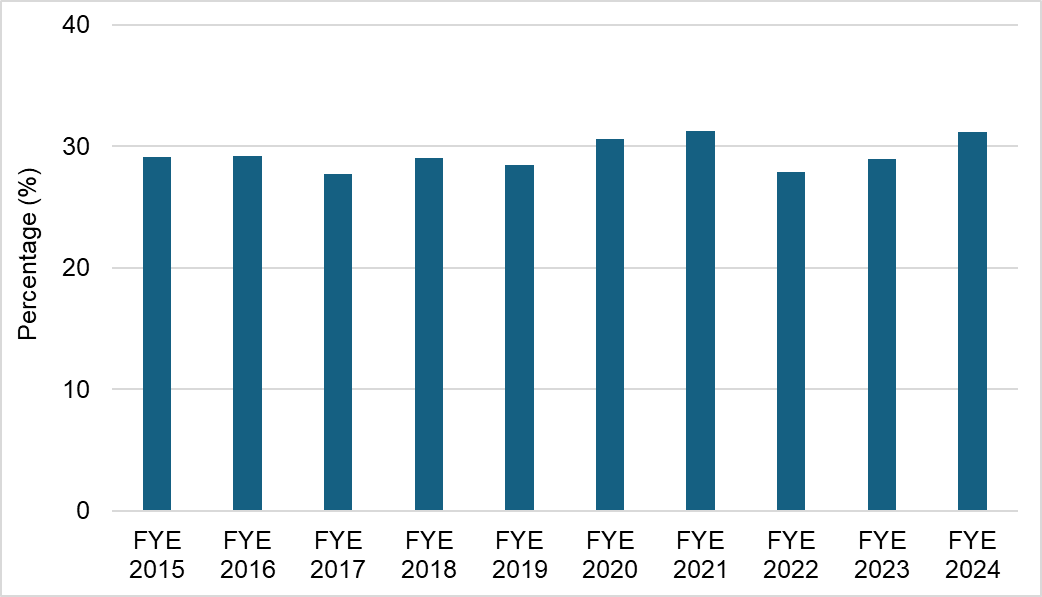
Figure 1 shows that over the last decade the percentage of children living in relative income poverty peaked during 2019 to 2021 (31%). Following a decrease (not statistically significant) immediately after, this has since risen to a similar level (31%).
Like the Strategy, this report does not seek to detail progress against every action that the current government is taking, which will be captured and reported elsewhere. This Child Poverty Progress Report seeks to provide a high-level summary of the main progress we have made against our objectives, driving actions across government to be more focused on the needs of children in poverty, support prioritisation and collaboration and encourage partners to work in new or different ways.
Additionally throughout this report, we will demonstrate how our actions to tackle child poverty take place in the context of our Well-being of Future Generations (Wales) Act 2015 which seeks to improve the social, economic, environmental and cultural well-being of Wales. The Act puts in place 7 well-being goals for Wales. These are for a more equal, prosperous, resilient, healthier and globally responsible Wales, with cohesive communities and a vibrant culture and thriving Welsh language. The Act itself is supported by a range of legislation which places statutory duties on the Welsh Government and public bodies in Wales to tackle poverty and inequality.
The Child Poverty Strategy uses the 5 ways of working identified in the Act. Throughout this Progress Report you will see examples of how we have worked collaboratively across Welsh Government and with stakeholders, practitioners and others to tackle the challenges of poverty through a joined up approach. We have put in place ways of helping to prevent people going into poverty, actions to mitigate the worst impacts of living in poverty and support for those in poverty to identify, and take, pathways out.
All our efforts to support children, young people and families are in line with the ambitions of the Programme for Government.
Monitoring Framework
The Monitoring Framework was developed following the publication of the Child Poverty Strategy to enable us to transparently demonstrate our progress on addressing child poverty. The framework was informed by independent academic advice and the views of the Child Poverty External Reference Group (CPERG).
Relevant Well-being of Wales national indicators and associated measures were selected for the monitoring framework, guided by a set of inclusion criteria. As these indicators largely cover families with children and 16 to 24 year olds, the Monitoring Framework also includes data for children under the age of 16 taken from the School Health Research Network.
Lived experience
Since the 2022 Progress Report, significant work has been undertaken to gather information from children, young people and their families living in poverty. This is a vital part of being able to understand the pressures caused by poverty and the impact policy decisions may have.
For the development of the Child Poverty Strategy, in 2023 we commissioned a range of organisations to provide us with feedback from a series of engagement events about what mattered to children, and what would make the biggest difference to them. We received feedback from 1,402 children and young people, this included children and young people from a wide range of backgrounds including care experienced children, those from ethnic minority backgrounds, children who have experienced homelessness and those with physical or mental impairments.
For this 2025 Progress Report, we have continued the approach of involving those with lived experience, asking what support people have received, how that has made a difference, and what else would make a difference. To do this we worked with partners, third sector organisations and community groups who are well placed to engage with people across their communities, taking advice from the Child Poverty External Reference Group on the questions we intended to ask. Over 3,000 people fed into this work, which helps us to better understand what is important for children and young people now, and what barriers they face in accessing services. Their views are used throughout this report to illustrate what is happening in Wales.
The second element of this work was to consider relevant evidence that had already been gathered by external organisations which contained lived experience data published over the term of this update. We again worked with the CPERG to identify sources of information in addition to data we were already aware of, and this information has been considered as part of the literature review element of this work. This includes recent work by Save the Children as part of the Power of the Voice activity where a group of young researchers from the Rhondda Valley created a powerful animation sharing their ideas of how child poverty can be tackled. It also includes the Wales Centre for Public Policy (WCPP’s) Poverty Stigma Insight Network and their report Lifting the lid on poverty stigma in Wales which was published in 2024, and reports such as the Bevan Foundation Snapshot of Poverty in Winter. The Lived Experience Report published alongside this update can be viewed as a standalone document, but relevant information has been included in this Progress Report.
Through the valuable work of our stakeholders in Wales, and the more recent Joseph Rowntree Foundation report Poverty in Wales 2025, we clearly see the challenges faced by families across Wales since the end of the pandemic and the cost of living crisis which led to increased costs for example for food and fuel. These reports suggest that unfortunately poverty has become the `new normal’ for some, and that levels of persistent poverty have risen.
“stigma says that people in poverty are bad… poverty is bad, not people in poverty.”
Voice of a young person.
We are very grateful to the children and young people, their families, people who work with them and the organisations who have engaged in all this work. This helps us to ensure that we are continuing to learn from and support people in the ways that help them the most.
Objective 1: to reduce costs and maximise the incomes of families
Objective 1 is about helping families to have more money in their pockets by increasing the amount they receive and reducing costs. We want to ensure that families living in poverty get the financial support they are entitled to, and that they are not missing out on help because systems are too complex or hard to access. This includes making it easier to access benefits and supporting people to get fair work and better wages. By working together across government and with partners, we aim to reduce the financial pressures families face and help create a more secure future for children in Wales ensuring children’s rights-based approaches across all our work.
Commitments:
- To put in place a Welsh benefits system.
- Work with partners to equip everyone who works with children, young people and families to make every contact count.
- Work with Estyn and school improvement partners to ensure education is a cost-neutral experience for families.
The information below provides an overview of progress towards these commitments as well as highlighting some of the other work that has been undertaken since the last progress report, and that which is planned for the coming years.
Maximising Incomes and reducing household costs by ensuring entitlements are achieved and putting money into people’s pockets
The Welsh Government continues to prioritise income maximisation as a cornerstone of its strategy to tackle child poverty. There are many things that we do to help save people money throughout Wales such as free NHS prescriptions. Additionally, there are free dental check-ups to everyone under 25 years of age along with our Designed to Smile programme aimed at preventing tooth decay, which is targeted a schools and nurseries in disadvantaged areas. In 2023 to 2024, 1,176 schools and nurseries participated in the toothbrushing programme, engaging just over 59,000 children and more than 203,000 tooth brushing packs were distributed. Through NHS Wales, we also provide free sight tests for children up to the age of 16, and those between 16 to 18 in full time education, and for other eligible people. These actions ensure that children in Wales are able to access the health services they need, when they need them.
Further to this, our work to streamline the Welsh Benefits system, which supports action on Commitment 1, will make it easier for families to access what they are entitled to. Work with all 22 local authorities and the Welsh Local Government Association to turn the Welsh Benefits Charter into reality is progressing. In January 2025, the Streamlining Welsh Benefits phase 1 route map was published. This sets out the high-level actions which are needed to ensure that 3 key local authority delivered benefits (Council Tax Reduction Scheme, Free School Meals and Schools Essentials Grant) can be delivered more coherently. This will mean that people across Wales will only need to provide their information and supporting evidence once to access Council Tax Reduction Scheme, Free School Meals, and the School Essentials Grant. The aim is for this to happen across all local authorities by April 2026.
“Access to help with Council Tax has eased some of the financial pressure we face, making it easier to manage other essential costs.”
Voice of family member.
Our Council Tax Reduction Scheme remains a major lever for tackling poverty, year after year. It is a cornerstone of our targeted support for people and families, especially those who are suffering the most from the effects of higher costs of living. The scheme provides direct financial help to many low-income households across Wales by reducing their Council Tax bills, and we have continued to maintain entitlements by ensuring the scheme is up rated every year to take account of rises in the cost of living. The latest figures indicate that in March 2025 more than 256,000 households in Wales are receiving support with their Council Tax bills through the scheme, with over 216,000 households paying no Council Tax at all.
In 2018, we focused on supporting vulnerable groups by exempting young care leavers from paying Council Tax until age 25, during this financial year it will help over 1,000 young people across Wales. In 2019, we ended the threat of imprisonment for non-payment of Council Tax and published a Collection Protocol, raising standards across Wales. By the end of this term we will have delivered fairer enforcement practices, improved the appeals process, and improved the regime of discounts and exemptions.
Complementing the Welsh Benefits action is the continued delivery of the flagship Claim What’s Yours campaign. From the first awareness campaign in 2021 to March 2025, this national benefits take-up initiative has already helped over 96,000 people access more than £32.7 million in additional income. Recognising the need to tailor approaches to reach as many people as possible, we have targeted those in more rural areas through local radio stations as these are more effective at reaching rural communities.
The Single Advice Fund was introduced in January 2020, and by March 2025 it had helped more than 388,000 people from the most disadvantaged and marginalised communities to access additional income of over £208.9 million, and to have debts totalling £66.3 million written off. It reaches those people who are most in need by working with access and referral partners across the regions. It adopts a person centred delivery model, ensuring the advice services are accessible through a range of channels to suit their needs, i.e. face-to-face, telephone, email, and webchat. We also have ensured that where there may be restricted internet access and people are not able to apply for support online, that provisions are in place to accept applications via post and over the phone. These actions support Commitment 2 of the Child Poverty Strategy.
The Lived Experience Report highlighted the importance of this approach and the need to continue to raise awareness.
“Parents said it would make a big difference if there was a simple, accessible way to check eligibility for different benefits in one place. They explained they feel overwhelmed and confused by what is available and often miss out on support because the information is not clear.”
Group facilitator.
Our Discretionary Assistance Fund (DAF) provides 2 types of grant:
- An emergency cash payment to pay for food, fuel or other essential costs.
- Provision of essential household items to help people live independently in their homes.
We have continued to invest in this important fund since 2013 with almost half of those accessing funding being families with children. From 1 April 2023 to 31 March 2025 the Discretionary Assistance Fund approved over 500,000 applications.
Over 6,000 frontline workers over multiple sectors have received free benefits training through DANGOS over the last 2 years. This helps to embed income maximisation into their work, empowering them to ensure every contact counts, build up their knowledge on financial support and their ability to assist their service users, to access additional income. Over 70% of those workers are now using their knowledge within their role. We have made a further funding available for a 2 year programme of free income maximisation training for frontline workers from February 2025, which will strengthen our efforts to make sure everyone who is entitled to benefits can access them.
Example of Income Maximisation from the 2025 to 2026 Child Poverty Innovation and Supporting Communities Grant:
- During the 2025 to 2026 grant period, Contact Cymru established a partnership with the All Wales Forum which will provide trusted, personalised practical and emotional support to parent carers of disabled children in Conwy and Gwynedd through 1 to1 sessions, workshops and codesigned resources. Together they are increasing household income, improve financial understanding and well-being and share learning through a national event to support sustainable change.
The Basic Income for Care Leavers in Wales Pilot aimed to support young people as they were leaving care and transitioning to adulthood, giving them the space to thrive whilst securing their basic needs. The pilot provided 644 young people leaving care, and turning 18 years of age between 01 July 2022 and 30 June 2023, with direct financial investment in them and their futures. This important pilot which provided eligible care leavers with a basic income of £1,600 (before tax) a month for up to 2 years concluded in June 2025. The pilot is being evaluated with the final report due to be published in 2027.
Linked to helping families reduce their costs and maximising their income, we are working to build financial literacy from an early age. It is increasingly recognised as a vital life skill, and its integration into the school Curriculum for Wales reflects this priority. We continue to work with the Money Advice Pensions Service (MAPS) to develop knowledge of financial literacy and good practice, including how children interact with digital money. The `Your Money Matters’ textbook has been shared with maths teacher trainers at the Welsh Joint Education Committee (WJEC) following the introduction of the new GCSE Mathematics and Numeracy, which embeds financial education as a core component.
Reducing food costs
The rollout of Universal Primary Free School Meals, as part of our Cooperation Agreement with Plaid Cymru, was completed in September 2024, marking a major milestone in reducing household costs and improving child nutrition. Around 174,000 additional pupils are now able to access a free, nutritious meal each school day. In 2024 to 2025 the programme served 21.3 million meals and was supported by £93.5 million in funding. From September 2025 we also increased the value of the unit rate per meal from £3.20 to £3.40, reflecting the priority we place on the delivery of this transformational commitment.
Looking ahead, the universal offer is projected to deliver over 28.5 million meals in 2025 to 2026. This continued investment not only sustains the universal offer but also supports wider promotional activity, including the Get Help with School Costs campaign, which encourages take-up of both universal and means-tested free school meals.
Our universal primary offer, combined with means-tested free school meals and transitional protections across both primary and secondary schools, means that around two thirds of children attending a local authority maintained school are eligible to receive a free school meal.
The School Milk Scheme also plays an important role in tackling child hunger by ensuring more children benefit from a healthy nutritious diet. We provide funding of £3 million for those schools in Wales who opt-in to the scheme, which for 2024 to 2025 provided free or subsidised milk for 81,374 children across Wales.
As reported in the Monitoring Framework only 35% of children from low affluence families report eating breakfast every weekday, compared to 50% from high affluence families. We continue to provide free primary school breakfasts for those children who have not had breakfast provided at home which helps to ensure no child in Wales goes hungry. The evidence shows us however that we need to make sure more children can take advantage of this offer.
During the summer holidays the Welsh Government provided £5.85 million in 2025 to 2026 to enable over 300 eligible schools to run Food and Fun with over 14,000 places offered to learners each operating day. This is an additional £1m to the funding compared to the previous year enabling more children and schools to benefit. A typical day at Food and Fun involves a healthy breakfast and lunch, a chance to try a new sport, participate in art, craft or cooking sessions. This is part of the School Holiday Enrichment Programme (SHEP) which is a school-based scheme that provides healthy meals, food and nutrition, education and physical activities to learners in areas of socio-economic disadvantaged.
The Welsh Government has written to local authorities reminding them of their discretionary powers (under the 1996 Education Act) which allow them to provide meals without charging to children from families with no recourse to public funds, including those living in socio-economic disadvantage. Our No Recourse to Public Funds (NRPF) guidance encourages local authorities to use this discretion to provide Free School Meals to any child whose parents’ immigration status means they have no recourse to public funds. Access to Free School Meals was a common theme for those who responded to the Lived Experience survey. Whilst most were very positive, some suggested that those with dietary restrictions may not be able to access food that they needed or wanted.
“School meals are really helpful as reduces stress and money worries.”
Voice of a parent.
“I waited so long for this, it helped as no heating in the house; I got free school meals when it was rolled out to all children in primary school which made a difference to my finance.”
Voice of a parent.
The Community Food Strategy focuses on connecting Welsh producers with consumers and supporting community-led food projects. It places prominence on the role of the multi-agency Local Food Partnerships which the Welsh Government has been funding since 2022. These partnerships work across sectors bringing relevant people together to develop a vision for a more sustainable food future that’s tailored to its local area and responds to its specific needs, such as working to tackle the root causes of food poverty. They do this through initiatives like Food Cardiff’s ‘Planet Card’ scheme which offers discounts on organic produce at the city’s Farmers Markets and is designed to address the issue of food insecurity and to improve access to healthy, sustainable food options for people experiencing low-income. In 2024 to 2025 alone we provided almost £2 million of funding to support the work of Local Food Partnerships.
Since 2015, we have also funded FareShare Cymru (FSC) to redistribute surplus edible food to community organisations in Wales. The purpose of the funding is to enable FSC to work towards fighting food poverty whilst simultaneously tackling food waste. FSC has been awarded over £3 million in funding since 2015. This helps to support the circular economy, using surplus food and drinks that would otherwise be wasted to provide cheaper food for those who need it.
Whilst we are working hard to ensure that food banks are no longer needed in the future, we recognise the vital role they have in supporting families in poverty. We recognise the dedication and hard work that local authorities, and a broad range of charitable and voluntary organisations undertake to provide these services across our local communities. We also recognise the value of co-locating with other services, for example in Warm Hubs, and with a range of advice services to support income maximisation. The Lived Experience Report details the value respondents put on food banks, and that over 37% of responses to the survey indicated people had accessed them. This is why since 2022, the Welsh Government has allocated over £8.5 million for emergency food aid to local authorities to bolster community food initiatives, such as food banks, pantries and provision of hot meals in community venues.
“Accessing food banks has provided essential support during difficult times, ensuring that our family’s basic needs are met.”
Voice of a parent.
Reducing fuel costs
Fuel poverty can lead to families living in cold, damp homes, and unable to heat food, or access hot water for washing. It can have devastating impacts on physical and mental health. To help address this, the Welsh Government is supporting the work of the Fuel Bank Foundation in Wales. This has helped them to develop a partner network of more than 150 referral partners in Wales. These partners can help people who prepay for their fuel and who are at risk of disconnection by providing support to apply for fuel vouchers or to purchase off grid fuel.
Since the Welsh Government started supporting the work of the Fuel Bank Foundation in Wales, they have delivered over 86,696 fuel vouchers and supported over 505 households with off grid fuel tanks to buy fuel helping to support over 212,269 people. This support helps those living in rural areas where there is a higher proportion of people living off grid, and where minimum delivery levels for oil tanks can leave people more vulnerable. Since 2024, Fuel Bank Foundation in Wales have provided more targeted support for the Gypsy Roma Traveler community and continue to consider where more targeted support could be provided elsewhere.
Up until the end of March 2024 through the previous Warm Homes programme, the Welsh Government invested more than £479 million since 2011 to improve home energy efficiency. Over 82,000 households benefitted from measures in their homes and 210,800 with free energy efficiency advice. In 2023 to -2024 these improvements saved households around £595 on their annual energy bill. Our new Warm Homes Programme was launched in April 2024, to help tackle fuel poverty by improving the long-term energy efficiency of the least thermally efficient low-income households in Wales. The annual report with data on the new programme will be available by the end of 2025.
“Advice on heating the home has helped us manage our energy use more effectively and reduced some of the stress around rising costs.”
Voice of a family member.
Reducing education costs
Evidence shows that the cost of children attending school can be high. School uniform requirements make it difficult for families to afford sending their children to school and can cause children to experience stigma. We have undertaken several actions to help address this. In May 2023 we published the School Uniform and Statutory Guidance. We also commissioned Children in Wales to develop a good practice guidance for schools and provide practical information in relation to the school uniform and appearance policy. Both documents provide practical guidance and advice to schools and governors to help drive down the cost of school uniforms.
In 2024 to 2025 £13.1 million was made available through the School Essentials Grant (SEG) which has helped to reduce the worry surrounding the purchase of school uniform and equipment (such as classroom essentials, sports kit and other equipment for after school activities) and helped with engagement with outdoor learning opportunities for many families. This funding enabled over 89,000 eligible learners to attend schools and participate in activities at the same level as their peers. We continue to raise awareness of this funding through the `Get Help with School Costs’ campaign. This builds on the £23 million of funding previously made available in 2022 to 2023 and the £13.5 million made available in 2023 to 2024 which supported over 90,000 learners. These actions help to work towards Commitment 3 of the Child Poverty Strategy.
The Lived Experience Report tells us that the cost of sending children to school, including the cost of uniform, is still a concern for some families.
“School uniform is so expensive, especially with the badge. I thought this was going to be a thing of the past and schools were getting rid of this, but this is not happening. If you have one or more child, then you are really stuck financially.”
Voice of a parent.
“School essential grant helped to get my children most of their school uniform for a few months, so had a real positive impact helping financially. Same as free school meals which made my daughter have a warm meal most days and save money on lunchboxes.”
Voice of a parent.
Additionally, in April 2023 the Education Maintenance Allowance (EMA) which supports eligible children between the ages of 16 to 18 to continue their education after school leaving age, was increased from £30 to £40 per week. An independent review which was published in July 2024 which has led to actions to support children to access support to stay in education, including increasing the means tested household income thresholds from September 2025. Going forward we will continue to seek ways to raise awareness of funding opportunities for all children in Wales.
“EMA has made sure that my child is having something to eat in college, I don’t have to worry; he was entitled to FSM in school but not in college, now he has money, he can be the same as everyone else.”
Voice of a parent.
Both the EMA and SEG activity are linked to Commitment 3 of the Child Poverty Strategy, helping to ensure that education is a cost neutral experience for children, young people and their families.
In 2024 to 2025 funding was provided to 6 school clusters across Wales to undertake `poverty proofing’ pilots, in conjunction with Children North East. These schools worked together to complete audits involving staff, pupils and parents to understand the lived experiences of those experiencing poverty in schools. Actions the school can take to improve experiences and reduce costs are a part of the audit and self-evaluation process.
Independent evaluation of the pilot is ongoing. Funding has been agreed to establish a partnership with third sector organisations to support the Cost of the School Day and Tackling Barriers to Attainment in schools and settings. This work will include the development of online resources, guidance and advice, the creation of a youth network amplifying learner lived experiences and sharing of best practice to mitigate the impact of poverty on pupils.
Reducing health costs
Evidence suggests that there is a direct correlation between socio-economic deprivation and poorer health. The Science Research Evidence: winter modelling 2025 to 2026 sets out the increased risks of poor health especially over the winter months caused by food and fuel poverty. These factors have been linked to increased vulnerability to respiratory illnesses (such as flu) and the exacerbation of other health conditions. This shows why actions, such as the initiatives to reduce food and fuel costs outlined above, are important to ensure that families can access the support needed.
We know that some young people can be badly affected by substance misuse issues. In July 2024, the Welsh Government published a Substance Misuse Treatment Framework for Children and Young People. The Framework is a guidance document and is designed to inform and assist health, social care and criminal justice planners to design and deliver high quality treatment services, working with those at risk of initiation, or experience of historic or current problematic drug and/or alcohol use. We provide over £67 million to support our substance misuse policy, £6.25 million of which is ring-fenced for children and young people. We know through the work on Adverse Childhood Experiences (ACEs) that children who are raised in homes where substance misuse is an issue are, potentially, more likely to have adverse outcomes in later life. We are committed to ensuring that our services provide early intervention and prevention so that longer-term harms are prevented, before they occur, and we recognise the importance of a multi-agency approach to support children and young people with wider issues that may cause trauma.
Additionally, the Tobacco and Vapes Bill, which will cover all 4 UK nations, will see all young people born on or after 1 January 2009 unable to purchase any tobacco products. Smoking remains the leading cause of preventable ill health and premature death in Wales, with the highest rates seen in our most deprived communities. Across Wales smoking causes around 3,845 deaths in Wales each year.
The Welsh Government has already led the way in restricting smoking in some outdoor public spaces, including hospital grounds, school grounds and public playgrounds to ensure people, particularly children using these areas, are not breathing in harmful second-hand smoke. We are also very concerned about the rise in vaping amongst children and young people. The sale of single-use vapes in Wales was banned on 1 June 2025 because of both their environmental impacts and their links to youth vaping. The proposed UK Government legislation under the Tobacco and Vapes Bill, along with the additional steps we are taking in Wales to protect future generations from the harms of smoking will support Welsh Government efforts to make Wales smoke-free by 2030.
The Baby Bundles programme provides essential items to support new and expectant families, particularly in deprived areas. We are providing £2.5 million of support so eligible families can register for a Baby Bundle from November 2025, and the first Baby Bundles will be delivered in February 2026. Further work is also underway to develop a follow on to the Breastfeeding Action Plan with recommendations currently under review. This plan seeks to support families to make informed decisions about how to feed their babies. The Healthy Start Scheme provides eligible pregnant individuals and families with children under 4 with a prepaid card for healthy food, milk and free vitamins. There have been around 20,000 Welsh beneficiaries of the scheme to date. The scheme is currently being evaluated, and the outcomes of the evaluation, due to be completed at the end of 2025, will help inform future actions. Healthy Start is widely promoted by stakeholders, including across food poverty networks, and a Healthy Start e-learning course is mandatory for all NHS staff working with pregnant women and families with children under 4. This includes staff within Flying Start, Child and Adolescent Mental Health Services, those working in children’s centres, healthcare support workers, community nursery nurses, assistant practitioners, and Allied Health Professionals.
“I see it benefits me greatly; I can use the card in Asda or Premier; if I don’t have time to do a big shop or the money for it, I could go to the local shop when I didn’t have cash and they would accept it, same as a bank card. I thought that was amazing.”
Voice of a parent.
Healthy Weight: Healthy Wales is our 10-year strategy to support a healthy weight across all our communities. The strategy focuses on prevention and early intervention. The strategy is supported by a series of delivery plans. The 2025 to 2027 delivery plan was published on 30 September 2025 and builds on the progress made to date along with directing actions where we can collectively effect the greatest change. It includes 6 priority themes, each of which includes an underlying focus on reducing health inequalities and supporting the youngest in our society. Over £4 million has been committed to delivering the actions in this plan, including important strategic programmes such as PIPYN (children and family weight management pilots).
The Healthy Child Wales Programme launched in 2016 sets out the planned contacts children and their families can expect from their health boards from maternity service handover to the first years of schooling (0-7 years), and it is funded through Health Board across Wales. These universal contacts cover three areas of intervention: screening; immunisation; and monitoring and supporting child development. The programme plays a crucial role in promoting child health and well-being with the aim of reducing inequalities and improving health outcomes for children in Wales. A comprehensive review of the programme is currently underway, which will conclude in the spring of 2026.
Supporting the reduction of household costs
The Cwtch Mawr multibank initiative is an example of how strong collaboration between the Welsh Government, the third sector and national regional and local partners help to reduce household costs in the Swansea Area. Launched in March 2024, this multibank can provide low-income families with access to essential goods in a kind, and dignified way. This initiative helps to provide clothes, bedding and baby products amongst other essentials through the use of surplus goods provided by a range of companies. This not only helps to provide support for families across the Swansea area, It also helps to reduce waste and make the most of resources available as part of the Welsh Government’s commitment to developing a circular economy.
Objective 2: create pathways out of poverty so that children and young people and their families have opportunities to realise their potential
Objective 2 is about ensuring that individuals have the tools, opportunities, and support needed to realise their potential through access to education, skills development, and fair work. Central to this objective is the commitment to building a Fair Work nation, removing barriers to employment, improving workplace practices, and supporting inclusive economic participation. This includes targeted action to support disabled people, carers, women, and ethnic minority communities, alongside efforts to address childcare and transport costs as vital enablers of access to work.
Commitments:
- Champion the Real Living Wage.
- Remove barriers to employment and career pathways for disabled people, women, carers, and ethnic minority people.
- Focus work across government to find affordable solutions to childcare and transport costs to remove barriers to work and make work pay.
The information provided below provides an overview of the progress towards these commitments as well as highlighting other work that has been undertaken since the last progress report, and that which is planned for the coming years.
The best start in life
Evidence shows investing in the early years of a child’s life has a positive impact on their physical and mental health and well-being. The Welsh Government remains dedicated to ensuring that all children have the best start in life. Whilst we are taking significant positive action, more is needed to ensure our youngest children can be lifted out of poverty.
Figure 2: children in relative income poverty by age of youngest child in Wales
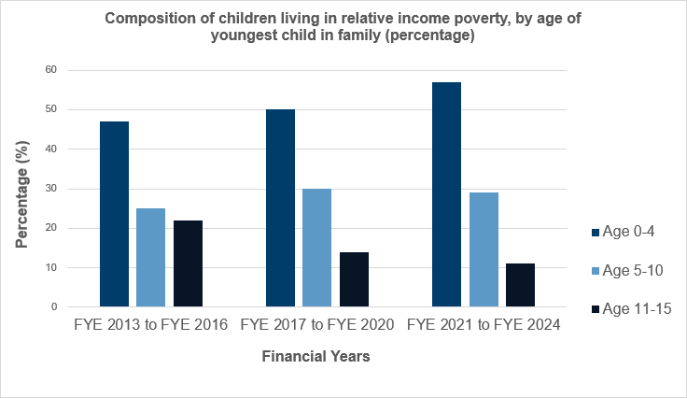
Figure 2 shows that children living in households where the youngest child was aged 0 to 4 years of age are by far the highest category living in poverty across all other children. Whilst some small reduction in the numbers of children living in households where the youngest child was aged 5 to 10 and 11 to 15 can be seen, those in households where the youngest child was aged 0 to 4 continues to increase in each 4 year period.
The Flying Start programme delivers targeted support to families with children under the age of 4 in Wales’s most disadvantaged areas. It is part of the Children and Communities Grant which supports vulnerable families through early intervention and prevention. In September 2022, we commenced a phased expansion of early years provision to include all 2 year olds, and to strengthen Welsh medium provision. In September 2025, Merthyr Tydfil became the first area of Wales where all 2 year old children can access free childcare as a result of the expansion programme. In 2024 to 2025, 40,943 children benefited from Flying Start services. This represents 35.1% of all under 4 year olds in Wales in 2024.
All children have the right to be able to express themselves freely about matters that affect them. Research shows that children living in poverty suffer disproportionately from delayed language, which impacts their ability to express themselves. The Talk With Me Speech, language and communications (SLC) plan has continued at pace since its launch in November 2020. We continue to further improve the identification of SLC needs in children aged 0 to 4 years 11 months, investing £1.5 million in Prosiect Pengwin to develop tools and resources to help practitioners identify SLC. We have also taken action to upskill the workforce in Wales to address SLC needs in this age group along with providing resources for parents and others, helping to increase their confidence to identify and address needs. We will continue to develop Talk with Me and consider how we can take this approach forward for older children and young people.
As part of the declaration of radical reform for children and young people’s care, we remain committed to improving educational outcomes for care-experienced children, whilst recognising the importance of looking holistically at their needs in schools. We are working with stakeholders to produce a suite of good practice guidance documents, including a charter for corporate parenting. These will support local authorities and schools to embed good practice.
Education and progression
The Pupil Development Grant (PDG) funds schools and educational settings to help raise the attainment of children from low-income households and care experienced backgrounds by reducing barriers to learning. Funding of £128 million has been allocated to the PDG in 2025 to 2026, mirroring the funding provided in the previous year. Of that funding, just over £5.6 million will be available in this financial year to specifically support care-experienced children in school. The funding aims to raise their attainment by reducing barriers they often face to achieving their full potential.
The grant allows schools and settings to adopt both targeted and whole-school approaches. Whole-school approaches should have the scope to benefit all learners but must ensure the needs of disadvantaged pupils are supported. Schools decide how to use the PDG, but decisions need to be evidenced based and monitored for impact. We will continue to work with PDG advisors to ensure the funding is being spent strategically and effectively.
In addition to the PDG, the School Essentials Grant (SEG) is available to parents of children in low-income households and children who are looked after. This is covered in more information under Objective 1.
Children and young people with Additional Learning Needs (ALN) can receive extra help to learn. There have been positive changes to our education system. In particular a new statutory plan for children with ALN, new statutory roles in health and education and new ways of working established across Wales. Since September 2025, the ALN system has applied to all children and young people in Wales. We are continuing to invest heavily in ALN. Since 2020, we have funded more than £150 million to local authorities and schools to support ALN implementation and funded more than £170 million of capital funding to improve facilities and infrastructure over the last 5 years. More than 32,000 statutory individual development plans have been created in schools through person-centred processes, and practitioners continue to work closely with learners and families to understand needs and secure appropriate provision.
Through the Commission for Tertiary Education and Research (Medr) we will do all we can to ensure that educational inequalities narrow and that opportunities are available to support learners and provide them with the knowledge and skills for lifelong learning, development and success. Medr published its Strategic plan (2025 to 2030) and Operational plan (2025 to 2026), which shows a commitment to narrowing educational inequalities noting that education plays a key role in providing a pathway out of poverty. The strategic plan committed to developing clearer and more coherent pathways across the tertiary education sector and the commitment to inclusion and learner wellbeing supports the Child Poverty Strategy’s objectives around dignity and creating safe, inclusive, and respectful learning environments.
The Welsh Government is continuing to support unpaid carers via our Short Breaks Scheme and Carers Support Fund. We have provided £1.75 million to continue the Carers Support Fund which provides financial advice sessions as well as small grants for essential purchases such as food, a household item or a utility bill. Both young carers and adult unpaid carers can apply to these schemes. We are engaging with stakeholders to identify the priorities for unpaid carers, as part of the process to introduce a new National Strategy for Unpaid Carers in Spring 2026. The financial challenges faced by many carers, particularly those not in paid employment, continues to be raised as a major theme.
We have made £3.5 million of funding available for the Short Breaks Scheme to extend it until the end of March 2026. Additionally, funding for 2025 to 2026 enables the Carer Well-being and Empowerment Project, delivered by Carers Wales, to provide support on benefit enquiries, carers rights and return to paid employment.
To help identify and address inequalities, including in education and work, the Disability Rights Taskforce was established at the end of the pandemic to demonstrate Welsh Government’s commitment to listening to and working with disabled adults and children to remove the challenges and inequalities they continue to face every day. The Taskforce’s 10 thematic working groups, brought together over 350 external stakeholders and over 200 policy leads from across government to produce high quality recommendations. Additionally, the Disability Rights Taskforce held a Children and Young people working group and a bespoke meeting with parents and carers, to consider the needs and ambitions of disabled children and young people.
The Taskforce’s recommendations were used to develop a Disabled People’s Rights Plan, which includes the outcomes needed to create long-term positive change for disabled people, putting the Social Model of Disability at the heart of our ambition for Wales. The plan, based on the hard work of the Disability Rights Taskforce members, also sets out our cross-government 10-year ambition and the long-term outcomes we are working towards to ensure disabled children and adults can thrive as equal members of Welsh society, and to challenge discrimination and prejudice.
The Plan’s 12-week consultation closed in August 2025, and the summary of responses was published on 30 October 2025. We will set up an External Advisory Board to provide advice and support on the implementation, delivery, and impact of the Disabled People’s Rights Plan. This plan can only succeed if organisations and people across Wales work together to deliver it.
The Equality and Inclusion Grant scheme, which was launched in September 2025. This scheme has 2 grants available totalling £1.2 million to September 2026. The first, the Awareness and Engagement Grant, seeks to fund activities that raise awareness of, or support engagement with protected groups, the second Innovation Grant provides funding to support organisations working together to enhance communication, joint working and adoption of innovative approaches responding to tackling inequality and inclusion.
Additionally, we recognise that local services have a crucial role to play in supporting children and young people from ethnic minority communities, including Gypsy, Roma and Traveller learners. We also understand the value placed on this support by schools and learners. The Welsh Government is providing £11 million to local authorities again in 2025 to 2026 via the Minority Ethnic, Gypsy, Roma Traveller grant to continue to fund these support services. The purpose of the grant is to support children and young people who experience barriers to learning, the curriculum and education. These may include linguistic or language barriers, cultural barriers, as well as systemic and institutional barriers. In December 2023 we published our new Gypsy, Roma, and Traveller guidance for schools. The guidance helps strengthen the support available to Gypsies and Travellers who have protected characteristics under the Equalities Act 2010, which also includes learners from EU Roma heritage.
Economy and fair work
Helping families into fair, well-paid work is a major driver in helping families out of poverty. To support this the Welsh Government is embedding fair work principles across our economy through initiatives such as the Economic Contract which sets out the agreement between the Welsh Government and the businesses it supports. It details how we will work together in partnership to create resilient businesses that offer an attractive place to work. Our Guide to Fair Work and Code of Practice on Ethical Employment in Supply Chains highlights the benefit of fair work and practical steps employers can take. We have also supported union-led adult learning via the Wales Union Learning Fund, supported Cynnal Cymru towards increasing the number of accredited Real Living Wage employers year on year, and upheld our commitment to ensure social care workers are paid at least the Real Living Wage. These efforts have made a meaningful difference to the lives and livelihoods of thousands of low-paid workers.
We have set a national milestone for the elimination of the gender, ethnicity and disability pay gap by 2050 and are taking forward actions, including those set out in the draft Disabled People’s Rights Plan and Anti-racist Wales Action Plan to improve employment outcomes and remove pay gaps.
Figure 3: percentage of people in employment and who earn at least the real living wage
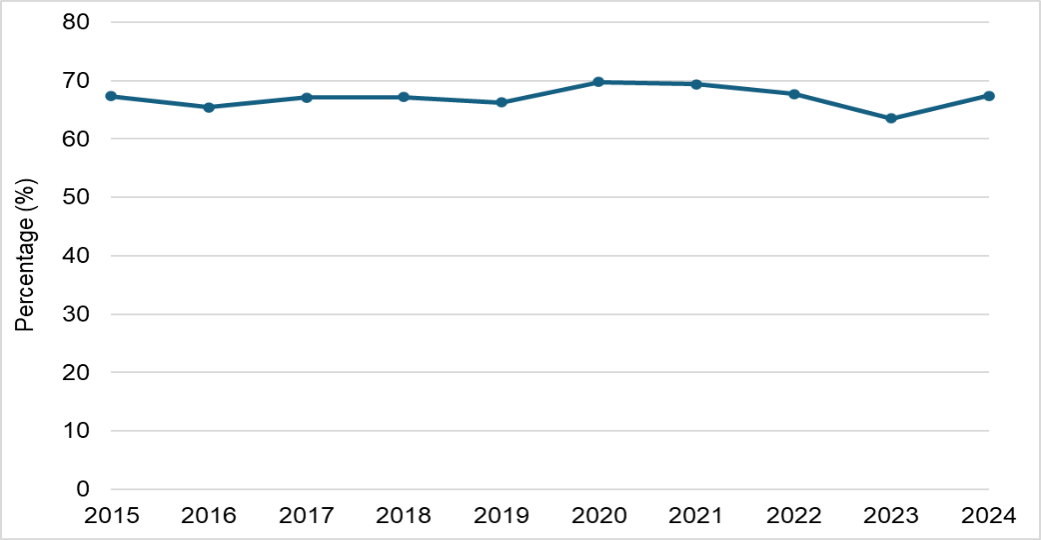
Figure 3 presents a line chart showing the percentage of people in employment earning at least the living wage since 2015. Over this period, the percentage has remained relatively stable, with limited variation year to year. The highest recorded percentage occurred in 2020, while the lowest was in 2023
The Monitoring Framework report tells us that in 2024, 67.4% of people in employment earned at least the real living wage. This was 3.9 percentage points higher than in 2023 (63.5%) and slightly above the level recorded in 2015 (67.3%).
It also demonstrates that there is more to do to achieve the ambitions set out in the Advancing Gender Equality in Wales Plan which specifies how we will provide leadership for achieving greater equality for women and girls in Wales. There remains a pay gap between the pay of male employees and female employees. In 2024, male employees earned an average £0.32 an hour more compared to females, and this is smaller than the difference in 2023 where there was a difference of £0.82 an hour. More information on this is available in the Monitoring Framework report.
Similarly, the percentage of children living in relative income poverty is higher for those with disability in the family household. Part of the reason for that is the disparity in pay levels within families where there is a disability in the family. In the financial year end 2022 to 2024, 35% of children who lived in a family where there was someone with a disability were in relative income poverty compared with 28% of those in families where no-one was disabled. We also know that in 2024, disabled employees earned an average of £14.00 an hour compared to non-disabled employees who earned £15.18. This shows the importance of action such as the development of the Disabled People’s Rights Plan.
Strengthening public procurement is a lever for achieving socially responsible outcomes, which could help address these inconsistencies. Over the next year, we will bring forward regulations that will ensure all parts of the Social Partnership and Public Procurement (Wales) Act 2023 are in force, this will include embedding fair work principles, including fair pay. Those undertaking public procurement will need to report annually on how they are using procurement to contribute to economic, social, cultural, and environmental well-being. The consultation on the draft regulations closed in October 2025. The outcome of the consultation will be considered, and further action will be undertaken to lay the regulations before the Senedd in 2026. These actions are part of the work taking place to address Commitment 4 of the Child Poverty Strategy.
Additionally, the Welsh Government is actively redesigning its employability support across Wales through the development of a new Employability Support Programme. During Summer 2025, we conducted engagement events attended by more than 500 stakeholders who provided feedback on the shape of the new programme and the critical issues it needs to address. We also understand that cost of living pressures remains an important issue for many across Wales. The Citizens Advice: Autumn Budget 2025 submission suggests that the high cost of essentials such as food energy and housing is having a significant impact on those in low-paid jobs. Compared to higher income families, a larger proportion of their income will be spent on these essentials, leaving less money for other items.
Our vision for employment extends beyond just providing jobs. It's about nurturing dignity, purpose, and opportunity, and ensuring that everyone, regardless of their background or circumstances, has the chance to thrive. To achieve this, we are prioritising collaboration to ensure policy alignment on employability and skills. This is especially important when addressing shared challenges such as economic inactivity and youth unemployment. This includes building joint frameworks that allow for shared accountability and coordinated delivery across UK Governments to enable us to pool insights, reduce duplication, and accelerate innovation in crucial areas such as digital engagement, employer collaboration, and inclusive growth.
In Wales, we have a shared vision and a common purpose. The Plan for Employability and Skills aims to unite efforts across every Ministerial portfolio, ensuring that we are all working towards the same goals. Integrated pathways are essential; this means embedding employability support within health, housing, and education, and creating provisions where people can access help without having to navigate a maze of systems.
In addition to the actions set out above, there are multiple actions under Commitment 5 of the Child Poverty Strategy (removing barriers to employment) which complement the activity under Commitment 4 (champion the real living wage and fair work).
In the last year alone, the Young Person’s Guarantee (YPG) has supported over 12,000 young people, providing everyone between 16 and 24 in Wales with the offer of support to gain a place in education, training, an apprenticeship, find a job or become self-employed. That includes more than 4,000 young people who progressed into employment.
The Lived Experience activity demonstrated the importance of this work and the concerns young people have when they are progressing from school to employment:
“All young people expressed concern about gaining employment as school leavers. They felt that this is the most important issue that Welsh Government should address. They talked about the vicious circle of not having enough experience for a job being cited as a reason not to give them a job. Employment between 16 and 18 years is the biggest concern. They describe jobs as being for 18+ years only but how they need to earn money from 16 years old to support themselves.”
Voice of facilitator.
Young people can access support primarily through Working Wales and the YPG brings together a range of programmes such as Jobs Growth Wales Plus, ReAct Plus and Communities for Work Plus. The Young Person’s Guarantee (YPG) Process Evaluation was published on 30 September 2025. The Evaluation highlighted the effectiveness of the YPG with over 60,000 young people taking this up and showed that the approach being taken through the YPG and the Youth Engagement and Progression Framework has been largely successful at engaging young people, including those from the most disadvantaged backgrounds.
In April 2025, we launched an Economic Inactivity Trailblazer in Wales in Blaenau Gwent, Denbighshire and Neath Port Talbot, testing new and innovative approaches to help individuals who are not in work or looking for work, navigate their way back into the labour market. This is part of the UK Government’s £135 million economic inactivity trailblazer programme, targeting areas with the highest levels of inactivity to Get Britain Working again, to unlock growth and deliver the Plan for Change. The aim of the Trailblazer is to support those individuals take those progression steps toward employment, improving well-being and life outcomes for those furthest from the labour market. In particular, it is focussed on those with long-term health conditions, disabled people and those with caring responsibilities. This includes developing a multi-agency approach, testing innovative ways of bringing together local authorities, health boards, GPs, Job Centres, social care, third sector organisations and employers, putting individual well-being at the heart of the decision-making process.
Encouraging young people to be entrepreneurial, Business Wales supports young people into self-employment through dedicated Big Ideas Wales assistance. Since 2021, over 283,000 young people aged 14 to 25 have engaged in enterprise workshops in schools, colleges, universities and community settings. 3,761 young people have received business support to explore ideas for starting their own business, 850 clients have started a business. Business Wales will continue to deliver on this commitment, also looking at addressing under representation amongst women, disabled people and Black, Asian and Minority Ethnic communities.
The Welsh Government Learning Grant Further Education (WGLG FE) is available for adults age 19 and over, for full or part time study making learning accessible and able to fit around existing commitments. We have supported over 3,000 learners each academic year from low income households to access qualifications up to and including Level 3. In June 2025, we increased the grant rate for WGLG FE in line with inflation; this was for eligible learners continuing in, or starting study in academic year 2025 to 2026. Previously, learners have received up to a maximum of £1,500 to help them with the cost of studying a course up to and including Level 3. From September 2025, this has increased to £1,919. To ensure our WGLG FE Scheme remains effective at reducing financial barriers for adults to return to education, an external review is underway and due to conclude in early 2026.
The Monitoring Framework report tells us that in 2023, 89.9% of 16 to 18-year-olds were in education, employment, or training (EET), an increase of 2.2 percentage points compared to 2022 (87.7%). This figure is broadly in line with the level recorded in 2015 (89.8%). It is therefore important that the work being undertaken to support young people into work or training continues.
Part of this is ensuring Welsh businesses have the workforce they need. The Flexible Skills Programme is supporting Welsh businesses to invest in themselves and build a stronger, more skilled workforce. In 2025 to 2026, at the time of writing this report, 164 applications to the Flexible Skills Programme have been approved, supporting over 10,500 individual upskilling interventions. Over 160 individual businesses, across every sector in Wales, have benefited from funding from the Welsh Government to cover 50% of accredited training costs.
We recognise that struggling with ill health, mental health issues or substance misuse issues can be barriers to accessing or keeping employment for some people. The Out of Work Service provides free peer mentoring support to people out of work, recovering from mental health and/or substance misuse. Between October 2022 and September 2025 over 12,000 people have been supported helping families living in poverty, where family income improves by gaining employment.
The rapid access to occupational support provided by the In-Work Support Service plays a vital role in helping people to retain employment by aiming to prevent people from becoming absent from work due to mental or physical ill-health and to help those on a sickness absence to return to work more quickly. Between April 2023 and September 2025, the service has supported almost 9,000 people to remain in or return to work and is essential in reducing ill-health, social exclusion and poverty. These adult focus services complement the NYTH/NEST Framework action covered in Objective 5.
As a government we are keenly aware of the multiple benefits and positive role volunteering can play in the training and skills development of our young people, including those opportunities provided in e.g. green skills areas such as community growing. We also understand the importance of giving younger people positive and supported experiences of volunteering at an early age, as this means they are far more likely to continue to volunteer and contribute to the health and wellbeing of their communities throughout their lives. That is why since the summer of 2024 the Welsh Government has been working in partnership with the Welsh Council for Voluntary Action to codesign, with all sectors, a New Approach to Volunteering to set out our vision for the kind of volunteering nation we want Wales to be. Because of their importance young people have been at the heart of this process from the beginning.
Removing barriers
Lack of childcare or access to suitable transport is a barrier to engagement with work, training and education. These barriers can have a greater impact in rural communities (sometimes referred to as the ‘rural premium’), due to the greater distance from services, limited job opportunities and low incomes. The Lived Experience Report suggest that support with childcare helps to provide stability for working families, but lack of support created challenge to those seeking work.
“Can’t get any support due to not being in flying start postcode. Nursery fees are killing us and due to one digit in the postcode we get no funding.”
Voice of a parent.
“Childcare support via 30 hours funding kept us being able to maintain our jobs at the level we were at rather than reducing hours/coming out of work.”
Voice of a parent.
“It was a great help, the subsidised childcare meant I was able to start getting back into work.”
Voice of a parent.
People told us that the Childcare Offer for Wales makes a significant difference for them. It provides working parents, and those in education or training a combined 30 hours per week of funding for nursery education and childcare for children aged 3 to 4 years old. In April 2025, we increased the rate at which the Offer is paid to providers to help ensure sustainability and encourage the continuation and growth of childcare places.
In 2022, we commissioned research to review the effectiveness of Childcare Sufficiency Assessment (CSA) arrangements. These form part of a statutory duty placed on local authorities to assess whether there are sufficient childcare opportunities to support working families in their areas. The report findings, published in March 2024, identified several areas for improvement. Based on the recommendations of the report, we are currently undertaking a comprehensive review of the CSA process. The review aims to enhance the CSA process to assist local authorities in providing adequate, sustainable, and flexible childcare services, thereby improving childcare accessibility in Wales. This work is part of Commitment 6 of the Child Poverty Strategy.
The Lived Experience Report tells us that transport difficulties, particularly related to travel, impact on family’s ability to engage with a wide range of services including education, health and recreational activities. Issues included the cost and frequency of transport particularly for those who are disabled or live in rural areas. To help address these issues, the Welsh Government’s `Travel for All’ approach aims to ensure that transport is accessible and inclusive, and that everyone feels safe and welcome. This includes children and those from lower socio-economic groups, and the intersectionality that affects child poverty and other issues affecting people’s ability to use our transport networks.
Complementing this, the Bus Services (Wales) Bill proposes a franchising model for bus services. This will enable us to design and secure bus services to meet community needs, including in rural areas, and ensure services are delivered in line with the Welsh Bus Network Plan, which reflects the principles for Travel for All. The Children’s Rights Impact Assessment that was developed for the Bus Bill highlighted the importance of affordable, reliable and safe bus travel for children to meet with friends, go to school and attend appointments, and that this can be challenging in more rural areas of Wales. The Bill was laid before the Senedd on 31 March 2025 and is expected to be passed in 2026. Whilst it will take time to implement changes, which are being rolled out regionally over a number of years, the Bill gives us the tools to ensure passengers are put first when the bus network is being planned and delivered.
On 10 July 2025, as a result of our budget settlement with Jane Dodds MS, the Welsh Government launched the £1 bus fare pilot scheme. The purpose of the scheme is to improve the bus fare offer for young people aged 21 and under. Specifically offering a £1 single fare and £3 fare for multiple journeys within a day. The first phase of the year long pilot scheme for young people aged 16 to 21 years old started on the 1 September. The scheme extended to include children aged 5 to 15 from 3 November. The pilot will run for a year with a budget of £22 million across financial years 2025 to 2026 and 2026 to 2027. This pilot scheme is designed to support young people in accessing education, employment, training opportunities and leisure activities. By reducing travel costs, we aim to remove barriers and provide greater mobility and independence for our youth.
“Help young people with the cost and availability of public transport, this could include making public transport like bus services feel safer and cheaper so they can to things like go to work or see family and friends.”
Voice of family member.
We recognise that for support to have the greatest impact, services for families must be coordinated. For example, childcare support is most effective when families can reliably travel to childcare settings and then continue on to work or other commitments. Regular, affordable and accessible transport is therefore essential. The actions outlined above are designed to ensure families receive this kind of holistic, joined up support.
Objective 3: support child and family well-being and make sure that work across the Welsh Government delivers for children living in poverty including those with protected characteristics so that they can enjoy their rights and have better outcomes
Objective 3 is about supporting children, regardless of their backgrounds so they can have the best start in life and go on to lead the kind of lives they want to. This includes having decent homes suitable for their needs, help to support mental health and well-being, having their voices heard on issues in their communities that affect them. This objective recognises that people want to live in areas where they have facilities to play, meet with friends and travel to cultural experiences without the barriers of expensive transport. It is about embedding a child-focused, inclusive approach across all areas of government to ensure that children in poverty are not left behind.
Commitments:
- ‘Think Community’ when developing, reviewing and funding relevant policies and programmes
- Support schools to develop as community focused schools,
- Push forward, working with partners, on the delivery of more community-based offers for play, sports, youth opportunities and access to arts, culture and natural resources.
- Developing our Communities Policy with co-productive and inclusive ways of working.
Cohesive communities
The Lived Experience Report shows it is important for people to have services that are accessible to them. Where travel is required to access services, schools, youth clubs and other services, people need access to regular and reliable transport. They also want access to digital services where needed.
“Over the last couple of years, children and young people have increasingly expressed concern that they cannot afford to see their friends or family.”
Children in Wales: children and young people survey.
The Monitoring Framework report shows that in 2024 to 2025, satisfaction with access to local services was lower among households in material deprivation. 73% of those respondents were fairly or very satisfied, compared to 79% of those not experiencing deprivation. A difference of 6 percentage points.
We also understand that being able to bring together multiple services promoting a `one-stop shop’ or multi-agency approach to delivery of services can help overcome some of the barriers people face to access them. There are many actions that fall under this objective that seek to address these barriers and develop more community based, accessible services for all.
The Community Facilities Programme (CFP) budget increased to £7.1 million in 2024 to 2025, up from £6.5 million in previous years. The CFP is a rolling capital grant programme which provides grants of up to £300k for community led projects to buy and improve community run land and buildings. This demand led programme contributes to support for children and families by helping community facilities to become fit for the future. These facilities offer a focus for community activities such as playgroups, parenting support, foodbanks and access to help and advice. In 2025 to 2026 the budget will rise to £10 million allowing us to support even more community facilities.
We recognise the importance of green spaces to our communities. Building on previous funding, since 2023 we provide funding through the Local Environment Quality grant to Keep Wales Tidy to support communities across Wales to help improve their local environment and develop a real sense of pride in their place. In 2025 to 2026 this has increased to £1 million. This funding also enables Keep Wales Tidy to provide practical support and advice to community groups and individuals on `doorstep issues’ such as litter, fly-tipping and dog fouling. This helps to provide valuable spaces for people and wildlife to thrive.
Further Capital funding has also been made available through the Integration and Rebalancing Capital Fund (IRCF). This supports the development of integrated health and social care community hubs and centres to deliver seamless services through local single points of access and co-location of staff and services.. Originally approved for 3 years from 2022 to 2025 funding now extends for an additional 2 years up to 2027. The fund supports housing, activities to prevent loneliness and isolation, foodbanks, as well as more complex health and social care services such as GP services, substance misuse and podiatry. These grants help to meet the requirements of Commitment 7 in the Child Poverty Strategy.
Schools play a vital role in building cohesive communities. Commitment 8 of the Child Poverty Strategy highlights the need to continue to support schools to develop as Community Focused Schools (CFS). These schools respond to the needs of their learners, families and communities through strong partnerships. In 2022, the Welsh Government announced the intention to develop CFS’s which would co-locate services and secure stronger engagement with parents and carers both in and outside traditional school hours. We believe that this is an important part of wider policy for tackling poverty on educational attainment.
To complement this approach, we developed a range of CFS stakeholder networks and guidance, and have invested in the recruitment and retention of Family Engagement Officers (FEO) across Wales. In 2025 to 2026, £9.5 million is allocated, building on over £16.5m since 2022. FEOs can be a highly effective resource for schools in reaching out to parents and carers and engaging them in their children’s learning. An FEO can ensure that positive partnerships with families are developed, and that bespoke support and services are offered. We are also continuing to fund CFS Managers in all local authorities, with over £660,000 of funding annually since 2022. This year an additional £1m of new funding has been provided to assist further embedding of CFS approaches and innovation. Work is ongoing around further development of the governance, structure and professional learning with further partner and stakeholder engagement planned for 2026. An evaluation of CFS is currently ongoing with a draft report expected by the end of 2025.
Additionally, as part of the Sustainable Communities for Learning Programme, by the end of last financial year (2024 to 2025) we had invested £60 million capital funding specifically to support schools to safely adapt and effectively open their premises outside traditional hours; enhancing their provision to not only benefit learners but the community around them.
A further £20 million funding for capital works in schools has been approved to continue to support local authorities in financial year 2025 to 2026.
Providing play, sport and youth opportunities
Commitment 9 of the Child Poverty Strategy sets out that we will seek the delivery of more community-based offers for play, sports, access to arts and other low-cost family activities. The Welsh Government has continued to support the Playworks Holiday Project, which aims to support access to increased play opportunities during school holidays along with providing healthy food and snacks. We have provided £1 million of funding per year for this since 2021.
There are many other organisations including across the third sector that provides free activities for children and young people throughout the summer holiday. Using their `fund for all’ scheme, the Urdd Gobaith Cymru provide summer holiday camps for children who would otherwise not have the opportunity to go on a summer holiday. The camps provide a range of experiences at the Urdd centres including skill building, outdoor activities and having fun. This is an excellent example of how the third sector are actively supporting children across communities in Wales to be able to participate in these camps free of charge.
Wales was the first country in the world to legislate in support of children’s play. We continue to build on this significant commitment to our children. In 2025, Wales: a Play Friendly Country was revised updating the version that was published in 2014. The refreshed statutory guidance supports local authorities to meet their statutory duties. To also support play in Wales, an extra £5 million of capital funding has been provided to assist local authorities to improve play facilities for children, including the creation of inclusive and accessible play spaces.
Over 100 of Cadw’s historic places are open and free to visit. 19 of their sites charge admission to support the care of the properties. In July 2025, Cadw introduced £1 tickets for people on qualifying benefits, making these more accessible for children living in poverty, and helping to increase access to historical and cultural resources for children.
The Lived Experience Report tells us that access to affordable and accessible activities for children and young people is important:
“Help with support of sports, get more kids affordable sports and grants to local sports clubs to keep kits fit, healthy, meeting new people and off the streets.”
Voice of a facilitator.
“I think the biggest difference would come from more affordable and accessible activities for children and young people. During school holidays especially, there just aren’t enough safe and low-cost options locally”
Voice of a facilitator.
As part of the Welsh Government Communities Policy, we continue to develop our approach across Wales. We meet with community stakeholders to help develop our thinking and options. These conversations have highlighted the importance of developing an asset-based approach to Welsh Government’s policies which is in line with Commitment 10 of the Child Poverty Strategy.
Of course, community approaches to supporting people are very broad both in terms of what is offered and who accesses them. In terms of Youth Work, extensive engagement with stakeholders has been underway since the publication of the Interim Youth Work Boards final report Time to Deliver for Young People in Wales in September 2021. The report called for greater collaboration in providing services for young people through the voluntary sector, statutory partners and local authorities to help deliver a rich and diverse youth work offer that will help them fulfil their potential. Work is underway to finalise the statutory framework for youth work, and to commence the establishment of a national body for youth work. These actions are in line with the Commitment 10 of the Child Poverty Strategy.
Part of having safer communities is consideration of the health inequalities related to road traffic collisions, with children and young people living in poor areas at a higher risk of being harmed on the roads. In September 2023, we introduced a default 20 mph speed limit on restricted roads across Wales. These roads are typically in residential and built-up areas, helping to provide safer routes to school. In July 2024, we issued further guidance to help highway authorities to assess which roads the speed limit could return to 30 mph. The Welsh Government are now working with Road Safety partners to provide a cohesive framework to coordinate initiatives to effectively deliver the `Safe System’ approach. This partnership has led to the development of a new Road Safety Partnership Plan, which is due to be published later in 2025. This Plan will set out a shared national vision for road safety in Wales, recognising that safe roads are critical to building more resilient communities in Wales, protecting those most at risk.
Sport and exercise are vital for young people’s development and health. As reported in the Monitoring Framework, in 2022 to 2023, just over half (56%) of primary school children from high-affluence families reported exercising at least 4 times a week to the point of getting out of breath and sweating. For those from low-affluence families it was just 40%.
Recognising the importance of this work,we continue to provide funding to Sport Wales to support sports clubs, National Governing Bodies, local authorities and other national partners to deliver the Vision for Sport, seeking to make Wales an active nation where everyone can have a lifelong enjoyment of sport.
Our Programme for Government (PfG) outlines the Welsh Government’s priorities and its commitments to the people of Wales and recognises that sport is of vital importance to both our economy and to our national life. Commitments under the PfG include promoting equal access to sport, supporting young and talented athletes and grassroots clubs, and investing in our world-class sporting facilities and in new facilities. Ensuring children from all backgrounds, including those experiencing poverty are able to access sport opportunities is an important part of the Child Poverty Strategy. Data from Sport Wales’s school sport survey in 2022 shows that 32.3% of children in areas of socioeconomic deprivation exercised 3 or more times per week. In 2024 to 2025 the Be Active fund: Sport Wales invested into 180 projects, valued at £1,232,199 in areas of socioeconomic deprivation, out of the total investment of that fund of £4,191,065. Although this is positive action, there is more that can be done in this area.
Supporting families
As noted in Objective 2, the Children and Communities Grant offers local authorities a 3 year funding allocation to support the needs of the most vulnerable babies, children, young people and adults in our communities. This funding enables a range of early intervention, prevention and support mechanisms such as Families First, Flying Start and Early Intervention Parenting Support. The 3 year allocation provides stability and reassurance for planning, delivery, and partnership working, ensuring children and families receive the support they need.
Families First promotes the multi-agency systems of support for families, particularly those living in poverty. The programme addresses financial, educational, health, and employment needs, and provides comprehensive support to families facing socio-economic challenges with the aim of improving educational performance, better health, stronger family dynamics, and economic empowerment.
On 21 May 2025, the Welsh Government published data about the delivery of the Families First programme during 2018 to 2023. Findings show the number of referrals for a Joint Assessment Family Framework (JAFF) has increased by 50% between 2018 to 2019 and 2022 to 2023, this is the highest number of referrals on record, showing the increasing needs of families requiring support.
The Welsh Government remains committed to delivering the Families First programme and supporting the well-being of families in Wales. In 2025, a formative piece of qualitative research has been commissioned to understand the perceptions of the families using Families First services. The research will explore how the Families First programme is being delivered, perceptions of effectiveness, and offer recommendations to ensure the programme continues to evolve to meet the needs of its communities.
We are also committed to supporting parents through our Parenting. Give it Time campaign, which provides practical advice, encouragement, and evidence-based tips, helping families navigate everyday challenges of parenting.
Mental health and well-being
Both the Monitoring Framework and Lived Experience reports show that poverty affects mental health and well-being. Data showed that in 2023, 84.5% of secondary school pupils aged 11 to16 from high-affluence families rated their life satisfaction as 6 or above on a scale from 0 to 10. This compares with 70.9% from low-affluence families, a gap of 13.6 percentage points.
The Lived Experience literature review also highlighted the impact on mental health and well-being for children and their families:
“Routes out of poverty were usually ‘blocked’ by poor mental health. For example, parents were often unable to work, engage with or seek support because of their mental health; children and young people regularly had poor attendance at school, because of the stress of school costs and bullying, frequently leading to low educational attainment.”
Children in Wales: Practitioners survey report
The Welsh Government is working to support children in poverty with mental health and well-being needs. In April 2025 we published our new Mental Health and Well-being Strategy and Delivery Plan. The new all-age strategy builds on the embedded cross-government and multi-agency working across Wales to improve mental health and well-being. It signals a shift from a health-led system to a health and social care-led system, recognising that many people who need support will not need specialist mental health services, and that most mental health issues are underpinned by wider social and welfare issues. Progress against the strategy will be published annually. Issues around stigma caused by poverty are covered further under Objective 4 of this Progress Report.
Additionally, up to £2.5 million per year was funded under the Co-operation agreement for health boards to pilot `sanctuary’ projects that offered support to children and young people who were experiencing or at risk of experiencing a mental health or emotional crisis. These facilities differ in each health board but broadly aim to support the young person in dealing with their emotions or help de-escalate the situation, thereby preventing attendance at A and E or admittance to a hospital setting. All of the pilots are being evaluated by the Royal College of Psychiatrists, the Welsh Government will use the results of these evaluations to understand the impact of each of the models piloted and help shape our thoughts on the longer-term provision required. These facilities form part of a much wider crisis care offer being rolled out across Wales, including the 111, press 2 for urgent mental health service and the national mental health conveyance pilot. We are continuing to work with health boards to create a joined up offer between these services and fit these in with the proposed open access model.
Over the past 3 years, Wales has seen notable improvements in Child and Adolescent Mental Health Services (CAMHS) particularly in reducing waiting times and enhancing support for neurodivergent children.
The Welsh Government has invested £13.7 million in 2025 to March 2027, to transform neurodivergence services, building on £12 million previously allocated (2022 to 2025). This funding supports the Neurodivergence Improvement Programme, which has explored integrated service models, workforce training and supported research into innovative profiling tools to better meet the needs of children with ADHD and autism.
In 2025 to 2026, £5.6 million of this funding will focus on reducing children’s neurodevelopmental assessment waiting times. This sets the target of eliminating all 3 year waits across Wales by March 2026.
In November 2024, £50 million of additional funding was provided to health boards to reduce the longest waiting times across Wales. £3 million of this package was specifically assigned to children’s neurodevelopmental services. This funding enabled 2,166 additional assessments to be done across Wales and all 4 year waits have been eliminated.
Homelessness and adequate housing
Accessible, joined up services are vital for children’s rights. A safe, suitable home is essential for their physical and mental well-being. Preventing homelessness is essential to ensure that children have adequate living standards.
“Some young people reported inadequate housing support, leading to unsafe living conditions or homelessness. Lack of secure housing was linked to wider barriers, including access to training, employment, and essential services.”
Voice of facilitator.
Ending youth homelessness remains a priority for the Welsh Government. We work with local authorities and others to provide good practice events around reducing reliance on unsuitable temporary accommodation and promoting partnership working across social landlords and housing advice teams.
In October 2024 we held a national youth homelessness conference which focused on sharing good practice on the prevention of homelessness. We have also published good practice case studies to support the Youth Engagement and Progression Framework which looks at the earlier identification of, and support for young people at risk of homelessness. We have protected, and increased, funding for homelessness support and prevention in 2025 to 2026, which now stands at almost £220m. This includes a £21 million increase to the Housing Support Grant and £7 million towards the earlier intervention, prevention and support for youth homelessness.
Evidence from the Welsh Governments Homelessness statistics tells us that some significant progress is being made in terms of homelessness. The statistics published in September 2025 suggest that the number of households threatened with homelessness in 2024 to 2025 has decreased 10% on the previous year. Additionally, the number of families with children placed in temporary accommodation as of March 2025 has also decreased from 27% to 24%.
The Homelessness and Social Housing Allocation (Wales) Bill was introduced in May 2025. It was informed by extensive stakeholder engagement and is rooted in the lived experience of those who have experienced homelessness. The Bill aims to transform our approach to homelessness and help us achieve the long-term ambition to end homelessness in Wales. It places a stronger emphasis on homelessness prevention and removing barriers that stop people getting the help they need including driving forward stronger cooperation across Welsh public services to achieve this aim. This important Bill will help support the objectives of the Child Poverty Strategy by ensuring children can access their rights, enjoy well-being and fulfil their potential regardless of background or income. Scrutiny on the Bill will be completed in early 2026. We have published a comprehensive Children’s Rights Impact Assessment alongside the Bill and will continue to ensure children and young people’s views are fed into the development of guidance that will accompany the Bill.
Additionally, we are investing in social housing to help reduce poverty, improve health and nurture economic growth. In 2024 to 2025 we allocated an additional £10 million on top of the original £350 million to support 16 more schemes across Wales to deliver a further 238 homes for rent in the social sector across Wales. In 2025 to 2026 we have allocated £30 million for this vital work bringing the overall investment in social housing funding to over £2 billion over this Senedd term. This record level of investment is resulting in the highest social housing delivery we have seen in nearly 20 years.
The Transitional Accommodation Capital Programme for 2025 to 2026 opened in April 2025, with an allocation of £100 million. An additional £55 million has now been allocated to this year’s programme to take the allocation available to £155m. The housing sector estimate that the combined funding will deliver over 1,100 additional social homes. This provides families and individuals with a pathway out of temporary accommodation, helping children have a greater sense of community and stability which may help their health, mental health and well-being.
Linked to this work, the Housing with Care Fund (HCF) provides capital funding to support the provision of supported housing and accommodation for vulnerable people in society with care and support needs. In 2024 to 2025 the overall budget was £60.5 million with approx. £19 million supporting children and young people with complex needs. This funding helped children’s projects such as children’s residential homes, helping them to be able to leave out of county placements, support for care leavers and supported accommodation for young people. In 2025 to 2026 we are providing a further £60.5 million to continue to support children with complex needs as 1 of the 5 priority groups eligible for funding through the HCF.
The Warm Homes Programme is also relevant to this objective, and more information can be found in progress outlined as part of Objective 1.
Living independently at home, regardless of disabilities, helps to keep families together. We support independent living through home adaptations, which prevent falls, reduce reliance on care, and improve health and well-being. The Welsh Governments Independent Living Programme has an annual budget of over £31.4 million and supports a broad range of activity through allocation based grants to partners including the Care and Repair sector, Housing Associations through Physical Adaptation Grants (PAG) and local authorities via the ‘Enable’ programme. Additionally, £32 million is provided through the local government settlement, provided to local authorities to facilitate the undertaking of Disabled Facilities Grants.
Objective 4: to ensure children, young people and their families are treated with dignity and respect by the people and services who interact with and support them to challenge the stigma of poverty
Objective 4 is about ensuring that the support children, young people and their families receive should not add to the burdens they may already face because of being in poverty. This includes taking steps to support people who may already be facing increased stress and poor mental health and well-being and working to reduce discrimination and stigma caused by poverty. It is important that everyone is treated with dignity and respect, and they feel they are listened to and supported in a kind and compassionate way.
Commitments:
- Take a children’s rights approach to the delivery of our Programme for Government with tackling poverty and inequality as cross cutting policy drivers.
- Implementing the Trauma-Informed Wales Framework and achieving its ambition of Wales becoming a trauma-informed nation.
- Working with partners and stakeholders to tackle the barriers to implementing approaches that ‘poverty proof’ children’s experience of school, creating inclusive education environments.
- Challenge discrimination and drive equality so that protected characteristics do not make it more difficult for children, young people and their families to do well.
Giving children and young people a voice
The United Nations Convention on the Rights of the Child (UNCRC) is the basis for all our policies for, and affecting, children. It is central to our ambition to give every child the best start in life and improve their outcomes. Wales became the first nation in the UK to enshrine the UNCRC in domestic law, and the Children’s Rights Scheme sets out our approach to meeting our statutory duties under The Rights of Children and Young Persons (Wales) Measure 2011. To ensure that children’s rights remain at the heart of all policy development, the Children’s Rights Impact Assessment (CRIA) continues to be the main mechanism for the Welsh Government to pay due regard to the (UNCRC) when undertaking our functions. They are part of our wider Integrated Impact Assessments. This helps to ensure that all policy makers consider differential impacts of proposed policies on different groups of children and young people, including those who are socioeconomically disadvantaged. We will continue to use the CRIA as the main compliance tool, with ongoing updates to resources if required. We also fund Children in Wales to operate Young Wales on our behalf, enabling children and young people to have their voices heard in the development of government policy.
Our ambition is for a Wales for All Children, a wonderful place to grow up, live and work where every person feels valued, respected and heard.
“All kids should be on the same level. Some kids don’t get the childhood they should have.”
Power of voice report: young person’s voice.
The Child Poverty Strategy’s Children’s Rights Impact Assessment sets out how it was developed and what was considered as part of the development. This includes identification of the Articles of the UNCRC relevant to child poverty. 1,402 children were actively consulted to shape the strategy development. We continue to seek children’s views as we develop our anti-poverty policies ensuring their lived experience informs our approach. These actions respond directly to commitment 11 of the Child Poverty Strategy.
In July 2024, the Welsh Government published its response to the United Nations Committee on the Rights of the Child’s Concluding Observations detailing the work undertaken to develop the new Child Poverty Strategy. We have committed to providing biannual updates on progress towards the UN Reports recommendations with the next update due in 2026. Alongside this we continue to work closely with the Children’s Commissioner for Wales, and others to help ensure that public bodies adopt a children’s rights approach.
Delivering with kindness and compassion
Evidence from the Lived Experience Report literature review highlights the challenges children face from being in poverty. It suggests that children feel shame, peer pressure and are bullied because of their family’s situation. It also referenced the Children in Wales survey for Children and Young People suggesting:
“68% of children and young people felt that being bullied or looked down on was most likely to affect children living in poverty.”
They describe children not wanting to go to school because they don’t have the right uniform or can’t afford the school trip, which leads to a sense of isolation, sadness, anxiety and feeling unsafe.
We recognise that there are many things that can impact on a child’s future and that trauma, including that which can arise from living in poverty, can have lasting effects. To raise awareness of the impact of childhood trauma and how to support children who have experienced it, the Welsh Government has continued to demonstrate its commitment by providing funding and support to ACE Hub Wales. We have increased this funding from £400,000 to £500,000 in 2025 to 2026. This funding supports them to co-lead with Traumatic Stress Wales on the implementation of the Trauma-Informed Wales Frameworks, along with support from members of the cross-sector Framework Implementation Steering Group. As part of its work the Steering Group considers specific issues or groups who may need support. These insights directly inform the development of trauma-informed approaches that aim to improve the lives of children and families.
Additionally, ACE Hub Wales and Traumatic Stress Wales continue to develop training and other resources to support individuals, organisations and communities to become trauma-informed. This includes a free to access E-learning package that provides a foundational knowledge of trauma-informed practice for professionals. Progress has also been made in supporting organisations to assess and improve their trauma-informed practices through Trauma and ACE informed organisations (TrACE) toolkit, which as been independently evaluated and published along with case studies that demonstrate the impact of applying the toolkit across different settings. These resources are publicly available online and via Hwb (the Welsh Government’s digital learning platform for schools) to help services embed trauma-informed practices.
This work directly supports Commitment 12 of the Child Poverty Strategy. It includes identifying and providing resources to help organisations deliver kind, compassionate and inclusive services.
Since 2022 the Welsh Government has allocated £4 million of funding for safe and warm spaces in the community, often referred to as Warm Hubs. This funding supports the provision of spaces within the community where people of all ages can access services and advice to help deal with a wide range of issues including debt issues, how to access their entitlements, and to combat loneliness and isolation. These spaces are a vital resource for families and are often used by multiple organisations to bring advice and guidance under 1 roof.
“the warm hub that they run here. I often pop in and have a cup of tea and a chat with everyone and its really good for bringing the community together”
Voice of family member.
Creating inclusive environments
Part of creating a more inclusive education environment is seeking ways to address the issues caused by poverty, and the negative impact this can have on physical health, mental health and well-being. Action is already being undertaken through the continuation of funding to implement the Whole School Approach to Emotional and Mental Well-being framework across all schools, Pupil Referral Units and Special Schools in Wales. In 2025 to 2026 this funding is £13.6 million, a significant increase since funding started in 2021. Around 9 out of 10 schools are actively action planning around their well-being needs. Our focus will now continue to support primary schools, and other educational settings to complete the action planning phase. We are continuing to support children and young people to access professional help and support through independent counselling services, and part of the funding provided will facilitate continued roll out of this to learners below year 6. Research is also continuing to evaluate the impact of the Framework and support settings with new and additional resources to ensure delivery of appropriate and impactful well-being and mental health support for their learners. The findings of the evaluation should be published in early 2026.
Working with partners and stakeholders such as Estyn, we continue to identify and share good practice in identifying and tackling poverty. We also continue to raise awareness of the negative impact poverty can have on children, and to highlight ways in which poverty proofing can help to improve the lives of children and their families. In line with actions to achieve Commitment 13 of the Child Poverty Strategy, Estyn have continued to review and update their guidance in terms of both identifying poverty and addressing the barriers. They have identified effective practices during inspections and published findings to assist others.
In November 2024, Estyn published a thematic review on the Impact of poverty on educational attainment, support, provision and transition for early education. They are continuing to develop an action plan to identify future priorities to help reduce the impact of poverty on educational attainment. They are also developing their own anti-poverty strategy.
Linked to this, there is substantial work being undertaken to support children with Additional Learning Needs to create welcoming environments for all children, through person-centred processes focused on the needs of the child. This has been covered in more detail in Objective 2.
Evidence shows people from certain backgrounds and communities can be more likely to be affected by poverty. There are many actions underway to help address the barriers to equity for all children in Wales. We also acknowledge that it is not enough to simply recognise where there is a lack of equality or equity, as set out in Commitment 14 of the Child Poverty Strategy, we must also seek to challenge discrimination and drive this work forward.
The Strategic Equality and Human Rights Plan (SEHRP) 2025 to 2029 sets out what the Welsh Government is doing to tackle inequality, and make our society fairer and more inclusive. It creates a unifying framework by bringing together our National Equality Objectives, which includes reducing poverty, with our work to promote human rights. The SEHRP is the overarching framework which ensures that the more specific action plans (for example relating to gender, disability, race and LGBTQ+) operate in a way which is aligned, consistent and outcomes-based. The Child Poverty Strategy aligns with the Objectives set out in the SEHRP and this Progress Report demonstrates the commitment to continue to work following rights based approaches and seeking to ensure increased equity for all children in Wales.
The Anti-racist Wales Action Plan (ArWAP) initially launched in June 2022,calls for a truly anti-racist Wales. The refreshed ArWAP, launched in November 2024 reaffirms this commitment. Evidence tells us that racial inequalities linked with socio-economic circumstances are significant factors to be considered in addressing racism in the context of broader inequalities. Close working with wider initiatives of the Welsh Government aimed at tackling poverty and disadvantage and promoting well-being are noted as critical to the achievement of the goals of the ArWAP.
We are using our influence to work with employers and trade unions to build anti-racist workplaces, close the ethnicity pay gap, and make sure leadership development is open to everyone, not just those who already have access to networks, mentors, or informal support that often helps people move into senior roles. Additionally, the Welsh Government has set a National Milestone which seeks to reduce the poverty gap for people with protected characteristics.
Reduce the poverty gap between people in Wales with certain key and protected characteristics (which mean they are most likely to be in poverty) and those without those characteristics by 2035. Commit to setting a stretching target for 2050.
National Milestone.
This Milestone is seen as a vital step in working towards a more equal Wales, and at the time of writing this report further work was being undertaken to best identify the appropriate characteristics which will be included in this milestone.
The LGBTQ+ Action Plan for Wales published in February 2023 sets out our commitment to defend and promote the rights and dignity of the LGBTQ+ community throughout education, including a commitment to publish national guidance to support trans learners in schools. Welsh Government officials have worked closely with practitioners, school leaders, local authorities and a wide range of stakeholders to continue taking this important work forward.
Other action to support greater equalities in education includes the Period Proud Wales Action Plan which we published in February 2023. This is our plan to end period poverty and achieve period dignity for all, and to ensure no girl is disadvantaged because of their period. As part of this plan, the Welsh Government allocate the Period Dignity Grant to all local authorities to ensure period products are available in schools and community settings where people are likely to be on low incomes.
As noted above, tackling child poverty requires a partnership approach. This must also be continual, and we continue to work with and learn from our partners. An example of this the Wales Centre for Public Policy’s forthcoming report on the what works to prevent and tackle poverty stigma, which was not published at the time of drafting this report. Other examples of where we have learned from the work undertaken by others are shown in the introduction.
Whilst we can be proud of the actions that are being taken to address inequalities, and to help ensure that children across Wales are treated with dignity, we recognise that there is more work to be done to help raise the levels of equity for all children in Wales.
Objective 5: to ensure that effective cross-government working at the national level enables strong collaboration at the regional and local level
Objective 5 is about ensuring that effective cross-government working enables strong regional and local collaboration on anti-poverty work, reducing duplication and supporting integrated, impactful delivery.
Commitments:
- Strengthen the Welsh Government approach to integration of policy and funding aims to better enable longer term collaboration anti-poverty work.
- Work with public bodies and the third sector to develop and share innovative examples of good practice and to highlight where the Socio-Economic Duty is relevant, support the wider efforts to tackle disadvantage and inequalities.
- Identify the best approach to support the coordination of anti-poverty efforts across existing partnership arrangements.
- Establish and support a Communities of Practice.
- Work with Regional Partnership Boards and wider partners to implement the NYTH/NEST framework for achieving a whole system approach to mental health and well-being for babies, children and young people.
This objective also recognises that to achieve meaningful change we must work both within existing structures and seek to identify gaps for new collaboration to take place, whilst ensuring colleagues internally and externally can share good practice and work together to create a More Equal Wales. Given the collaborative nature of this commitment, some of the actions noted will have also been included in other objectives in this report
Stronger collaboration and sharing good practice
Ensuring a more joined up approach both across the Welsh Government and our wider partners, including local authorities, the third sector and community-based services, is vital if we are going to make a difference to child poverty. In line with Commitment 15 and Commitment 18 of the Child Poverty Strategy, we are seeking ways to better integrate our policy development, and we are doing this in several ways.
Since April 2024, the Tackling Poverty Community of Practice (COP) has brought together over 320 participants from diverse organisations, focusing on collaboration, innovation and practical approaches to tackling child poverty, including food poverty and supporting communities.
The COP has covered issues such as:
- collaboration as a tool to address child poverty
- collaboration and innovation in/for community spaces and kind and compassionate support
- Child Poverty Innovation and Supporting Communities grants 2024 to 2025
- examples of how organisations are tackling food poverty
Future COP’s will focus on Early Years and Poverty in Schools.
Additionally the COP provided an opportunity for attendees to hear from the Children’s Commissioner for Wales’s office on The Right Way: A Children’s Rights Approach which places the UNCRC at the core of planning and service delivery. It raised awareness of the range of resources developed by the Children’s Commissioner to support a better understanding of children’s rights, and the work of the Commissioner’s office.
As well as the COP, the Child Poverty External Reference Group (CPERG) was established in 2023 to inform the development of the Child Poverty Strategy for Wales. The CPERG now supports collaboration at a more strategic level ensuring we continue to work collaboratively across our delivery and implementation of the objectives, priorities and the Commitments set out in the strategy. The Group has provided advice and guidance as part of elements of this Progress Report ensuring we are aware of relevant information and data that is available to inform our approach.
Since 2023, over £2.4 million has been awarded to 47 organisations through the Child Poverty Innovation and Supporting Communities Grant, developing new and existing partnerships to deliver innovative, place-based interventions.
A consistent lesson learned from the projects was the benefit of the inclusion of people with lived experience of poverty in both development and delivery. Their knowledge and experience helped shape service design, build community trust, and drive engagement, reinforcing the importance of investing in integrated, community-led solutions. In 2024 to 2025, over 7,300 people with lived experience of poverty were directly impacted by the projects.
Example of grant funding to encourage collaboration in the delivery of child poverty interventions 2025 to 2026:
- North Denbighshire Family Advice Network:
- A new collaboration between Citizens Advice Denbighshire (CAD) (providing financial, housing, and energy advice for all in Denbighshire, regardless of circumstance or issue) and Denbighshire County Council’s Family Link (FL) service (providing support for families, pre-school settings and schools to make sure all children have a positive experience of education and get opportunities to reach their full potential), co-designed to deliver innovative, early-intervention advice for families living in or at risk of poverty.
- The project embeds specialist advisers within Denbighshire’s Family Link service, providing early, community-based access to welfare, debt, and housing advice in education settings to struggling young families. This innovative ‘one-stop shop’ collaboration improves support pathways and empowers families in poverty to thrive through trusted, joined-up help where they already are.
- This new collaboration builds on existing relationships and creates new ways of working that reduce duplication, increase efficiency, relieve pressure on existing services, and improve outcomes for children and families in poverty.
Using the information and knowledge gained from 2024 to 2025 grant funding round, the 2025 to 2026 Child Poverty Innovation and Supporting Communities grant focused on progressing, strengthening and adding value to working arrangements already in place or to establish new collaborative working arrangements to help tackle child poverty. Moving forward, the continued development of our Communities of Practice will be vital in ensuring this learning is shared and built upon.
During 2022 and 2023, we held virtual cost-of-living summits which brought over 500 stakeholders from across Wales together to discuss the impact of the crisis and to target support effectively. The summits underlined our commitment to continue to do everything within our powers and to support our communities through this challenging period. The summits further underlined the importance of working as partners and galvanising our combined efforts to have a greater, more lasting impact.
We have also supported conferences for practitioners in North and South Wales in 2024 to 2025 which covered tackling child poverty, maximising incomes and reducing costs to address child poverty.
Wider action to drive collaboration
On 31 March 2021, the Socio-Economic Duty came into force in Wales. The duty is a legal requirement which is applied to specified public bodies including Welsh Ministers and aims to improve the outcomes for people who experience socio-economic disadvantage, including those living in poverty. It means that decision makers must give due regard, when making strategic decisions, to how their decision might help to reduce inequalities of outcome which result from socio-economic disadvantage. It has encouraged stronger focus on consultation and engagement with affected communities and also helped to shape the Integrated Impact Assessments noted under Objective 4 of the Progress Report. Some of the Socio-economic Duty (SED) resources have been updated to promote collaborative and integrated working across duties. This action supports Commitment 16 of the Child Poverty Strategy.
All Regional Partnership Boards (RPB’s) now have children and young people subgroups which facilitate partnership working across health, social care, education and third sector to improve babies, children and young people's health and social care. These groups work to regional children's strategies informed by population needs assessments.
The NYTH/NEST (mental health and well-being) Framework, introduced in 2023, promotes a whole-system approach to mental health and well-being for children and families. In February 2024, a NEST self-assessment tool was co-produced to support organisations to embed and adopt the NEST principles. Free NEST and children’s rights training is available through the Y Ty Dysgu Learning Platforms. We also provide training and a national monthly forum to support people to complete the NEST self‑assessment. Additionally, the Welsh Government run a national NYTH/NEST specific Community of Practice (COP) on supporting families. Since the start of 2025, all RPB’s now have NEST leads and complete the self-assessment tool, supported by national forums and training. This work supports actions under Commitment 19 of the Child Poverty Strategy.
All Public Service Boards (PSB) are required to carry out a well-being assessment and publish a local well-being plan which sets out how they will meet their responsibilities under the Well-being of Future Generations (Wales) Act 2015. To ensure collaborative working takes place there are a wide range of people and organisations who should be part of the membership of the PSB’s. These include the local authorities themselves, police and crime commissioners, and voluntary organisations. Across the published plans there are multiple objectives to helping support people out of poverty, ensuring children and their families know where to go for help, highlighting issues with both fuel and food poverty and the impact this can have on the well-being of children, and providing objectives to help tackle these issues. These actions work towards delivery for the Child Poverty Strategy Commitment 17.
These actions show that it is vital that we continue to work together across all organisations to tackle poverty if we hope to make an impact. A further example of this can be seen through the WCPP’s Poverty Stigma Insight network which was noted in Objective 4 of this report.
“We need a big community. Like bringing together lots of different groups and people who are trying to help out, but instead of doing it by themselves, they should all come together”
Save the children report: young persons voice.
Led by Gwent PSB, from June 2025, Gwent was the first Marmot region in Wales. This means that their work is being delivered through strategic priorities which include that every child has the best start in life, and that everyone has the same economic chances. This is in line with Sir Michael Marmot’s 8 principles to tackle health inequalities and aligns with the `prevention’ way of working under the Well-being of Future Generations (Wales) Act 2015.
In June 2025, the Cabinet Secretary for Health and Social Care announced his intention for the whole of Wales to become a ‘Marmot nation’. It will build on the success in Torfaen, which was part of the wider Gwent area that became a Marmot region. Here they have undertaken a systematic redesign of their strategy and approach, shifting to a ‘Communities Approach’, developing a model that is based on growing the role of community support within the well-being system.
We have continued to support organisations such as Public Service Boards, Corporate Joint Committees and Medr in developing their own strategies to address child poverty.
As part of socio-economic development in April 2025 a Foundational Economy mission statement was published which outlined the Welsh Government’s objectives to identify and support opportunities for better jobs, fair work and good pay, promotion of schemes like the Real Living Wage and the need to help build local supply chains to keep people skills and wealth in Wales.
This work is vital for the long-term future of children across Wales, it will help to provide essential services and infrastructure to support their development, well-being and future opportunities. In May 2026, a Foundational Economy prospectus will be developed with stakeholders to present to the incoming administration.
Working together to increase awareness
Child Trust Funds (CTF), set up for children born between 2002 and 2011 were designed to provide every child with a financial asset at adulthood. Specifically, children received an initial amount of up to £250, with some receiving additional contributions from the Welsh government at various stages. These funds are held in trust until the child turns 18, at which point they can be utilised for education, housing, or other personal investments.
As of 1 September 2025, all CTF accounts will belong to individuals aged between 14 and 23. However, a significant number of these funds remain unclaimed. We are actively working across the Welsh Government alongside other UK Government departments to raise awareness and enable young people to access what belongs to them. This work is important to achieve the ambitions of the CTF’s to support young people to have a helping hand at a crucial transition phase of their lives.
Finally, the Child Poverty Strategy recognises that we cannot only work across Wales to achieve our ambitions to eradicate child poverty. We do not hold all the necessary levers to do this, and therefore we must work with the wider UK Government to influence policies such as welfare reform and in particular the need to end the two-child limit and benefit cap. We can also learn from other areas of the UK on how they are addressing child poverty. The Cabinet Secretary for Social Justice, Trefnydd and Chief Whip has been actively participating in the 4 Nations Ministerial Group on Child Poverty and the UK Government Child Poverty Taskforce to both share learning around tackling child poverty and to advocate for the UK Government to use its levers such as welfare reform to their fullest.
Annex A: list of all objectives, priorities and commitments
Objectives
- Objective 1: to reduce costs and maximise the incomes of families.
- Objective 2: to create pathways out of poverty so that children and young people and their families have opportunities to realise their potential.
- Objective 3: to support child and family well-being and make sure that work across the Welsh Government delivers for children living in poverty, including those with protected characteristics, so that they can enjoy their rights and have better outcomes.
- Objective 4: to ensure children, young people and their families are treated with dignity and respect by the people and services who interact with and support them and to challenge the stigma of poverty.
- Objective 5: to ensure that effective cross-government working at the national level enables strong collaboration at the regional and local level.
Priorities
- Priority 1: entitlement (putting money in people’s pockets).
- Priority 2: creating a Fair Work nation (leaving no one behind).
- Priority 3: building communities (accessible, joined up services to meet community needs).
- Priority 4: inclusion (kind, compassionate and non-stigmatising services).
- Priority 5: enabling collaboration (at the regional and local level).
Commitments
- Put in place a Welsh benefits system underpinned by the Welsh Benefits Charter that is delivered with compassion and accelerate work with our partners to passport and streamline the application process for Welsh Benefits to make them more accessible.
- Work with partners to equip everyone who works with children, young people and families to make every contact count, so that people get face-to-face information and advice about getting support with claiming their full financial entitlements.
- Accelerate our work with Estyn and school improvement partners (local authorities, Consortia) to ensure education is a cost-neutral experience for children, young people and their families.
- Champion the Real Living Wage, promote access to trade unions, and embed fair work within wider skills and economic development interventions. We will also implement the provisions of our Social Partnership and Public Procurement (Wales) Act 2023.
- Remove barriers to employment and career pathways for disabled people, women, carers, and ethnic minority people whilst improving workplace practices and culture.
- Focus work across government to find affordable solutions to childcare and transport costs to remove barriers to work and make work pay. This must be achieved without compromising the need to ensure that all childcare is of a quality that meets the needs of children and that transport solutions are driven by our Net Zero Wales commitments.
- ‘Think Community’ when developing, reviewing and funding relevant policies and programmes, promoting ‘one-stop shop’-style multi-agency services in the community to help address the range of interconnected needs and disadvantages people living in poverty experience.
- Ensure that we continue to support schools to develop as community focused schools, responding to the needs of their community, building a strong partnership with families and collaborating effectively with other services.
- Push forward, working with partners, on the delivery of more community-based offers for play, sports, youth opportunities and access to arts, culture and natural resources for children and young people and low cost family activities to support health and well-being.
- Ensure that in developing our Communities Policy, we identify new, co-productive, and inclusive to all ways of working, using a community action approach to inform the development of local joined up services to tackle poverty without stigma.
- Take a children’s rights approach to the delivery of our Programme for Government, in line with the UNCRC, with tackling poverty and inequality as cross cutting policy drivers.
- Work with ACE Hub Wales and Traumatic Stress Wales on implementing the Trauma-Informed Wales Framework and achieving its ambition of Wales becoming a trauma-informed nation. This will include the identification of any additional resources required, including help and support for organisations.
- Urgently refocus our work with Estyn, our partners and wider stakeholders to tackle the barriers to implementing approaches that ‘poverty proof’ children’s experience of school and consistently create inclusive education environments which are based on the Rights of the Child, and anti-discriminatory values.
- Challenge discrimination and drive equality so that protected characteristics do not make it more difficult for children, young people and their families to do well. Retaining a clear focus on our equality plans to achieve this.
- Strengthen the Welsh Government approach to integration of policy and funding aims to better enable longer term collaboration at the regional and local level on anti-poverty work.
- Work with public bodies and the third sector to develop and share innovative examples of good practice and positive outcomes to highlight where the Socio-Economic Duty is relevant, identify new or existing areas of work that the duty could/should be applied to, and advocate for and support the relevance of the duty to wider efforts to tackle socio-economic disadvantage and inequalities of outcome.
- Identify the best approach, with partners, to providing additional capacity to support the coordination of anti-poverty efforts across existing regional partnership arrangements and to identify and advise on the options to better support collaborative working to tackle child poverty.
- Establish and support a Communities of Practice approach to provide a forum where colleagues from across public services and the third sector across Wales can compare learning and share good practice to support a joined-up approach to the funding, development and implementation of work to create a More Equal Wales including tackling child poverty.
- Work with Regional Partnership Boards and wider partners to implement the NYTH/NEST framework for achieving a whole system approach to mental health and well-being for babies, children and young people. The NYTH/NEST framework focuses on the importance of the wider determinants of mental health and well-being including child poverty concerns and brings education, social care, health and third sector together to work in partnership to create a joined up approach to mental health support.
Glossary
Children
People up to the age of 18 as per the Welsh Government Child Poverty Strategy.
Child poverty
Our Child Poverty Strategy defines poverty as:
A long-term state of not having sufficient resources to afford food, reasonable living conditions or amenities or to participate in activities (such as access to attractive neighbourhoods and open spaces) that are taken for granted by others in their society.
Dependant
Someone who depends on a caregiver. This could be a spouse, partner, child, grandchild or parent.
Disability
Under the Equality Act 2010, a person has a disability if they have a physical or mental impairment that has a ‘substantial’ and ‘long-term’ negative effect on their ability to do normal daily activities.
This report uses the medical definition of disability to align with the data sources and measurement approaches applied. It is important to note that the Welsh Government supports the social model of disability, which recognises that people are disabled by barriers in society rather than by their impairment or difference.
Domain
Broad themes use to group child poverty indicators linked to the objectives of the Child Poverty Strategy.
Family
Defined as a single adult or a married or cohabiting couple and any dependent children. Since January 2006 same-sex partners (civil partners and cohabitees) have been included in the same family.
Family Affluence Scale (FAS)
The School Health Research Network (SHRN) administers a Student Health and Well-being Survey within secondary schools in Wales every 2 years. The Family Affluence Scale (FAS) has been employed to estimate young people's socio-economic status. An affluence score result has been calculated using 5 out possible 6 affluence results.
Lived experience
Personal knowledge gained from direct experience that would not ordinarily be apparent through observation or via representations constructed by a third party who has not `lived’ it though the eyes of those who were in the situation (O’Leary and Tsui, 2022).
Measure
A way to measure and monitor a given outcome.
Material deprivation
The extent to which people are able to afford basic things like food and heating. People in material deprivation lack the ability to access key goods or services.
National indicator
The national indicators are designed to represent the outcomes for Wales, and its people that will help demonstrate progress towards the 7 well-being goals.
Objective
The change which the intervention aims to bring about.
Protected characteristic
Under the Equality Act 2010, it is against the law to discriminate against anyone (at work, in education, as a consumer, when using public services, when buying or renting property, as a member or guest of a private club or association) because of the following protected characteristics:
- age
- gender reassignment
- being married or in a civil partnership
- being pregnant or on maternity leave
- disability
- race including colour, nationality, ethnic or national origin
- religion or belief
- sex
- sexual orientation
Real Living Wage
The Real Living Wage is a voluntary wage rate in the UK. It is independently calculated to reflect the real cost-of-living and stands at £12 per hour (as of April 2024). The Real Living Wage is different to the UK’s statutory minimum wage rate regime (the National Living Wage and Minimum Wage). The statutory minimum varies depending upon the worker’s age and whether or not the worker is an apprentice.
Relative income poverty
An individual is living in a relative low-income household (or relative low income) if the household income is below 60% of UK median household income in that year. This measure is an indication of inequality between low- and middle-income households. The median is the point at which half of households have a lower income, and half have a higher income. Household income may be measured before housing costs or after housing costs are deducted. Figures in this report relating to relative income poverty in Wales are taken after housing costs, unless otherwise stated.
The School Health Research Network (SHRN)
The School Health Research Network (SHRN) is a policy-practice-research partnership between Welsh Government, Public Health Wales, and Cardiff University established in 2013. SHRN aims to improve young people’s health and well-being in Wales by working with schools in both primary and secondary education to generate and use good quality evidence for health improvement.
The Welsh Index of Multiple Deprivation (WIMD)
This is the Welsh Government’s official measure of relative deprivation for small areas in Wales. It identifies areas with the highest concentrations of several different types of deprivation. WIMD ranks all small areas in Wales from 1 (most deprived) to 1,909 (least deprived).
Young people
People up to the age of 25, as per the Welsh Government Child Poverty Strategy.