
Welsh Index of Multiple Deprivation (WIMD) 2025 results report - Access to services domain results
WIMD is designed to identify the small areas of Wales that are the most deprived.
In this page
Introduction
The purpose of this domain is to capture deprivation as a result of a household’s inability to access a range of services considered necessary for day-to-day living, both physically and online. This covers both material deprivation (for example, not being able to get food) and social aspects of deprivation (for example, not being able to attend after school activities). The domain has a relative weight of 10% in the overall index.
Indicators
Figure 6.1: access to services domain indicators, WIMD 2025
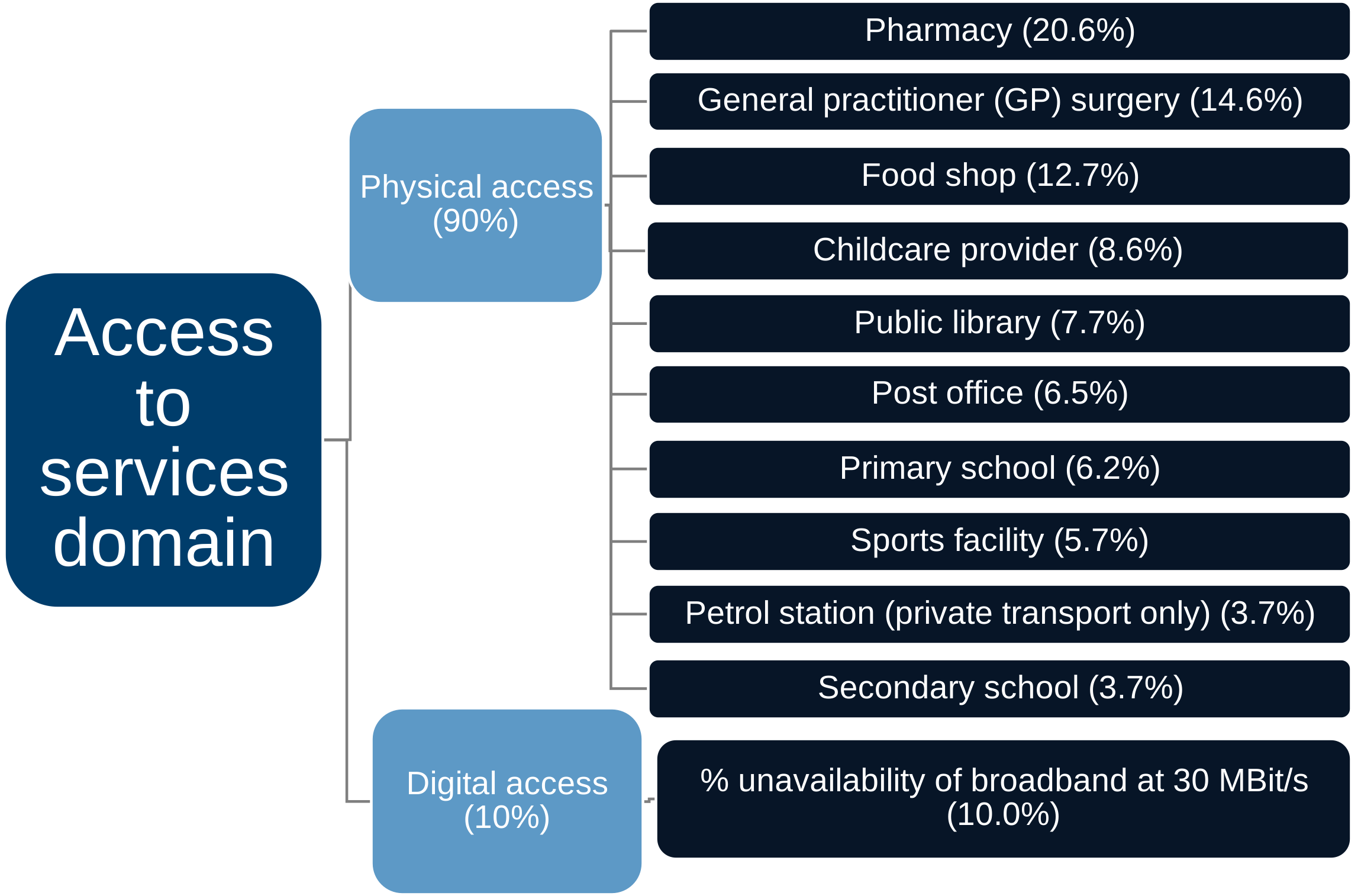
Description of figure 6.1: diagram showing that the access to services domain has 20 indicators grouped into 2 sub-domains. Each service in the physical access sub-domain has a public transport indicator (excluding petrol stations) and a private transport indicator.
The physical access sub-domain contains 19 indicators measuring the average travel time to 1 of 10 services using a mode of transport (public or private). The services included are (in descending order of indicator weight):
- pharmacy
- General Practitioner (GP) surgery
- food shop
- childcare provider
- public library
- post office
- primary school
- sports facility
- petrol station (private transport only)
- secondary school
The indicators measure an average return travel time (in minutes) from residential dwellings to the nearest service by the given mode of transport. Public transport includes travel by public bus, public train, foot and national coach. Private transport is travel by private car.
The digital access sub-domain measures the percentage of homes and small businesses unable to receive fixed line broadband at a download speed of at least 30MB/s (superfast broadband).
Public and private travel time indicators for each service are combined in weighted sums using Census 2021 data on car ownership and the number of adults ages 17 or over. Factor analysis is then applied to these combined scores to calculate the weights displayed in figure 6.1, which contributes 90% of the overall domain score. The digital access subdomain contributes the remaining 10% of the domain score.
Childcare provider has been introduced to the list of services included in the physical access sub-domain for WIMD 2025, with two corresponding new indicators. Childcare providers are those registered with Care Inspectorate Wales (CIW), including day and sessional care, crèches, out of school care and childminders.
Most datasets for these indicators relate to a 2025 time period. Full details on indicators and the construction of the domain is available in the WIMD 2025 technical report. The report includes details of the travel time indicator methodology, which has changed since WIMD 2019.
Main results
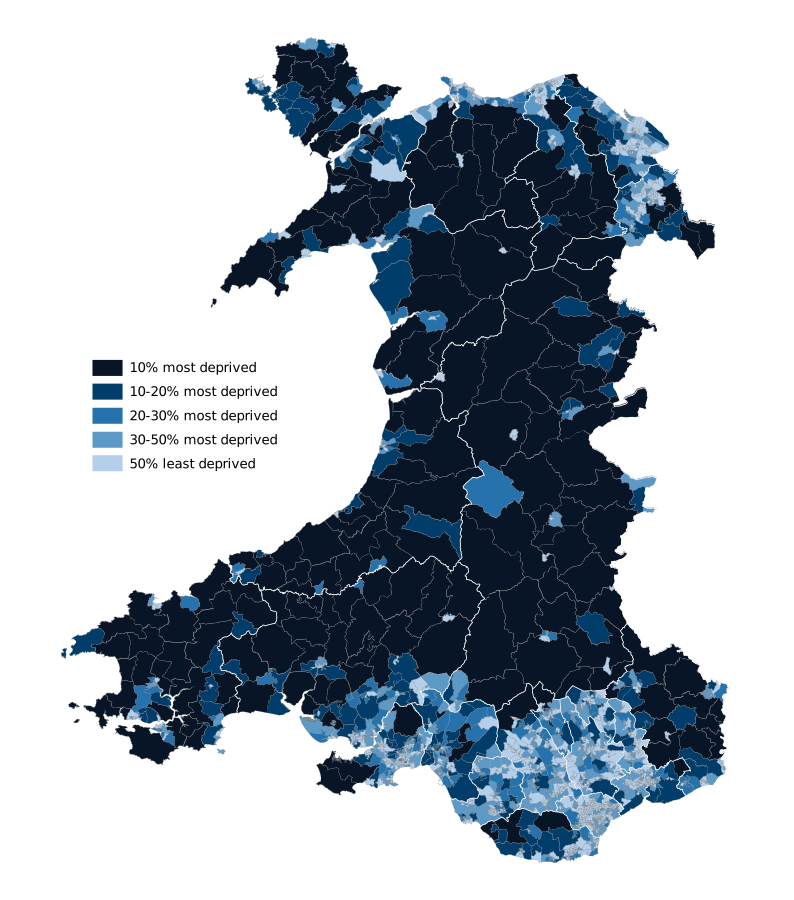
Figure 6.2: map of LSOAs shaded by access to services deprivation group, WIMD 2025
© Crown copyright 2025. Cartographics. Welsh Government.
Description of figure 6.2: the map shows that in the WIMD 2025 access to services domain high deprivation was widespread across rural areas.
- The local authority with the highest proportion of areas in the 10% most deprived was Powys (at 49%) followed by Ceredigion (at 44%) and Pembrokeshire (at 35%).
- Blaenau Gwent, Bridgend, Caerphilly, Cardiff and Torfaen had no areas in the 10% most deprived group.
- The overall patterns of access to services deprivation in WIMD 2025 are broadly like those for WIMD 2019.
- For the access to services domain, the most deprived area in Wales was Llanegwad 2, a rural area in Carmarthenshire, which was ranked fifth most deprived in WIMD 2019.
- Of the 10 most deprived areas in Wales in 2025, 4 were also in the top 10 most deprived in 2019.
Comparison between WIMD 2019 and WIMD 2025
There is one new indicator in this domain, and some of the travel time methodology and data sources have changed. The access to services domain is therefore not directly comparable with that for WIMD 2019. For full information on how the domain has changed since 2019 see the technical report.
| WIMD deprivation group | 10% most deprived 2025 | 10% to 20% most deprived 2025 | 20% to 30% most deprived 2025 | 30% to 50% most deprived 2025 | 50% least deprived 2025 |
|---|---|---|---|---|---|
| 10% most deprived 2019 | 87% | 12% | 1% | 1% | 0% |
| 10% to 20% most deprived 2019 | 12% | 45% | 20% | 15% | 8% |
| 20% to 30% most deprived 2019 | 1% | 20% | 24% | 37% | 19% |
| 30% to 50% most deprived 2019 | 1% | 8% | 16% | 30% | 45% |
| 50% least deprived 2019 | 0% | 1% | 4% | 17% | 77% |
The table shows the percentage of small areas (LSOAs) in each deprivation group for WIMD 2019 that have stayed or moved group in WIMD 2025. For an explanation of how we have treated the minority of areas that changed boundary, please see the guidance report.
The diagonal (top left to bottom right) shows the percentage of areas which have remained in the same deprivation group. Above the diagonal are percentages of areas which have moved from a more to a less deprived group. Below the diagonal are the percentages of areas which have moved from a less to a more deprived group.
The table shows that:
- most LSOAs in the most deprived and least deprived deprivation groups remained in the same group between 2019 and 2025
- of the 10% most deprived areas in 2019, 87% remained in that group in 2025
- of the 50% least deprived areas in 2019, 77% remained in that group in 2025
For access to services, 30 areas moved by more than 2 deprivation groups. Below we focus on those that have moved in or out of the most deprived group:
Relatively more deprived
Two areas moved from the 30% to 50% most deprived group in 2019 to the most deprived 10% in 2025, these were Resolven 1 in Neath Port Talbot and Borth in Ceredigion.
Relatively less deprived
One area moved from the 10% most deprived group in 2019 to the 30% to 50% most deprived group in 2025, this was Llandrindod South in Powys.
Another 16 areas moved from the 10% to 20% most deprived to the 50% least deprived group; the biggest movers in this group were Rhyl West 2 in Denbighshire and Coity Higher 3 in Bridgend (an LSOA that has changed boundary).
Local authority analysis
Figure 6.3: box plot of WIMD 2025 access to services domain ranks, by local authority
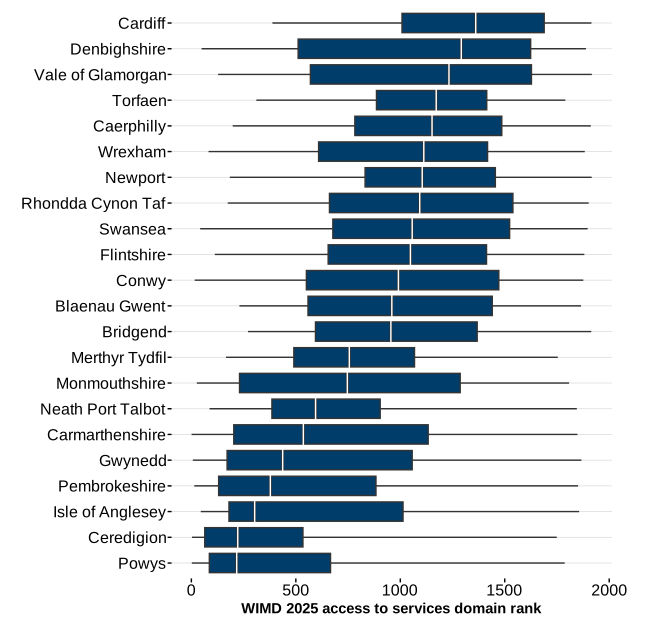
Description of figure 6.3: the chart shows the spread of access to services domain ranks for each local authority. The blue boxes contain half the total number of small areas (LSOAs) in each local authority, centred on the median (middle) rank for each local authority and the ‘whiskers’ show the full range of ranks within the local authority. Deprivation increases with decreasing rank (that is, towards the left-hand side of the plot).
The spread of access to services domain ranks is greatest in Denbighshire, Vale of Glamorgan and Monmouthshire and narrowest in Ceredigion followed by Neath Port Talbot and Torfaen. Cardiff has the highest median rank (less deprived) and Powys and Ceredigion have the lowest (more deprived).
Concentrations of access to services deprived areas, by local authority
One way of considering WIMD data at the local authority level is to look at the proportion of areas within the local authority that are in the most deprived 10% (or 20% etc) of all areas. This method can be seen as identifying the concentration of the most deprived areas in a local authority, rather than an average level of deprivation.
The WIMD 2025 access to services domain results show that:
- the local authority with the highest proportion of areas in the most deprived 10% was Powys (49% or 39 areas) followed by Ceredigion (44% or 20 areas)
- Blaenau Gwent, Bridgend, Caerphilly, Cardiff and Torfaen had no areas in the 10% most deprived
- Ceredigion and Powys had the highest percentage of areas in the most deprived 50%, at 84% and 82% respectively
- Cardiff had the lowest percentage of areas in the 50% most deprived (22%)
Concentrations of WIMD 2025 access to services deprived areas, by local authority on StatsWales.
Other relevant sources
National Survey for Wales
The National Survey for Wales includes questions about whether people are satisfied with their ability to access the services and facilities they need.
Ofcom
Alongside fixed provider coverage data, Ofcom publish data on fixed provider performance and mobile coverage at a variety of geographies in their connected nations report.
Office for National Statistics (ONS)
The ONS publish interactive analyses of access to local amenities in England and Wales, including post offices, cashpoints and parks, as well as travel time estimates to railway stations and libraries.