We worked with the Disability Rights Taskforce to conduct research into options for a National Centre for Independent Living and how it could operate. We wanted to test how we co-produce research to support disabled people.

First published: 11 June 2025
Last updated: 11 June 2025

Acknowledgements

This was a collaborative social research project. A team of co-producers delivered the research including Chairs of the Disability Rights Taskforce working groups, Welsh Government social researchers and Welsh Government policy officers. The co-production team combined lived experience of being disabled by barriers with expertise in disability rights and social research (both academic and government).

This social research project would not have been possible without the dedicated time and extensive and insightful contributions made by the co-producers at each stage of the research, from project scoping to publication of this report.

Welsh Government would like to pay particular thanks to co-production team members from the Disability Rights Taskforce for sharing their personal and organisational assets, including lived experience of being disabled by barriers, their passion and ambition to address inequalities, their communications and interpersonal skills, and for reaching into their own expertise and understanding of the current and historical landscape for disabled people, and tapping into their own networks.

Disability Rights Taskforce members included:

  • Rhian Davies, Chair of the Independent Living: Social Care Working Group of the Welsh Government Disability Rights Taskforce
  • Damian Joseph Bridgeman - disability activist, social entrepreneur, Councillor for Saint Athan Community, and Chair of the Housing Working Group of the Welsh Government Disability Rights Taskforce
  • Professor Debbie Foster, Cardiff Business School, Cardiff University. Chair of the Employment & Income Working Group and Co-Chair of the Welsh Government Disability Rights Taskforce
  • Dr Natasha Hirst, Chair of the Access to Services Working Group of the Welsh Government Disability Rights Taskforce
  • Willow C Holloway, Chair of the Independent Living: Health Working Group of the Welsh Government Disability Rights Taskforce
  • Joe Powell, Chief Executive Officer, All Wales People First and Chair of the Access to Justice Working Group of the Welsh Government Disability Rights Taskforce

Executive summary

Background and introduction

Research rationale

In September 2023, the Chairs of the Disability Rights Taskforce (DRTF) Working Groups agreed to collaborate with the Disability Disparity Evidence Unit (DDEU) with the aim of co-producing Government Social Research (GSR). The DRTF had previously identified a series of recommendations, one of which related to Independent Living.

The working group members recommended establishing a National Centre for Independent Living (NCFIL), to be run and controlled by disabled people. It would be aimed at: 

  • strengthening knowledge and understanding about the right to Independent Living
  • increasing knowledge and skills regarding good practice in supporting and achieving Independent Living
  • devising strategies to broadening access and take-up of Direct Payments including developing the market for Personal Assistants
  • maximising the role of local Centres for Independent Living through provision of support and access to resources

This research aimed to further explore this DRTF Working Group recommendation with a range of stakeholders and use a co-production approach.

Independent Living in Wales

In 2019, the Welsh Government published Action on Disability: The Right to Independent Living, which set out its actions to address the main issues faced by disabled people across a range of policy areas.

It also made clear Welsh Government’s support for the UN Convention on the Rights of Disabled People (UNCRDP), making a commitment to consider how the convention could be effectively embedded in Welsh law. 

Throughout this report we refer to the convention as the ‘Convention on the Rights of Disabled People’ or UNCRDP rather than the given name, ‘Convention on the Rights of People with Disabilities’. This is to reflect our commitment to the Social Model of Disability.

The Convention was adopted by the UN General Assembly in 2006 and ratified by the UK in 2009. It acts as an agreement by governments to recognise and protect the rights of disabled people. This includes those rights relating to Independent Living which are summarised by the Equality and Human Rights Commission as:

  • disabled people have an equal right to live in and take part in the community
  • disabled people have the right to the same choice and control as non-disabled people
  • governments should do everything they can to ensure disabled people enjoy these rights

Data on wellbeing outcomes for disabled people in Wales

As of the 2021 Census, disabled people, as defined as those who have a physical or mental health condition or illness lasting or expected to last 12 months or more, made up 21% of the population. This is 670,000 people in Wales. Approximately 48,500 adults in Wales had a care and support plan as of March 2024 according to Welsh Government Social Services activity data. 

In 2002 the Welsh Government adopted the social model of disability. Rather than defining people as disabled by their impairment (i.e. the medical model of disability), people with impairments or long-term health conditions are considered to be disabled by physical, attitudinal and organisational barriers created by society. Many of the data sources in this section use medical model definitions of disability in line with the Equality Act 2010 definition. In the Equality Act a “disability” means a physical or a mental condition which has a substantial and long-term impact on your ability to do normal day to day activities. However, we have used social model language in this section where possible.

The Wellbeing of Wales 2024 data suggests that disabled people experience worse outcomes than non-disabled people across a number of areas related to Independent Living, including employment, income, and well-being.

According to the National Survey for Wales 2022-23, one in four disabled people or people with a limiting long-standing illness (25%) lived in a household in material deprivation. This is compared to 11% of non-disabled people. 22% of disabled people or people with a limiting long-standing illness said they feel lonely most or all of the time, compared to 7% of non-disabled people. Disabled people also had lower life satisfaction than non-disabled people.

The employment rate for disabled people aged 16 to 64 in Wales was 50.9% in the year ending September 2024. This is compared to a rate of 81.5% for non-disabled people. The employment rate gap was 30.6 percentage points. In 2023, for those in employment, disabled people in Wales earned, on average, £1.75 (12.2%) less per hour than non-disabled people.

Co-production approach

This research was a prototype for co-producing GSR. It set out to test if it is possible to co-produce this type of research, how much can be co-produced and to show how it could be done in the future. 

The co-production team combined the lived experience of disabled people with a broad knowledge of disability rights and social research. The team included DRTF Working Group Chairs, and Welsh Government research and policy officials.

The team’s goal was to learn how to produce research together. This would improve the quality and use of evidence which informs decisions affecting disabled people.

Methodology

Based on the DRTF Working Group’s recommendation to establish an NCFIL, the co-production team developed an NCFIL Vision document, which included:

  • the suggested overall scope for an NCFIL
  • core elements of what ‘good’ Independent Living looks like
  • suggested organisations and activities which could help to enable and support Independent Living
  • the types of activities that an NCFIL could do
  • suggested foundational principles for an NCFIL
  • practical questions to consider for designing an NCFIL

The team held a deliberative workshop in October 2024 to explore ideas from the co-production team’s vision about establishing an NCFIL. The co-production team recognised that a wide range of stakeholders need to deliver the right services for Independent Living to work well. Participants were invited to take part in an extended discussion, with background information given, to support discussions.  Participants were chosen to represent different experiences and knowledge about social care issues that affect disabled people. Participants included:

  • disabled people
  • representatives from a range of different impairment groups (IGs) and Disabled People’s Organisations (DPOs)
  • trade unions
  • local government and other public sector organisations
  • the social care sector
  • individuals working in academia or with other related expertise
  • Welsh Government officials

A DPO is ‘an organisation led, directed, and governed by disabled people, with a commitment to the social model of disability and the promotion of human rights for disabled individuals’.

An IG can broadly be defined as ‘an organisation whose purpose is to further the interests of people with a specific impairment, which is not run and governed exclusively, or at all, by disabled people’. 

In total, 30 participants from 19 different organisations contributed to the research. 

Members of the co-production team jointly chaired and delivered the workshop. Welsh Government researchers observed the discussions and took notes of discussion themes and points of agreement. 

The workshop was run as an online meeting to make the research accessible. Participants could contribute their views in alternative ways if they preferred. 

An agenda, details of the discussion prompts, instructions for joining the virtual discussion and background information on Independent Living in Wales were shared ahead of the workshop. 

The data collected are shown in this report as a summary of the participants’ views on the co-production team’s vision. This includes opinions on what Independent Living should mean in practical terms, how an NCFIL could help to support Independent Living for disabled people, and options for delivery models. 

This research did not aim to fully evaluate the current approach to Independent Living in Wales. The participant sample was not fully representative of all types of stakeholders involved in social care and Independent Living. 

There are some limitations associated with this method. It is important to make sure information given to participants is balanced and not biased towards one viewpoint. It can also result in bias as different groups of stakeholders may be more or less willing to attend a workshop than others.

Research findings

What Independent Living means in practice

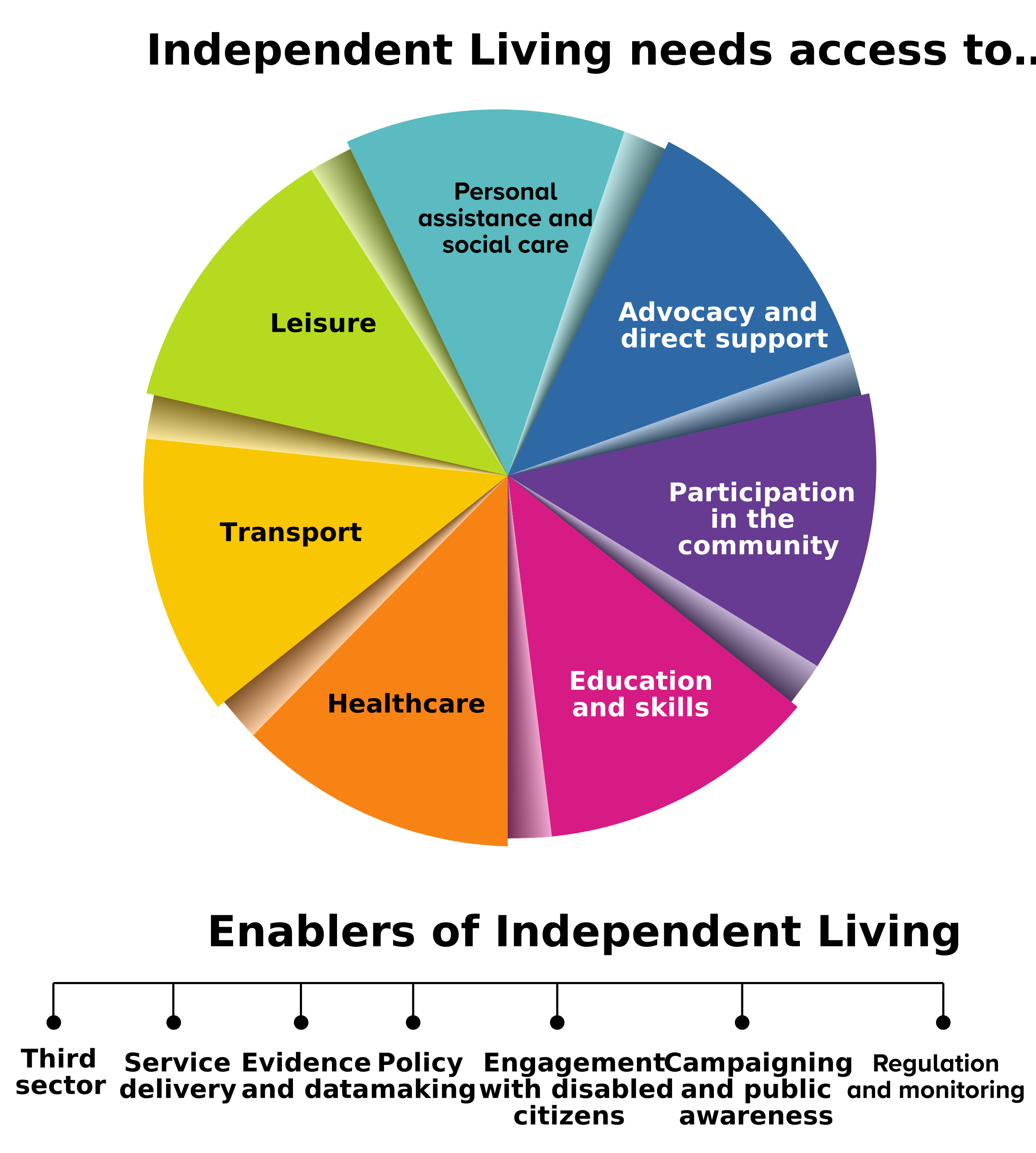
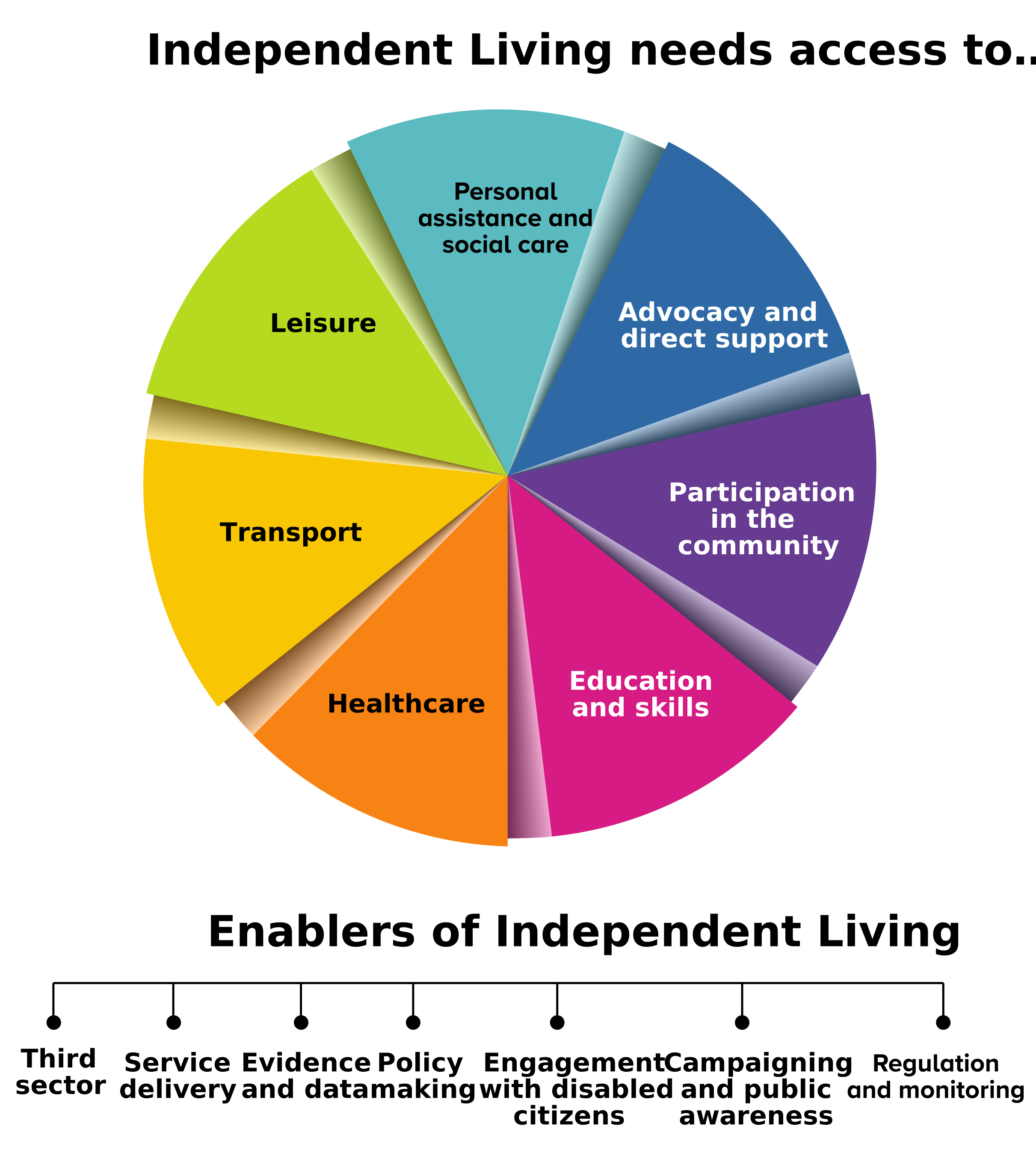
Participants deliberated on the co-production team’s vision of what excellence for Independent Living looked like. The following elements were identified by the co-production team within their vision for a NCFIL as being necessary for Independent Living. 

  • Personal assistance and social care
  • Advocacy and direct support
  • Participation in the community
  • Education and skills
  • Healthcare
  • Transport
  • Leisure

Participants were shown the following types of either organisation or activity which the co-production team had identified within their vision as helping to enable and support Independent Living. 

  • Third sector
  • Service delivery
  • Evidence and data
  • Policy making
  • Engagement with disabled citizens and co-production
  • Campaigning and public awareness
  • Regulation and monitoring

The diagram below includes the elements and enablers deemed as needed by the co-production team.

Figure 1: Elements of Independent Living and enablers taken from the co-production team’s Vision

Image
Circle with segments to show the different elements that Independent Living needs access to, with the various Enablers of Independent Living which support this, underneath

Participants agreed that an important first step would be to agree to a definition of ‘Independent Living’ for an NCFIL and to share this with stakeholders. It was proposed that it should include the empowerment of disabled people to live a fulfilling life ‘on the same basis as their non-disabled peers’. Participants were aware of many variations in how different people interpreted the term. It was thought that an agreed definition would help people needing support to understand their rights. This could also raise awareness about how structures in society and practical services or processes need to work together to support disabled people.

It was felt that independent Living should mean appropriate social care but should also underpin other aspects including quality of life and personal fulfilment, and enable full engagement with the community. It was felt that it should not mean ‘doing things by yourself’ or living alone.

When considering excellence for Independent Living, it was widely agreed that disabled people need to be in positions to lead and influence decisions nationally. A ‘golden thread’ throughout discussions was considering how to ensure lived experience is taken into account when enabling Independent Living in Wales. Many participants spoke about the negative mental health impacts from feeling out of control of their own lives or living with worry about potential policy changes which could impact the support they receive. 

Many participants perceived a gap between what should be available to support Independent Living and what happens in practice. This was felt to impact policy and service design as well as delivery. 

Participants provided examples of organisations not complying with the Equality Act 2010 (Government Equalities Office and Equality and Human Rights Commission) including failure to properly assess the impacts of decisions on disabled people. Others highlighted the lack of guidance for those providing services under the Social Services and Well-being (Wales) Act 2014 (UK legislation) (SSWBA). They felt this made it difficult for organisations to understand how to adhere to the UNCRDP which sets out the overarching rights of disabled people.

The most common suggestion to enable Independent Living was having person-centred support with viable service options available and the ability to choose. This included good quality personal care, which participants felt that when working well positively impacts other areas of life such as work and family relationships. For example, it could enable parents to focus on parenting or provide the consistent and reliable support needed so that individuals can work or study. Participants also noted that other services need to work well to support wider aspects of life such as health, work, education, family and leisure. 

Many felt that a vital element to enable Independent Living was an effective third sector, because it provides services direct to citizens and enables them to engage with decision-makers. 

Participants considered the services that were available. Examples of limitations to services were highlighted. These included a lack of choices, or access to the right information in accessible formats that would enable choices to be made. It was noted that these examples go against the SSWBA principle of ‘Voice and Control’ of ‘putting the individual and their needs at the centre of their care’. 

Negative experiences shared by participants showed that problems with collaboration between services can affect support for disabled people. Some described services as ‘fragmented’, and examples of individuals needing to access several different providers for support with a single issue were shared. 

There were also experiences shared of different support services available in different parts of Wales. Some gave examples of variations in personal care services accessed through local authorities in terms of support offered and barriers to accessing Direct Payments (Social Care Wales) to pay for personal care.

What activities an NCFIL could do to improve Independent Living for disabled people in Wales

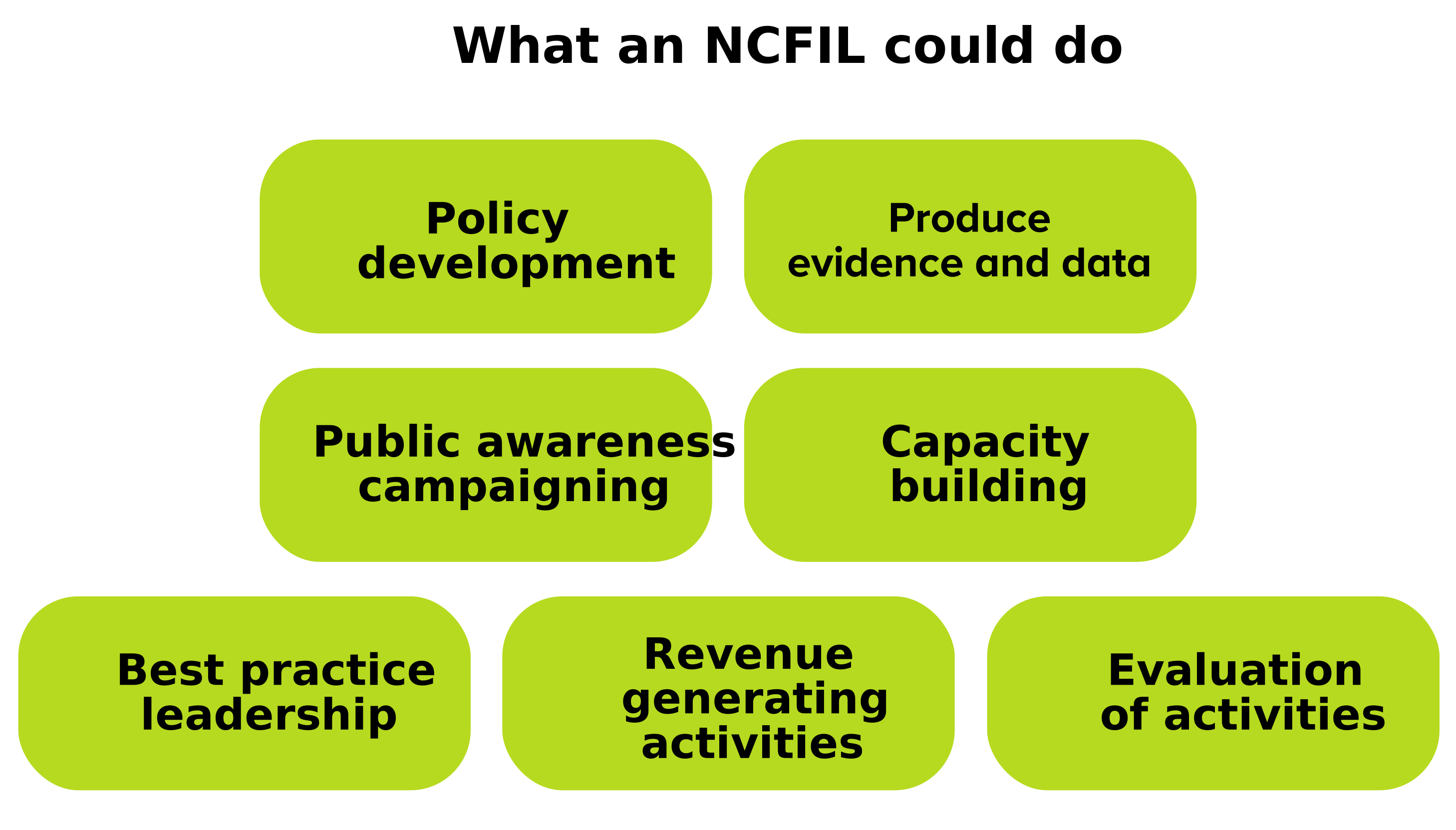
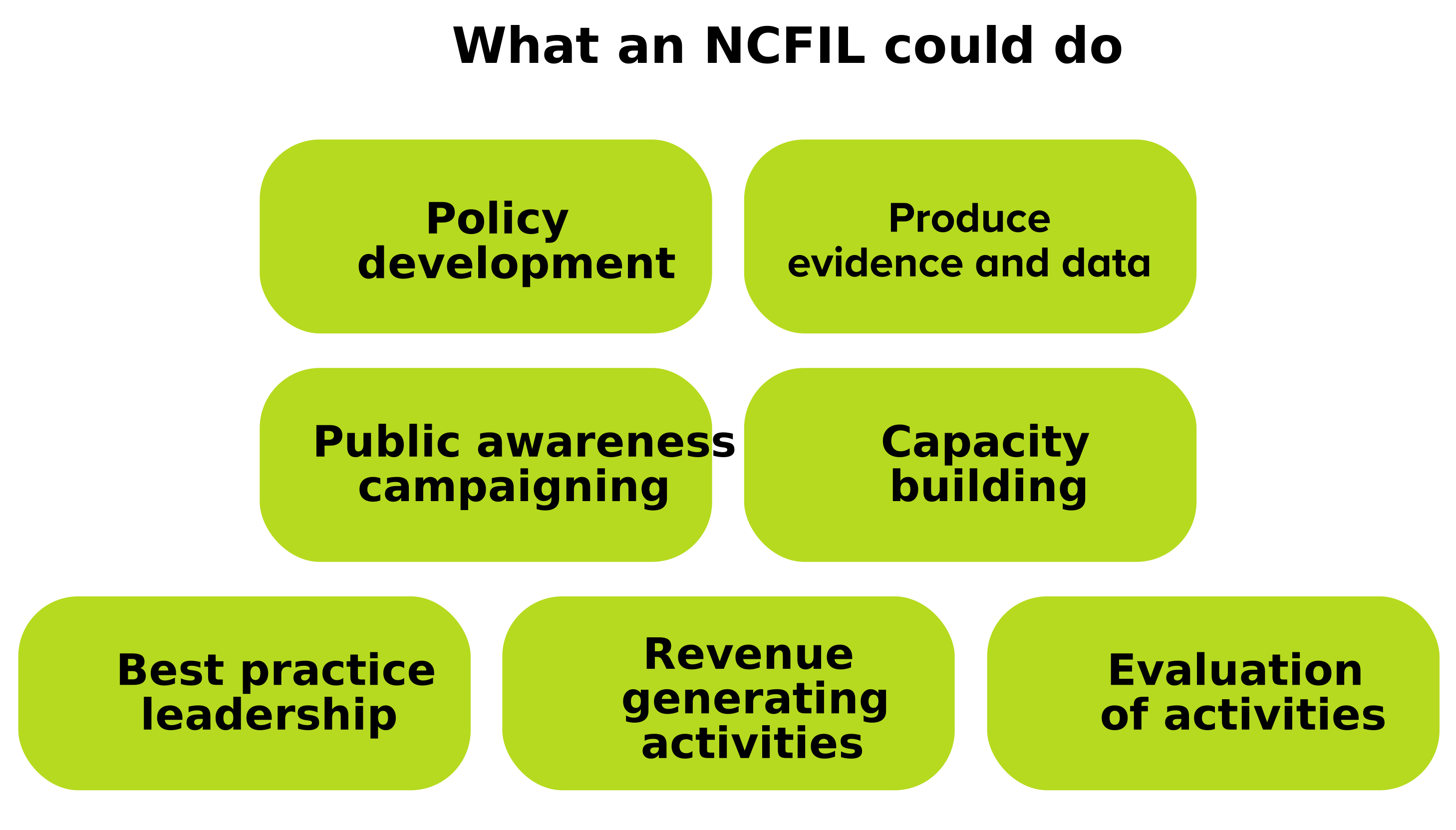
Participants felt that an NCFIL is needed to bring together stakeholders to enable Independent Living in a range of practical ways. Participants strongly agreed that the activities suggested by the co-production team in the NCFIL Vision (listed below) would help to enable Independent Living. 

  • Policy development: advocate for disabled people’s involvement in policy making in Wales to support Independent Living.
  • Produce evidence and data: on Independent Living and disseminate findings to inform policy.
  • Public awareness: campaigning, educational activity to change societal attitudes.
  • Capacity Building and Networks: support local Centres for Independent Living (CILs) and other organisations supporting disabled people.
  • Best practice leadership: develop guidance and best practice, training and networking opportunities to support organisations.
  • Potential for revenue-generating activities: including consultancy services, training and product development.
  • Evaluation to monitor the Centre’s activities against agreed success criteria.

Figure 2: Suggested activities for a National Centre for Independent Living taken from the co-production team’s Vision

Image
List of possible activities which a National Centre for Independent Living could do to support disabled people.
Leadership and representation activities

Leadership and representation were deemed to be important to make an NCFIL effective in supporting Independent Living. In particular, having an NCFIL led by disabled people and with disabled people represented at all levels within the organisation. It was thought this would improve the quality of decision making and would provide a powerful example of disabled people in leadership positions. It would demonstrate to other organisations and to the public how to make a workplace accessible. 

Participants said there was a need to improve how disabled people’s lived experience is included when central and local government make decisions and policies about social care and other factors which support Independent Living. It was felt that an NCFIL could facilitate meaningful citizen engagement.

Participants suggested that training should be available to encourage citizens to act as representatives. It was proposed that coaching could aim to improve confidence, public speaking skills, and provide citizens with the tools to feel able to represent themselves with a variety of audiences. Participants thought this could result in a greater diversity of voices involved in national conversations and avoid over-burdening a few individuals. It was deemed that fair remuneration (payment) should be given to individuals who act as representatives.

Communications and policy activities

Many saw a function of an NCFIL would be presenting a strong and unified voice to drive change and influence policy locally and nationally. It was felt that an NCFIL should represent disabled people’s interests in policy and decision making which impacts on Independent Living. It was suggested that it could take an overview of how different policy areas should work together to support disabled people, and communicate this to stakeholders. It could also provide lived experience perspectives. It was considered that messages being voiced by disabled people should also help the public to better understand the right to Independent Living. 

Participants felt that an NCFIL could build networks and share expertise, which would help to reduce regional variations in services and support. Suggestions for how this might be achieved included development of a Wales-wide strategy for Direct Payments, and facilitating better collaboration across organisations.

Evidence and data

Participants suggested that an NCFIL could produce evidence and data to support better decision-making, which takes into account lived experience. 

Some felt that there is insufficient data currently available to evaluate progress on tackling inequalities in Wales, and that an NCFIL could look at ways to improve the evidence to show whether policies were working effectively. Some noted a gap in accountability for organisations delivering outcomes related to Independent Living. It was felt that data reported generally focuses on outputs such as numbers of individuals supported, and this does not give a full picture of the impacts on disabled people.  An NCFIL could also produce evidence that helps to understand what future priorities for supporting disabled people should be. 

Some suggested that an NCFIL could support the establishment of an academic centre focusing on disability studies in Wales.

Supporting stakeholders

Participants felt that it was very important to support organisations that provide services to disabled people and advocate for them. Effective collaboration was deemed necessary for Independent Living. It was thought that supporting better collaboration would strengthen the link from local groups engaging with individuals, to national decision making.

Participants thought that an NCFIL could provide support to and bring together stakeholders who already deliver services. They felt this would need to complement what is already working well and should not duplicate what is already in place. Stakeholders mentioned were CILs, DPOs and Disability Wales, and local authority officials who support accessibility. 

DPOs were seen to play a vital role in delivering services directly to citizens and were seen to be well positioned to understand issues at community level. It was noted by many that third sector organisations often have difficulties in securing regular funding and so are less able to deliver longer term, consistent services. Participants felt that support should be provided to improve resilience of DPOs. It was suggested that this could include training, professional services support, and peer networks. Best practice sharing was deemed to be particularly valuable to smaller organisations. It was thought this could include guidance on working with volunteers, accessible working, and communicating to others what Independent Living means in practice. 

Participants suggested that best practice could be shared by established regional networks such as Regional Partnership Boards and the newly established National Office for Care and Support.

Volunteers were seen to play an important role within third sector organisations. However, participants noted that many such organisations rely largely on volunteers, with only a few paid employees to deliver services. This was deemed to present a sustainability risk, and participants felt that services that support disabled people should be adequately funded without the need to rely on unpaid labour.

Revenue generating activities

Participants identified gaps in current services which an NCFIL could help to fill, including providing training for organisations and individuals, accessibility awareness sessions, or training to conduct accessibility audits.

Practical considerations for designing an NCFIL

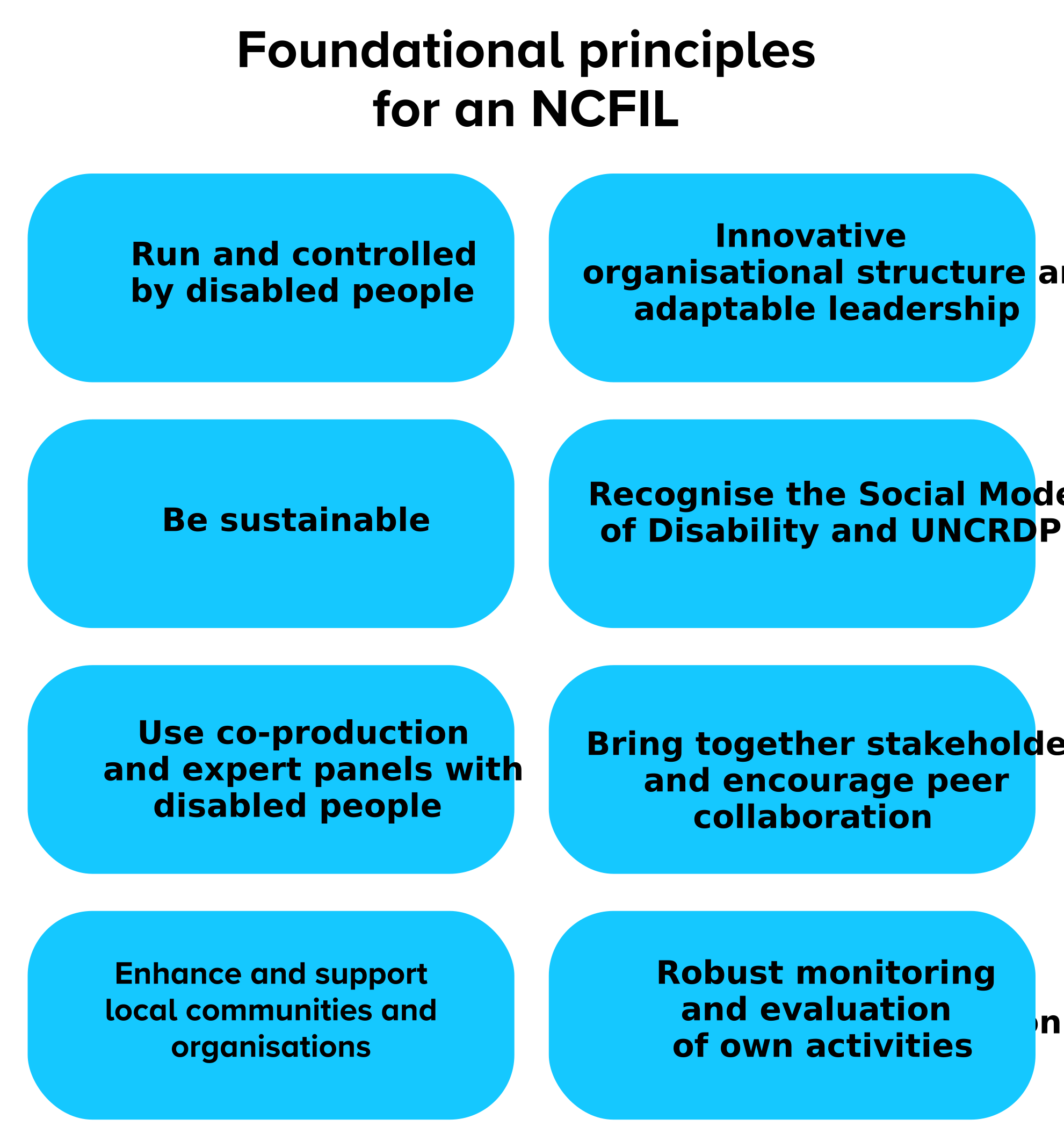
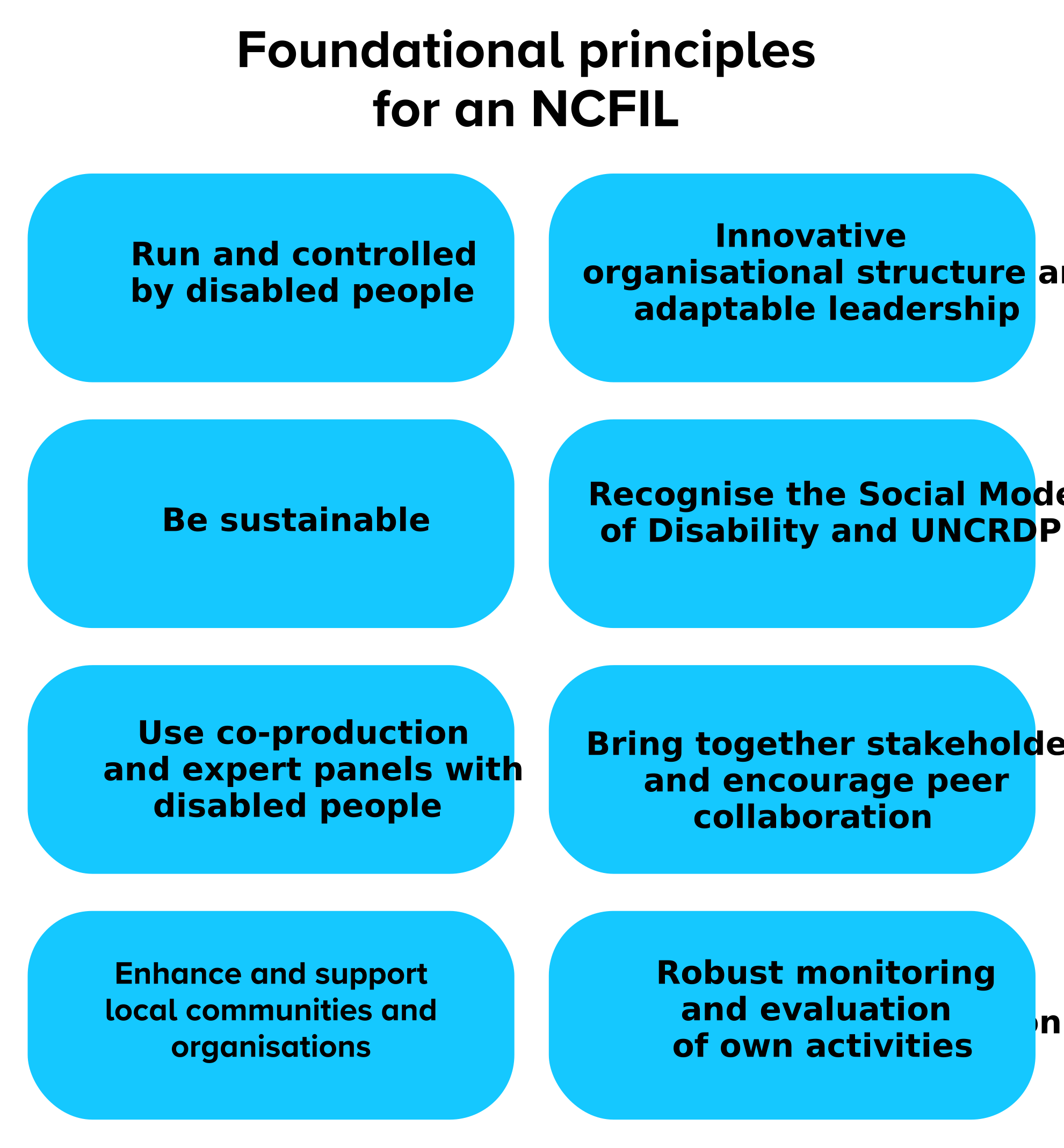
The co-production team proposed the following principles which, if built into the design of an NCFIL would help it to effectively deliver the proposed activities. Discussions explored some practical considerations and options for different organisational models below, with the principles in mind. 

The co-production team’s vision suggested that an NCFIL should:

  • be run and controlled by disabled people
  • use an innovative organisational structure & adaptable leadership
  • be sustainable
  • recognise the Social Model of Disability & align to the UNCRDP
  • use co-production and expert panels with disabled people active at all levels
  • bring together stakeholders to encourage peer support and collaboration
  • enhance and support local communities and organisations
  • include robust monitoring and evaluation of its own activities
Figure 3: Foundational principles for a National Centre for Independent Living taken from the co-production team’s Vision
Image
List of suggested foundational principles for designing a National Centre for Independent Living.

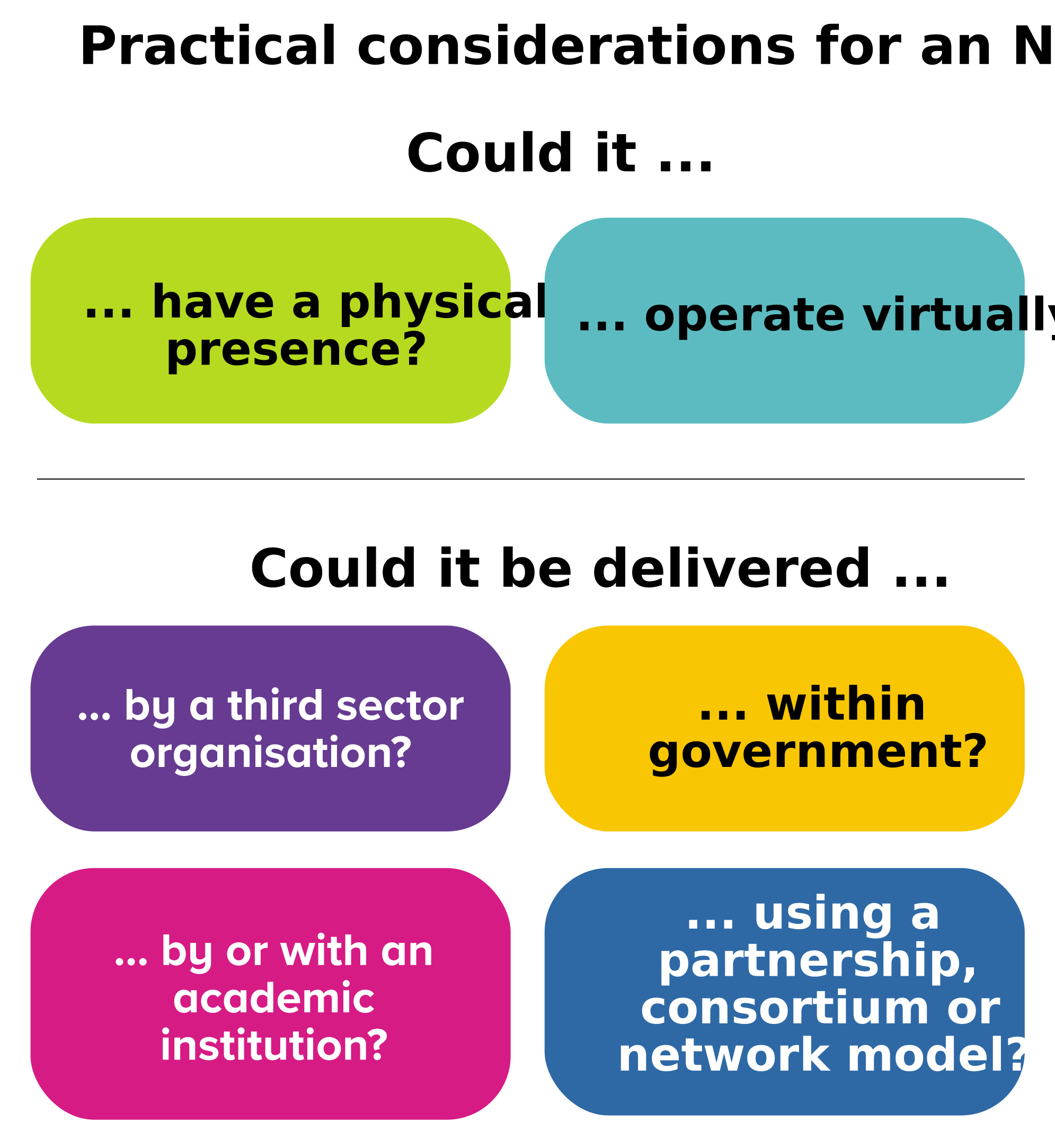
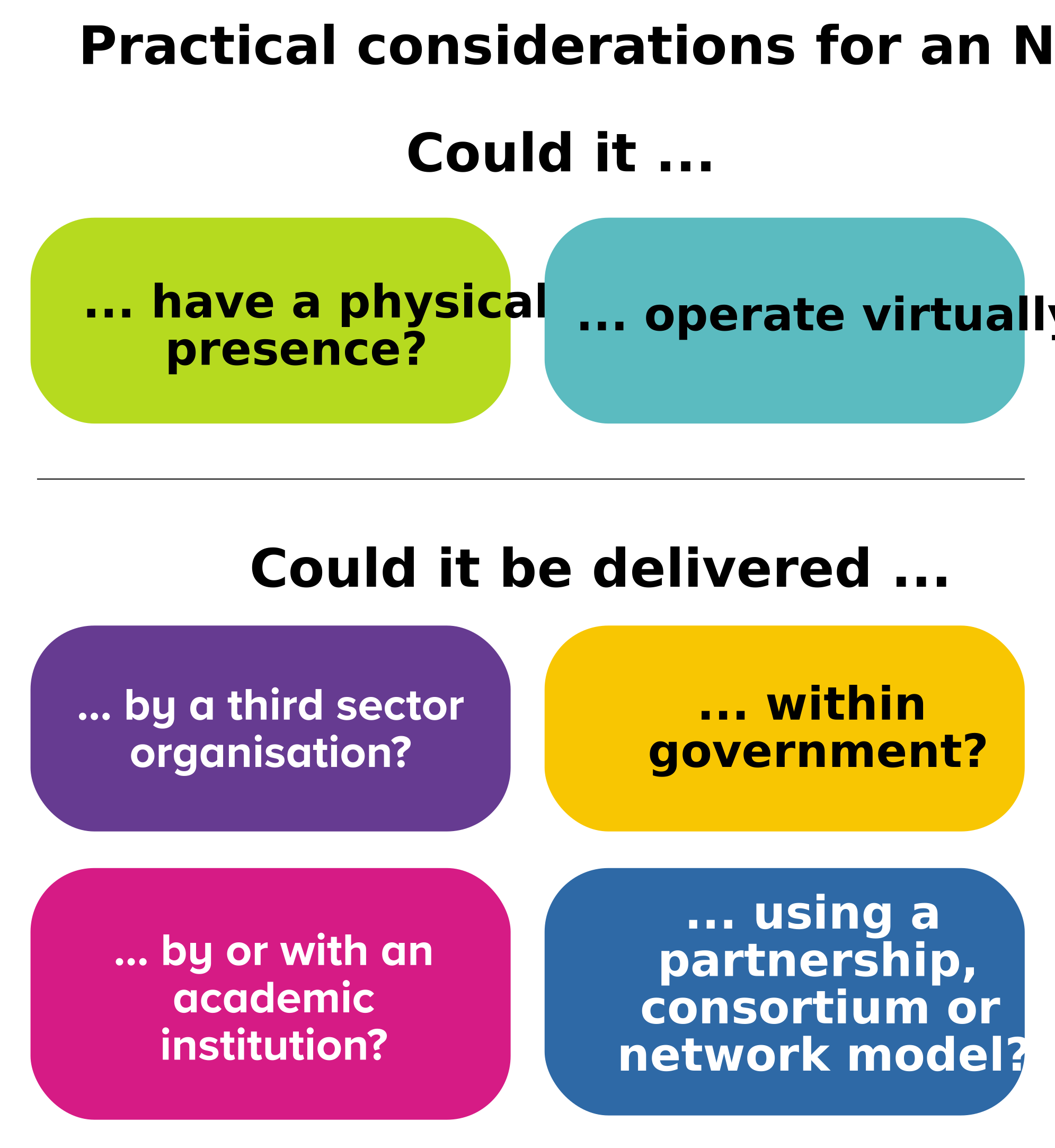
The co-production team identified the following practical considerations for participants to deliberate.

  • Could it have a physical presence?
  • Could it operate virtually?
  • Could it be delivered by a third sector organisation?
  • Could it be situated within government?
  • Could it be delivered by or in partnership with an academic institution?
  • Could it use a partnership, consortium, or network model?
Figure 4: Practical considerations for designing a National Centre for Independent Living taken from the co-production team’s Vision
Image
List of practical considerations for a National Centre for Independent Living including whether it could be physical or virtual, and what kind of organisation could deliver it.
The importance of lived experience

One of the most important considerations raised was the need to have lived experience at the heart of decision-making at all levels of an NCFIL. It was suggested this should include leadership within the organisation and include citizens’ voices through co-production. It should also provide accessible working environments and fair payment for employees and volunteers. 

It was deemed that the establishment of an NCFIL within the third sector would work well to support inclusion of lived experience within leadership roles. Participants felt this would also enable effective engagement with disabled people. It was noted that many DPOs are run by disabled people.

Complementing existing stakeholder organisations

When exploring strengths and weaknesses of different types of organisations, all groups discussed models involving more than one organisation working together to deliver an NCFIL. Partnerships, hub and spoke models and networks were all considered as good options for delivering the wide range of proposed activities and areas impacting Independent Living. 

Participants felt an NCFIL should be designed in a way that would support effective engagement with stakeholder organisations and citizens.

Some participants suggested that an existing organisation could be commissioned to set up an NCFIL. Others suggested that creating local authority access and advocacy posts could support some of the identified activities.

Accessibility

Accessibility for stakeholders was considered essential for an NCFIL to function well and to demonstrate a gold standard for accessible employment and stakeholder engagement. It was agreed that an NCFIL should offer a range of accessible ways for people to access its services including digital and non-digital. 

It was deemed that the activities carried out by an NCFIL should be spread across Wales. Participants felt strongly that it was important to consider the varying access needs of disabled people living in different regions and different types of areas, for example cities, towns, and rural areas. 

It was suggested that there could be risks around having an NCFIL in a single or main physical place. Some felt having it in Southeast Wales could make regional inequalities worse and alienate stakeholders in other regions. 

A few had concerns that the building could become the focus instead of the activities of an NCFIL. Nevertheless, maintaining an in-person presence across Wales was deemed to be essential. Ideas to support regional engagement included working with networks of local third sector organisations or universities, having local or regional branches of an NCFIL, running in-person events across Wales, and working with Regional Partnership Boards.

Funding, strategy, and governance

Many participants thought an NCFIL should receive funding to deliver the main and most important activities. Others felt that generating independent sources of income would be more sustainable. Everyone agreed that sufficient funding to deliver core activities without reliance on volunteers would be needed. 

It was thought that a benefit of situating an NCFIL within government would provide better access to funding, and some thought that an academic institution would also be well-placed to access grants to deliver activities. Whilst many advantages of establishing an NCFIL within the third sector were identified by participants, it was deemed that issues around funding, reliance on volunteers, as well as skills and capacity posed risks. It was suggested that a joint model involving other delivery partners could mitigate these risks. 

It was felt an NCFIL would need to have control over its strategic direction and to be able to challenge effectively. Participants felt that situating an NCFIL within the academic sector would offer more freedom to set strategy than the other models proposed. Many thought that to have enough independence to have an impartial view, an NCFIL could not be set up within government, but some public sector organisational models were explored. 

Some suggested considering an arms-length body with a government mandate, and others explored an NCFIL’s activities being delivered via local authorities though it was agreed that a national overview was necessary. Alignment to Regional Partnership Board structures was proposed by one group, who explored the idea of a hub and spoke model, linking local and national organisations and potentially involving other sectors such as academia and third sector. 

Participants felt it would be important for an NCFIL to be able to find out what citizens wanted and needed, and to influence decisions that were being made at a national level. It was thought that a third sector model could effectively support this having access to citizens across Wales, through existing networks and local or community groups.

It was also suggested that an NCFIL’s strategy could be aligned to existing frameworks such as The Well-being of Future Generations, or Anti-racist Wales Action Plan: 2022.

Background

Foreword by the Disability Rights Taskforce policy lead

In July 2021, the Locked out: liberating disabled people’s lives and rights in Wales beyond COVID-19 report highlighted the inequalities experienced by disabled people in society. One of the Welsh Government’s responses to the report was to set up the Disability Rights Taskforce (DTRF), a partnership between Welsh Government and disabled people. The DRTF operated on the principle of co-production, with more than 200 Welsh Government policy officials and 350 external stakeholders working together to develop recommendations, aimed at improving outcomes for all disabled people in Wales. These recommendations have been used to inform the outcomes and actions of the Disabled People’s Rights Plan. 

Rationale for the research using a co-production approach

In September 2023, the DRTF agreed to collaborate with the Welsh Government’s Equality, Race and Disability Evidence Units (ERDEU) with the aim of co-producing Government Social Research informed by lived experience. It would test the extent to which GSR can be co-produced, working together to navigate barriers and embrace enablers for change.

The research aimed to test an alternative way of conducting research alongside representatives of disabled people and in line with the social model of disability. A ‘co-producer’ is identified as a member of the cross-sector team who worked together to prototype co-production of a GSR report.

The research aimed to enable delivery of the ERDEU’s mission, “to improve the availability, quality, granularity and accessibility of evidence about individuals with protected and associated characteristics so that we fully understand the level and types of inequalities in Wales.” 

The ambition, as part of contributing to A More Equal Wales, was to enable decision makers to develop better informed policies and drive better outcomes for people.

The research was intended to strengthen the legacy of the DRTF through further exploring the recommendations. Two recommendations were selected by DRTF Chairs for researching. This report focuses on the following recommendation from the Independent Living: Social Care Working Group.

‘Establish a National Centre for Independent Living, run and controlled by disabled people, aimed at: 

  • strengthening knowledge and understanding about the right to Independent Living
  • increasing knowledge and skills regarding good practice in supporting and achieving Independent Living
  • devising strategies to broadening access and take-up of Direct Payments including developing the market for Personal Assistants
  • maximising the role of local Centres for Independent Living through provision of support and access to resources.’

Disabled people’s lived experience: note from the Chair of the Independent Living: Social Care Working Group

The Disability Rights Taskforce (DRTF) Independent Living: Social Care Working Group met 4 times between September 2022 and March 2023. Working Group membership included disabled people with lived experience of using social care services, representation from Disabled People’s Organisations, third sector organisations, public sector bodies, academics, and Welsh Government officials from a range of policy and delivery areas. 

The meetings explored issues faced by disabled people relating to social care and Independent Living. Members discussed a wide range of barriers that disabled people experience around social care including a lack of understanding from health and social care professionals about their needs; disabled citizens’ lacking understanding of their rights regarding access to support; barriers to accessing Direct Payments; problematic attitudes within society; and lack of specialist skills among social care workers. Discussions covered ways to address these barriers, as well as contextual issues such as the Cost-of-Living crisis, the slow recovery in social care provision following the coronavirus (COVID-19) pandemic, and issues with healthcare services. 

The Working Group discussed the importance of taking a human rights approach towards support for disabled people, and looked at the implications of the UK ratification of the UN Convention on the Rights of Disabled People (UNCRDP), in particular Article 19 on the Right to Independent Living. Discussions also raised concerns over a lack of accountability regarding the implementation of statutory duties. It was suggested that guidance was needed on implementing the Social Services and Well-being (Wales) Act requirement to give due regard to the UNCRDP when providing services under the Act. 

Working Group members proposed that establishing a National Centre for Independent Living (NCFIL) in Wales, run and controlled by disabled people could help to embed Independent Living through conducting research and having oversight of regional services. They also recommended that Welsh Government actively recommit to the concept of Independent Living, and promote it across policy areas and service delivery. Members felt this should be used as the gold standard by which to judge what is being achieved. Members also suggested some amendments to the definition of Independent Living which Welsh Government used in the 2019 Action Plan. 

I want to thank all members of the Working Group whose contributions and ideas inspired this research.

Rhian Davies, Chief Executive of Disability Wales

Policy context

The right to Independent Living in Wales

In 2019, the Welsh Government published its framework: Action on Disability: The Right to Independent Living, which set out actions to address the main issues faced by disabled people across a range of policy areas. It highlighted inequalities for disabled people in a number of areas related to Independent Living, including higher levels of poverty and greater social exclusion.

Independent Living is defined within the Framework as:

‘Independent living means all disabled people having the same freedom, dignity, choice and control as other citizens at home, work, in education and in the community. It does not mean having to live by yourself or do everything for yourself. It means rights to practical assistance and support to participate fully in society on the same basis as others as well as to voice choice and control over how this is provided. 

It is about ensuring people of all ages and from all communities are able to maintain independent living, enjoy well-being and access appropriate support when and how they need it.’ 

The Framework intended to help disabled people to fulfil their ambitions and improve their well-being through fair employment, better health outcomes, opportunities for life-long learning, and more joined-up communities. It aimed to remove the barriers to getting a job and to create the right environment for businesses to grow and thrive.

In doing so, it has influenced a number of policies and strategic plans across several Welsh Government policy areas, including: Hate Hurts Wales, the Digital strategy for Wales, the Innovative housing programme and Stronger, fairer, greener Wales: a plan for employability and skills.

More recently, development has started on a cross-government action plan for disabled people. This will set out Welsh Government’s vision for a Wales where disabled people can expect to be included and respected. The plan will demonstrate an ongoing commitment to the protection of disabled people’s rights and to embedding the Social Model of Disability throughout policy in Wales.

The Welsh Government also has responsibilities under the UN Convention on the Rights of Disabled People (UNCRDP). The convention, which was adopted by the UN General Assembly in 2006 and ratified by the UK in 2009, acts as an agreement between governments to protect the rights of disabled people. This includes rights that relate to Independent Living under Article 19, ‘Living independently and being included in the community’, which says:

  • disabled people have an equal right to live in and take part in the community
  • disabled people have the right to the same choice and control as non-disabled people
  • governments should do everything they can to ensure disabled people enjoy these rights

Welsh Government has commissioned the independent Legislative Options Working Group to scope how this convention could be incorporated into Welsh law.

Scope of Independent Living

The right to Independent Living in Wales touches many policy areas and inequalities can be seen in official statistics. 2021 census data show that 21% of people in Wales (670,000 people), were disabled, defined as those who have a physical or mental health condition or illness lasting or expected to last 12 months or more, aligning with the Equality Act (2010), Wales. 

National Survey for Wales data (2022 to 2023) shows that disabled adults[1] or those with a limiting long-standing illness are much more likely to say they feel lonely most or all of the time and more likely to have lower life satisfaction. Disabled people or those with a limiting long-standing illness were more than twice as likely to live in a household in material deprivation than those who are not disabled. 

In 2002 the Welsh Government adopted the social model of disability. Rather than defining people as disabled by their impairment (i.e. the medical model of disability), people with impairments or long-term health conditions are considered to be disabled by physical, attitudinal and organisational barriers created by society. Many of the data sources in this section use medical model definitions of disability in line with the Equality Act 2010 definition. In the Equality Act a “disability” means a physical or a mental condition which has a substantial and long-term impact on your ability to do normal day to day activities. However, we have used social model language in this section where possible.

Despite some improvement in recent years, evidence from the Wellbeing of Wales report 2024 suggests that disabled people continue to experience worse outcomes than non-disabled people across a number of areas related to Independent Living. These include employment rates, income, and well-being.

Economic activity data published by Welsh Government shows the disability employment gap to be 30.6 percentage points. 50.9% of disabled people aged 16 to 64 were in employment in the year ending September 2024 compared to 81.5% of people who are not disabled. According to 2023 data, for those in employment, disabled people in Wales earned, on average, £1.75 (12.2%) less per hour than non-disabled people. 

About 48,500 adults in Wales had a care and support plan according to 2023-24 Social Services activity data of which, 13% had a care and support plan supported using a Direct Payment. About 200,000 people work in Care and Health Services in Wales. Those services have been identified as one of the eight parts of the Foundational Economy, which also includes Food, Housing, Transport and other essential everyday goods and services.

The role of Social Services 

Local authorities provide many of the personal care services used by disabled people in Wales. The Welsh Government’s framework on Independent Living recognised personal care and support as one of a range of elements that are needed to remove or reduce social barriers. 

Social services is devolved in Wales and the Social Services and Well-being (Wales) Act 2014 sets out in law how social care should be delivered. The principles underpinning the Act can be summarised as follows.

  • Voice and control. Putting the individual and their needs, at the centre of their care, and giving them a voice in, and control over reaching the outcomes that help them achieve well-being.
  • Prevention and early intervention. Increasing preventative services within the community to minimise the escalation of critical need.
  • Well-being. Supporting people to achieve their own well-being and measuring the success of care and support.
  • Co-production. Encouraging individuals to become more involved in the design and delivery of services.

The Code of Practice on part 2 of the Act sets out how general functions under the Act are to be carried out. In particular, it places a duty on local authorities to have due regard to the United Nations Convention on the Rights of Disabled People in relation to disabled people who need care and support and to disabled carers when carrying out these functions. 

As part of the Social Services and Well-being (Wales) Act, Regional Partnership Boards (RPBs) were established. These aim to improve the well-being of the population and improve how health and care services are delivered. Each RPB must demonstrate citizen engagement and co-production. They can include members of the public and carers as well as representatives from Health, Social Care and Local Government.

Welsh Government’s National Office for Care and Support was established in 2024 to guide the social care sector to make improvements to social care in Wales. It is aiming for collaboration across the social care sector. Also, to improve access to services, to improve the experience of using services and to achieve better and more equitable outcomes. One of its core functions during its first year has been the development, implementation and ongoing delivery of the National Care and Support Service for Wales. The National Office will continue to work closely with local authorities, service users and the workforce. It will continue to support and enable delivery of national priorities as the 10-year phased implementation plan progresses for a National Care and Support Service, in addition to other core functions.

Further work is underway to support disabled people and those with long term health conditions to have more control over how, when and by whom their healthcare is delivered. The Health and Social Care (Wales) Act 2025 which enables the introduction of direct payments for adults receiving Continuing NHS Healthcare (CHC) became law in Wales in March 2025. It aims to provide parity with social care, where direct payments administered by Local Authorities are a valued option for disabled people as evidenced by Audit Wales data. 

The role of the third sector 

The Welsh Government has acknowledged the important role of third sector organisations in contributing to Independent Living. This includes working co-productively with disabled people and DPOs to identify problems affecting disabled people and to find solutions. They also provide services to citizens such as advocacy and other support. 

The Welsh Government’s Third Sector Scheme was published in 2014. It sets out how Welsh Government works with, supports and funds voluntary organisations. This Scheme includes a Code of Practice for Funding the Third Sector which sets out the principles for Welsh Government funding and commissioning. The Third Sector Partnership Council’s (TSPC) Funding and Compliance sub-committee members and Welsh Government officials have engaged third sector organisations and public sector funders to co-produce a revised code.

The five principles of the refreshed and simplified code are: Equity of Access; Early and continuous dialogue; Valuing and Outcomes; Appropriate Funding Mechanism; Flexibility. Following its publication in April, Welsh Government officials are working with the third sector to promote its adoption.

In addition, Welsh Government is working with the Third Sector Partnership Council’s Volunteering Cross-Sector Leadership Group to co-design new ways to support and increase volunteering in Wales. This New Approach to Volunteering will be launched at Gofod3.

Centres for Independent Living in the UK

As in Wales, local centres for independent living operate in England, Scotland and Northern Ireland offering variously advocacy, payroll support, and PA recruitment. Some also undertake campaigning and training activities.

As well as local centres, until 2011 there was a National Centre for Independent Living in England. It was formed from the British Council of Organisations of Disabled People and was controlled by disabled people. It campaigned for rights on Independent Living, including on the use of Direct Payments for social care. In 2012 it merged with RADAR and Disability Alliance to form Disability Rights UK, which is a Disabled Person’s Organisation (DPO). It aims to influence policy impacting disabled people nationally and regionally. 

Methodology

Introduction

This section sets out the methods and research activity undertaken. This includes:

  • research planning and development;
  • data collection;
  • analysis;
  • and the process of prototyping a co-production approach

Research planning and development

The research aim was to further explore the DRTF Working Group recommendation to ‘establish a National Centre for Independent Living in Wales’ with stakeholders. 

A co-production team was established to design and deliver the research. The team included disabled people who were members of the Disability Rights Taskforce and Welsh Government Officials. Further information about the co-production process is set out in Background information.

Previous work from the DRTF Working Group highlighted that topics at the centre of this research are complex and cross-cutting, covering a number of different policy areas. As such, the co-production team drew upon the expertise and lived experience of its members to develop an initial Vision for how a National Centre for Independent Living could work in practice, setting out the following elements in order to structure the research, including:

  • overall scope of an NCFIL: an idea of the scope of a centre
  • core elements of ‘good’ Independent Living: essential services which people need access to
  • ‘enablers’ of Independent Living: types of organisation or groups delivering a particular activity which is necessary to support Independent Living
  • activities for an NCFIL: suggestions for what an NCFIL could do to support its aims
  • organisational considerations for an NCFIL: foundational principles and practical considerations for the potential design of an NCFIL

Work to map the prospective stakeholders of a NCFIL, and understand the relationships between them, gave an indication of likely research participants. Given the range of stakeholders identified, the co-production team opted for a deliberative approach to data collection, engaging with stakeholders collectively rather than through individual discussions.

Such methods aim to explore the informed and considered views of participants and enable mutual understanding, aligning with the Magenta Book guidance on handling complexity (HM Treasury) and topics lacking consensus between stakeholders.  

Representatives from a range of stakeholder organisations were invited to participate in an online workshop to explore the themes outlined above. The co-production team’s Vision formed the basis of discussions throughout the day. This was circulated to participants ahead of the workshop alongside other information. 

Data collection

Research themes and objectives for the workshop were co-designed to explore how establishing an NCFIL could support Independent Living for disabled people, and the advantages or limitations of various delivery models. Core research objectives were:

  • to understand what Independent Living means in practice
  • to identify what activities an NCFIL could deliver to enable Independent Living for disabled people in Wales
  • to explore the practical considerations for designing an NCFIL

A deliberative workshop was held online to collect primary data from stakeholders, with Chairing and facilitation roles shared between members of the co-production team. 

A purposive sampling approach was taken to identify participants who could represent lived experience of disability and organisations involved in the delivery and oversight of social services. Participants were invited to represent a wealth of experience and knowledge in the areas relating to social care, the issues affecting disabled people, and the right to Independent Living. 

In total, representatives from 35 different organisations, including a range of related Welsh Government policy areas such as transport and housing, were invited to attend. 30 participants contributed to the research, representing 19 organisations. Not all participants were able to attend the full four-hour workshop, and one participant contributed separately in writing only. Participants were from the following groups: 

  • DPO and Impairment Group (IG) representatives (11 participants)
  • representatives from local authority and other public sector bodies (6 participants)
  • individual representatives from academia; trade unions and other stakeholder organisations (5 participants)
  • Welsh Government policy and delivery officials (8 participants)

A DPO is ‘an organisation led, directed, and governed by disabled people, with a commitment to the social model of disability and the promotion of human rights for disabled individuals’.

An IG can broadly be defined as ‘an organisation whose purpose is to further the interests of people with a specific impairment, which is not run and governed exclusively, or at all, by disabled people’. 

A list of organisations involved in the research is given at Annex C.

Contacts in stakeholder organisations were either invited to participate by Welsh Government using publicly available email addresses or were approached directly by co-production team members. For DPOs and IGs, a list of participants from DRTF Working Groups was used to identify potential participants. This meant that organisations representing disabled people with a range of impairments were invited to participate.

The workshop was held virtually to ensure that the research was as inclusive and as accessible as possible. This enabled people from across Wales to participate. Participants were asked to indicate any accessibility requirements in advance. They could also participate in the research in writing if unable to attend the workshop. Participants were provided with a list of discussion questions and a short summary of background information, as well as practical information about joining the workshop. 

A workshop is a commonly used deliberative research method used to gather qualitative data. Deliberative sessions are usually longer than standard research discussions and are used to explore in-depth topics. Participants are chosen to represent a range of different viewpoints and are encouraged to discuss the topic with the rest of the group. This method aims to understand participant viewpoints after having the opportunity to hear what others think. As stated in HM Treasury guidance, deliberative research methods are appropriate where participants require a large amount of information to form a judgement and meaningfully engage in a topic. Deliberative methods also give facilitators the flexibility to probe and explore the views of participants to help understand not just ‘what’ works but ‘why’ and ‘how’. This enables researchers to better understand the relevant mechanisms, influences and interactions. 

The first hour of the workshop included presentations on the right to Independent Living and on the UNCRDP, the DRTF recommendation, and the Vision for an NCFIL developed by the co-producer team. The remaining three hours involved breakout group discussions, with varied stakeholder types represented in each group, to explore the research questions. 

The topic guide was developed by the co-production team and included three main question areas aligned to the research objectives.

  • What does excellence look like for Independent Living, and what are the common characteristics of good experiences?
  • What could a National Centre for Independent Living in Wales do to support overcoming the implementation gap, including an exploration of the suggested activities and thoughts on delivery stakeholders?
  • What is needed for a National Centre for Independent Living in Wales to be successful, including discussion on the suggested organisational models and any potential barriers?

For each question, the team developed discussion prompts, see Annex B, for breakout group facilitators to use to guide discussions. These prompts allowed the conversation to flow naturally and cover areas of greatest interest and experience of the participants. Participants were divided into four virtual breakout groups, to enable fuller discussions within smaller groups. One participant from each breakout group then briefly presented the main points of agreement from their group discussion to the full group. In this way, participants could hear the main viewpoints of other breakout groups as well as their own. 

The data collected included:

  • examples of what participants felt constituted excellence for Independent Living, and what is needed for this to work in practice
  • explorations of what an NCFIL could do to support Independent Living, and how an NCFIL could work with what is already being delivered, and with main stakeholders
  • ideas about what should be considered when designing an NCFIL, and how to support engagement of different stakeholder groups
  • examples of organisational models which could be considered for an NCFIL, and thoughts on the benefits and limitations of different model options

There are some risks associated with this method. It is important to make sure information given to participants is balanced and not biased towards one viewpoint. It can also result in bias as different groups of stakeholders may be more or less willing to participate in a workshop than others. Workshop discussions need careful facilitation to ensure that all participants have equal opportunity to communicate their views. Some participants had previously attended the DRTF Working Group, so were involved in development of the original recommendation. The co-Chairs were disabled people who were members of the co-production team and had a clear understanding of the issues being discussed. Co-facilitators were Welsh Government officials who were members of the co-production team. The co-Chairs and co-facilitators attended training in deliberative methods facilitation ahead of the workshop. Government Social Researchers quality assured the research plan and materials to ensure that appropriate research standards were adhered to throughout. 

Workshop participants shared a wide range of knowledge and insights including experience of working in roles that support disabled people and Independent Living directly or indirectly, as well as lived experience as a disabled person. As Independent Living underpins many aspects of day-to-day life, the range of policy areas and stakeholders involved in delivering Independent Living is understood to extend beyond those represented in this research. However, every effort was made to identify and engage with main stakeholder groups. 

It is noted that this research uses a qualitative method, with a limited number of participants rather than a representative sample. It aimed to further understand elements of the DRTF recommendation. It is not intended to be interpreted as an exhaustive exploration of everything that is needed to support disabled people’s rights to Independent Living. It is also not intended to be a full feasibility study looking at setting up an NCFIL. However, this research method can produce rich and diverse insights into a particular topic, allowing for collective and diverse views to be explored in detail.

Analysis of the data

Captions were recorded with the permission of all participants, so a transcript of the workshop including each breakout group discussion could be produced. The data was anonymised by a Welsh Government researcher who also analysed the transcript. Another researcher then independently analysed half of the data, and the researchers compared their results for consistency to check that the analysis had been done correctly. The workshop co-Chairs reviewed the initial findings, and main themes were shared with the rest of the co-production team for discussion and review. 

The researchers undertook systematic thematic analysis, following the six steps as described by Naeem et al (2003) (Sage Journals). This approach was first developed by Braun & Clarke’s technique (2008) (Taylor and Francis Online). The six steps are set out below.

Step 1: Transcription, familiarisation with the data and selection of quotations

Initial phase where researchers dive deep into the data and select quotes that bring the data to life and reflect the research questions and options. 

Step 2: Selection of keywords

Involves examining the quotes and picking out keywords that reflect them. 

Step 3: Coding 

This simplifies the keywords by converting raw data into insightful, manageable units. 

Step 4: Theme development

Organising codes into meaningful groups to identify patterns linking to research questions.

Step 5: Conceptualisation through interpretation of keywords, codes and themes

Involves understanding and defining concepts emerging form the data.

Step 6: Development of conceptual model 

Creating a unique representation of the data, guided often by existing theories or themes, answering the research questions and is the culmination of the analysis.

The co-production prototyping process

The research has been delivered in line with the social model of disability and active steps were taken to meet the range of accessibility needs of the co-producers. The co-production team set out to work collaboratively to ensure disabled people’s voices were ‘a golden thread’ throughout each stage of the research. The extent to which co-production was achieved will be reviewed at the end of the project. Co-production is an iterative process, and the research design shifted and changed during the project. There were some elements of the research design that were not completed as tasks had to be prioritised and some were ultimately beyond the research projects resources in the timescale available. This included undertaking a full-scale literature review, and collecting stories from disabled people from different communities during the fieldwork. 

This issue of resource had a further impact on the research team’s ability to fully triangulate the data with additional evidence sources. This is an acknowledged methodological limitation of this research. 

The co-production team were involved at each stage of the research as set out below in more detail.

Scoping stage 

This involved facilitating co-production team workshops to better understand the rationale for the DRTF Working Group recommendation and develop initial research questions to form the topic guide. Evidence reviewing and conversations with Welsh Government Policy Officials were also undertaken during this stage. A workshop was held for the co-production team to further develop the DRTF recommendation into a fuller ‘Vision’ to explore with wider stakeholders. 

Co-planning stage

This involved agreeing a deliberative workshop as the primary research method, co-designing topic guides, pooling contacts and efforts to recruit participants. A workshop was held to co-design the co-facilitation approach in advance, and the workshop co-Chairs and co-facilitators participated in a deliberative methods facilitation training course. 

Fieldwork stage

As noted above, this involved a co-facilitated deliberative workshop with a range of stakeholders including DPO / IG representatives, Welsh Government officials, representatives involved in supporting social care and disabled people, and other interested stakeholders such as academics and activists.

Co-analysis stage 

A Welsh Government researcher transcribed and anonymised the raw data before undertaking thematic analysis. This theming process was also undertaken independently by another Welsh Government researcher before comparing and agreeing themes. The themes were sense checked with workshop co-Chairs and co-facilitators. 

Reporting stage 

The report was drafted by a Welsh Government researcher and quality assured against Government Social Research (GSR) standards. The draft report was shared with the co-production team for comment before final revisions. The co-production team provided advice and steer regarding accessible formats and highlighted the need to quality assure any outputs to check for adherence to Social Model of Disability language. 

Remuneration was offered as in-kind contributions of facilitation training and masterclass events by well-regarded disability rights activists. 

Research findings

The following chapter sets out the main findings from the deliberative stakeholder workshop. It summarises the issues discussed and suggestions made by workshop participants, outlined in 3 sections as follows.

Section 1 describes what Independent Living should look like in practice. This includes views on how a common understanding could be developed and communicated more widely. The barriers to achieving Independent Living are also discussed.

Section 2 summarises potential activities of an NCFIL. It explores how these activities might support Independent Living and how it could work with what is already being done. 

Section 3 sets out practical issues that should be considered for the design and delivery of a successful NCFIL.

What does Independent Living mean in practice?

Defining Independent Living

Participants deliberated the following elements which the co-production team identified within their vision for an NCFIL as being necessary for Independent Living. 

  • Personal assistance and social care
  • Advocacy and direct support
  • Participation in the community
  • Education and skills
  • Healthcare
  • Transport
  • Leisure

Figure 1: Elements of Independent Living and enablers taken from the co-production team’s Vision

Image
Circle with segments to show the different elements that Independent Living needs access to, with the various Enablers of Independent Living which support this, underneath.

Many participants felt that defining Independent Living should be the first step in exploring what an NCFIL could do to support disabled people. Several participants noted having heard interpretations of Independent Living which differed from their own. Some had heard it used to refer to financial independence and employment. Others mentioned that it can be interpreted as living independently rather than in supported housing. One participant felt that some people potentially wilfully misunderstand the term to justify the removal of support. There was strong agreement among participants that the definition should go beyond personal care, to take a fuller and overall view of disabled people’s lives. Support in the home was deemed to be a vital enabling factor for many, but participants were keen to highlight other essential elements needed to enable Independent Living. Examples shared included accessible travel, education, participation in cultural events, and leisure activities.

Participants also noted that some interpretations focus exclusively on the UNCRDP Article 19. Some thought that this was potentially limiting because they felt the scope of Independent Living described in this Article is too narrow. Many participants felt that as discussions on Independent Living can often be focused on or limited to social care, disabled people who do not use personal care services may not be aware of their rights.

“I'm not sure how far everybody would understand that and what it means. […] I do wonder if the term Independent Living reinforces a particular view or perception of disability and what disabled people, and their lives look like.” - DPO

When considering how to define what Independent Living should mean, many mentioned that ‘independence’ can be interpreted in a variety of ways. In order to discuss what improvements and support are needed, there needs to be an agreement of the overall goal. However, many felt that as ‘Independent Living’ originated in the disabled people’s movement, there is value in using the term. It was seen to have strong cultural understanding and significance. It was deemed that people find it hard to define Independent Living. As a result, it is often defined in terms of what it is not rather than what it is. For example, it could be described as ‘meaning more than just financial independence’. This lack of clarity can make it challenging to discuss what people’s rights for Independent Living are. The need for a clear understanding among stakeholders about what it is, or should be, was agreed to be important to the success of an NCFIL.

There was strong agreement that an empowering definition of Independent Living would be centred on access to the same quality of life as non-disabled people. An individual participant suggested, and others agreed, it should be grounded in ‘living a good life of your choice, in your community’. It was thought that this could come from being well supported in practical terms, but also through personal fulfilment. This was summarised by another individual participant as ‘feeling that you are supported, feeling that you have a role, a purpose, that your talents are recognised’. 

Some groups explored the role which the wider community and range of stakeholders with different perspectives need to play. It was noted that responsibility for ensuring accessibility is currently shared by providers of education, employment and other services. Those with lived experience should be able to identify challenges and barriers and communicate these with service providers and policymakers. One group summarised that they thought ‘responsibility for Independent Living in that format lies with the whole community. […] Stakeholders well beyond local authorities and state agencies.’

It was noted that currently two Centres for Independent Living (CILs) offer direct support around social care and advocacy to citizens in their local areas. One group felt that using the term ‘centre for Independent Living’ within the name of an NCFIL could mislead people about the services it offered. They felt some might assume that an NCFIL provided the same services as CILs, but on a national basis. 

Participants agreed that clear communication of the aims and scope of an NCFIL would be needed in order to advertise what the organisation would do. This was thought important no matter what name was chosen. It was raised that clear communication would also promote wider understanding of what Independent Living means and why it is needed. It was observed that this could ‘help inform broader cultural understanding of those terms. […] Having a clear vision or mission can help that’ - local government services representative.

Independent Living in practice

Participants were shown the following suggested types of organisation and activities which the co-production team identified within their vision as helping to enable and support Independent Living. See Figure 1. 

  • Third sector.
  • Service delivery.
  • Evidence and data.
  • Policy making.
  • Engagement with disabled citizens and co-production.
  • Campaigning and public awareness.
  • Regulation and monitoring.

When considering ‘excellence’ for Independent Living, it was widely agreed that disabled people need to be represented within decision-making which affects them and the support they receive. They should also have a role in evaluation and monitoring of policies.

A significant theme observed throughout the discussions was the ‘golden thread’ of incorporating lived experience at every level of an NCFIL. This would include positions of leadership, management and staffing. Throughout the workshop, having an understanding of lived experience and it being at the heart of Independent Living in Wales was deemed to be essential. 

Many felt that decisions were made without involvement of disabled people. Several participants shared positive examples of when lived experience has been incorporated into policy and service design work. Participants felt that this was perceived as adding value. 

Others voiced frustrations about sharing their own lived experience with policymakers and not finding out if their contributions had made a difference. 

“They're all feeding in a lot but waiting to hear the outcomes and that can cause a lot of frustration and apathy.” - DPO

Several participants spoke about the negative mental health impacts of feeling unable to influence decisions that impact their lives. Some participants felt like many things were out of their control, and worried about potential future changes impacting the support they receive. Some suggested that being ‘at the mercy of’ decisions made by politicians about services and policies that affect them, could not constitute true Independent Living. 

“I think there's a greater anxiety at the moment with regard to new governments and budgets and disability payments, carers allowance. So, a lot of disabled people are just absolutely terrified about what's going to happen there.” - DPO

“A lot of disabled people are anxious or fighting or highlighting and getting very […] tired with raising voices, but then […] you’re not in control when it's down to central government or budgets.” - DPO

The most frequently mentioned factor in achieving Independent Living was having viable choices. This meant also having the necessary information and control to make informed decisions about your own life. 

“We should go back to basics on what do we expect as a minimum standard, and the ability to make decisions about your own life and your own care should be key to that.” - individual participant

Looking more widely than social care, participants agreed that Independent Living should mean having access to and choices about appropriate resources to enable equal access. Many highlighted that disabled people may face additional barriers to accessing fundamental aspects of life such as work and study. 

One group summarised this as ‘having all the pieces of the puzzle that is your life work together, so Health Boards, social services […] fit together nicely to achieve the outcomes of what you want, to live independently’.

Participants felt that support should be flexible, tailored to the individual, and should accommodate intersectional needs. Another group summarised the need to find ‘a way that multiple systems can work for everyone’.

“I think the key is for it to be ‘person-centred’, where the person is given the skills, resources, and support they need and in the form that suits them, when or where they need it, without having to fight or struggle to access it” - DPO

It was noted that effective support and connected systems can mean that when one element works well, it positively impacts other areas of an individual’s life. Examples shared included support into employment reducing reliance on benefits and improving housing options, and reliable daily personal care enabling work. 

Even where choices about personal care or other elements supporting Independent Living are available, participants noted the need for options to be viable, to be accessibly communicated, and to be effectively and consistently delivered by people who have appropriate skills and training. Participants shared experiences of good quality, reliable, personal care supporting disabled individuals’ relationships, avoiding family members needing to provide care, and enabling disabled parents to focus on parenting their children. 

‘It’s about choice, and it’s also about routine and consistency.’ - local government organisation

Direct Payments were seen by many participants as essential in helping give greater control to disabled individuals. This was felt to be an enabler of Independent Living, making it easier for those who rely on personal care to go about their daily lives. 

“Without the direct payments […] working well, I can't do my job.” - local government organisation

It was also noted that individuals might choose not to use Direct Payments, because of the additional responsibilities and management involved.

“Some people might not want the responsibility of directly employing a PA themselves. They might want somebody to take all of that on for them.” - DPO

It was noted that using Direct Payments to pay for personal care requires individuals to become an employer, and it was suggested that this can be off-putting. It was raised that receiving support from a single Personal Assistant (PA) can also mean that individuals need to find someone to cover their annual leave. One participant highlighted that in some cases the monetary value allocated for personal care is not enough to pay a PA’s hourly rate. It was also mentioned that in some areas there are high numbers of unfilled vacancies for PA positions. Another participant noted finding it hard to source PAs who are trained in providing support for specific impairments or in using specialist assistive technology.

There was agreement that Independent Living should mean offering appropriate support options rather than a one-size-fits-all approach. This would aim to empower individuals to make decisions for themselves.

“Excellent for me is that you have that balance of access to the right support […] and then also access to Direct Payments to give you that choice and to give you that control.” - DPO

Participants noted several examples of not being adequately informed to make choices. Common barriers included information not being available in an accessible format or not being shared at the right time. Some noted that if options are not appropriate for those with multiple needs, this means there may be no viable choice for some individuals. Some participants shared experiences of not receiving appropriate information on options from providers including local authorities to support informed choices. This included information on care options available, and on using Direct Payments to access personal care. For those using Direct Payments, some participants noted examples of restrictions on which payroll services individuals could use.

Examples shared by participants of well-communicated information included access statements for venues or other physical spaces, and making websites compatible with assistive technology.

In contrast to this, participants also noted a lack of clarity around multiple sources of support, such as Access to Work (Gov.UK) and Personal Independence Payment (PIP) (Gov.UK). They felt there should be clearer information about if or how these supports work together. Further experiences were shared involving barriers to receiving appropriate information through exclusionary technology, as well as reading ability. One respondent shared an example of the support which an 18-year-old disabled person received moving from children’s to adult social services, without being told what this meant and how their support would change.

Barriers to Independent Living

Collaboration was agreed to be vital to ensure that service providers worked together to avoid gaps, duplication or conflicts. Many agreed that Independent Living requires different stakeholders to share knowledge, and experiences so others can learn from their successes. Participants agreed that Independent Living ought to be the responsibility of whole communities. 

“You can have individual pockets of things that work well and are great, but it needs to be one cohesive thing” - local government organisation

Many participants described social care services for disabled people as ‘fragmented’. An example was raised about issues arising in a particular area where support for individuals using Direct Payments was provided by several different organisations. 

“I still think there's some waste in the system where the systems don't work together properly. [..] I think there's efficiencies that can be made there that could then be diverted into other areas of actually supporting people where they need it” - public sector organisation

Dealing with multiple healthcare providers was also identified as a common stressful barrier by a representative of a DPO:

“So many of our members are exhausted by trying to navigate lots of healthcare appointments and specialties, when none of them 'talk' to each other, or treatment or meds contradict each other”

Several participants thought that the services available to disabled people were inconsistent and sometimes varied across different parts of Wales. Experiences included an example of funding to attend an exercise activity granted to one individual but refused to another, in the same local authority area. Another participant shared the feeling that “Direct Payments are a postcode lottery within Wales” - DPO.

Many participants felt that a vital element of good Independent Living was effective engagement between disabled people and those making decisions which affect them. Participants considered Disabled People’s Organisations (DPOs) to be integral to this. DPOs were felt to provide a way for disabled people to have their experiences and opinions heard. Similarly, they were deemed to provide a way for policymakers and delivery organisations to reach citizens. It was noted that DPOs, regional Centres for Independent Living (CILs) and Access Groups may also deliver services to citizens, including advocacy, and payroll support as well as using their own knowledge and expertise to support disabled people directly.

Several representatives of DPOs and CILs noted that running these kinds of organisation can be difficult. Issues included finding it hard to secure regular long-term funding which means they are only able to deliver certain services. They felt that this reduced their ability to campaign about issues they felt were important and meant they could not be very innovative in their work. These participants felt they would have liked to do more to engage with citizens and to support representation of lived experience nationally. Others mentioned encountering barriers with funding eligibility as smaller organisations can be excluded from applying for certain grants, and some contracts include requirements which they would find impossible to meet.

The bidding process itself was described by some as too complex and some felt that contracts were too low value. One participant noted that their organisation had not been allowed to provide advocacy services as well as payroll activities, due to a conflict of interest. They felt this stopped them from being able to support disabled people in the way they would like to.

“If we are really going to survive [….] the reality is that we need to be removed from the shackles of really, really tight […] local government contracts that prevent us from doing what we do best.” - third sector organisation

DPOs also shared experiences of struggling to access essential services to run their organisation such as legal, accountancy or IT services. It was raised that their staff may not have the expertise to cover these types of activities, and many are unlikely to be able to afford to pay external suppliers. Finding external suppliers who can provide these services accessibly was deemed to also be hard. Difficulty providing an accessible working environment for volunteers was also highlighted. It was raised by participants that workplace adjustment funding is not available to support voluntary posts.

Participants noted that impact assessments for policy were an important way to embed the principles of Independent Living in decision making. It was felt, however, that their use was inconsistent. Participants felt they had seen better decisions being made where lived experience was taken into account. One example involved access needs for a new building development being thought about at an earlier stage. Many agreed that this kind of engagement should be a required part of into decision-making.

Activities

Proposed activities

Participants explored what activities a National Centre for Independent Living (NCFIL) could undertake to support disabled people in Wales. Discussion was based on activities proposed by the co-production team, which are listed below. Overall, the suggested activities matched what participants had expected an NCFIL could do. One breakout group quickly concluded ‘A resounding yes’ to the question of whether the activities could help to address the implementation gap by ensuring that policies aimed at supporting disabled people work properly in practice. Discussions centred around how the different types of activity might work to support Independent Living. Participants also explored practical considerations such as what resources would be required, who would be involved in delivery and how stakeholders could be engaged.

The seven activity categories

  • Policy development: advocate for disabled people’s involvement in policy making in Wales to support Independent Living.
  • Produce evidence and data: on Independent Living and disseminate findings to inform policy.
  • Public awareness: campaigning, educational activity to change societal attitudes.
  • Capacity Building and Networks: support local Centres for Independent Living (CILs) and other organisations supporting disabled people.
  • Best practice leadership: develop guidance and best practice, training and networking opportunities to support organisations.
  • Potential for revenue-generating activities: including consultancy services, training and product development.

Evaluation to monitor the Centre’s activities against agreed success criteria.*

*Evaluation of an NCFIL’s activities will be addressed in the final part of this section.

Figure 2: Suggested activities for a National Centre for Independent Living taken from the co-production team’s Vision

Image

Leading best practice through employment and engagement

“Nothing about us without us” is widely used in the disability activism movement. Some participants referenced this term during the workshop. It describes the need for those with lived experience to have a say in policies which affect them. Having disabled people in leadership positions, where they may be involved in and influence policy decisions, service design, and evaluation, was identified as foundational to successful Independent Living and imperative to consider in a NCFIL.

“These are things that [an NCFIL] could really help with. Gathering best practice. […] Gathering the experience of disabled people and really focused on lived experience and run and controlled by disabled people. So that policy ideas and suggestions are all rooted in that proper experience.” - individual participant

Several participants felt that disabled people’s voices were under-represented in decision-making in Wales, both nationally and within communities. Many explored the idea that an NCFIL could facilitate meaningful engagement between disabled people and the bodies making decisions on the care and support they receive.

Participants felt strongly that an NCFIL led by disabled people would demonstrate that lived experience is valued and would showcase best practice in accessible working.

“Representation should be at all levels, that it should be encouraged at a local level, regional level and national level. And that opportunity should be made available, but also skills and development for those people that are taking up those opportunities’ - DPO

One group suggested that having disabled people in leadership would be an important point of difference from other organisations, and would help to make an NCFIL effective at supporting Independent Living. However, it was acknowledged that there are disabled people working in central and local government, and other stakeholder organisations as well as DPOs and CILs.

“It’s assumed that disabled people can’t do leadership roles and they can, it’s just they’re never given the opportunity to do it. And they should be doing it when it’s about their own lives.” - Individual participant

Making sure employment is fully accessible for disabled individuals was noted by many as integral to support the aims of an NCFIL.

“Offering those opportunities for employment, but also using that as a way of sharing best practice by […] designing these roles around disabled people and saying, of course it can be done. Other people should be doing it too.” - breakout group summary feedback

It was suggested that demonstrating disabled people thriving in employment could also help to address public misconceptions about disabled people’s ability to work. One participant summarised their own experience:

“It shows other employers then that disabled people can work and want to work. […] There is always a surprise, ‘oh, you're disabled, and you've got a job’”. - local government organisation

Opportunities to upskill individuals and organisations were discussed by some, and participants felt this could also help in engaging with local stakeholders. Suggestions included training disabled citizens to conduct access audits, and offering workplace mentoring programmes.

Throughout the workshop, many groups explored the important role of volunteers, particularly within DPOs and CILs. Participants recognised that volunteer posts in third sector organisations can be a way for disabled citizens to give their views, which are then represented more widely in national level conversations via the organisation. Volunteers were also deemed to play an important part in delivering services through third sector organisations, but participants felt that relying on volunteer posts rather than paid positions represented a risk to sustainability. To ensure that services can be delivered consistently, participants felt that paid positions would be fundamental to the success of an NCFIL.

“There’s a reliance on volunteers at the moment. […] There’s an opportunity here for one more consistency by offering permanent work to disabled people, but then also that people should be fairly reimbursed for their labour’ - breakout group summary feedback.

It was also acknowledged that as long as they are not relied on instead of paid employees, volunteer posts fulfil an important role in allowing engagement for individuals.

Many participants shared concerns around societal expectations of disabled people to provide labour and lived experience expertise free. One group noted that in some cases a large burden may be placed on individual volunteer representatives to act as spokespeople for all disabled people. This group felt that an NCFIL could provide best practice leadership on engaging volunteers. This would aim to improve outcomes for disabled people, through encouraging organisations to engage with a greater diversity of voices. This would also aim to reduce the burden on individuals. One participant identified ways in which their early experiences as a representative could have been improved.

“I clearly remember the first time […]. Just sitting there and thinking, what the hell am I doing in this room and what can I bring, because I knew nothing. […] I could have been helped a great deal in the early days. […] Somebody teaching me what I needed to know, it would have removed a lot of that stress.” - DPO

It was suggested that an NCFIL could provide training and development for citizens to empower them to take up opportunities to represent disabled people. It was deemed that this could include policy and service delivery consultations, social media campaigns, or to be community ambassadors.

Some mechanisms for sharing best practice on supporting and promoting Independent Living and incorporation of lived experience were suggested as a potential function of a NCFIL, largely based on working with existing relationships and networks. One group identified Regional Partnership Boards as a potential Wales-wide structure to reach stakeholder groups.

Communication and public awareness

Many participants saw a function of an NCFIL would be to present a strong and unified voice to drive change.

It was felt that ensuring that lived experience was represented, would also help to increase public understanding of issues facing disabled people. It was noted that:

 “There’s perhaps a potential for [an NCFIL] to run and promote public campaigns promoting independence. […] Having a strong, unified [..] voice that would influence and should influence legislation to better protect and to enhance the rights of disabled people” - Welsh Government Official

As identified in Section 1 Defining Independent Living, agreeing what is meant by ‘Independent Living’ was noted by many participants as an important early task of an NCFIL, with associated work to promote awareness and understanding publicly.

“The fact that in every description of independent living we have to say, ‘it's not about doing things by yourself’, so we are constantly having to define Independent Living by what it is not as well as what it is.” - Individual participant

It was felt that with a clear, common understanding of what an NCFIL was aiming to achieve, and proactive communication it would be possible to improve public understanding about Independent Living.

“If the vision is clear and the mission is clear, then it becomes less a discussion around what does 'independent' mean or 'centre', but a wider understanding of the mission.” - local government organisation

Regional Partnership Boards were identified by one group as a potential dissemination route, well positioned for public engagement. It was acknowledged that campaigning about rights for disabled people was already being done by Disability Wales, and other organisations.

Policy and service development and review

Finding a way to influence policy locally and nationally was agreed by many as being an important function of an NCFIL. It was agreed that this would aim to provide an overview of how different policy areas impact disabled people’s ability to live well. Participants mentioned in particular Housing, Transport, Healthcare and leisure. Some noted needing to work at a cross-party level.

“I think [an NCFIL] could drive policy change at a local and national level. It would be crucial to do that. And I think that potentially involves lobbying for increased funding, for accessible housing, transportation, health care services, those sorts of things” - Welsh Government official

Several participants suggested that Independent Living could be better supported with improved use of equality impact assessments, when designing services and policies. Many felt there was little recourse if assessments are not done, and suggested an NCFIL could support with promoting a need for better accountability. Some suggested that there should be a panel or body for disabled people to refer to with issues.

Many participants felt that taking a national approach by having a NCFIL could help to address regional variations in support for disabled people. Suggestions included the NCFIL developing a Wales-wide strategy for Direct Payments and developing a market for Personal Assistants. One group suggested exploring centralised funding to improve access to support services. Several suggested that an NCFIL could promote better collaboration through supporting networks and providing guidance.

“A really productive [NCFIL] should be focused on overcoming fragmentation across all services and spaces.” - DPO

Evidence and data

Many participants discussed needing to be able to monitor and evaluate Independent Living in Wales. Some participants said there is not enough data on inequalities experienced by disabled people. The relatively small number of disabled people in Wales means that it is harder to have more detailed data for analysing inequalities. A few participants felt that having better monitoring data on outcomes for disabled people, such as employment rates, and qualifications, could be a way to understand where policies to help disabled people were not working correctly. This was also deemed to help with the perceived issues around accountability for supporting Independent Living through services aimed at supporting disabled people. It was also suggested that data on the impacts of services and policies on citizens is needed, rather than only monitoring outputs, such as numbers of people supported or receiving care. Impact assessments were mentioned as useful ways to check that what is being done is not discriminatory. However, they were thought to not be widely or systematically used.

Participants suggested that an NCFIL could contribute evidence to policy decision-making by having research involving lived experience. This was deemed to improve the quality of policymaking and demonstrate the difference lived experience can make, as one participant described, an NCFIL could: “Collect stories and data from citizens to highlight systemic issues in policy discussion”. - DPO

Some participants suggested collaborating with the technology industry. This could support the development of new assistive technologies by connecting citizens with experts to make cross-cutting innovations.

Whilst participants explored the role of evidence and data, many suggested that there could be value in creating a dedicated academic centre for disability studies in Wales. There was wide support among participants for being able “to live, study and work in Wales” – breakout group summary feedback. Others suggested that a centre for Disability Studies could help third sector organisations to develop the skills and knowledge they need to generate income, such as providing training and consultancy to others. Options for situating an NCFIL within or as a partner of an academic institution are explored further in the third section of this chapter.

Supporting stakeholders

Effective collaboration was identified by participants as necessary for Independent Living to work well. Several barriers and failures of working together were shared – see the section on Barriers to Independent Living.

Many saw a primary function of an NCFIL as making it easier for existing organisations such as DPOs to continue delivering services. It was thought that this could be achieved through practical help as well as bringing people together to share ideas, and to amplify disabled people’s voices nationally.

“I think I would see a national hub centre of this nature being about enabling. Enabling what's out there already better, just helping the existing organisations to grow what they are doing and achieve their own sustainability and ensure their resilience.” - DPO

Some explored the idea of an NCFIL as a coordinating hub for local organisations, providing a single point of contact with expertise and information for individuals and other organisations.

Strengthening local services, including third sector and local authority services, was discussed widely across breakout groups. Many felt strongly that an NCFIL should build on what exists already, linking the local with the national. It was considered that a national centre would only be successful if local and community services were working well, to provide direct support to individuals.

To address some of the barriers outlined in Findings Section 1, participants suggested that an NCFIL could play a role in providing practical business support. This could help the sustainability of DPOs, CILs and support organisations. It was suggested that these organisations often do not have the resources to employ professional services such as HR, Digital, Accountancy etc.

“DPOs and local centres for Independent Living need support in terms of the business side of things. They're often set up as grassroots organisations […] not expecting to have to become employers” - breakout group summary feedback.

One participant shared an experience of struggling to find accessible business support for their organisation and peer networks could help.

“Some of the support that's out there, for example, with business development, is not accessible and it doesn't take into account the specific needs and challenges of disabled people and disabled people's organisations.” - DPO

Information sharing was identified by many as a way to support particularly smaller organisations. Case studies of projects supporting Independent Living could be shared with other organisations and more widely outside Wales.

“We’re seeing really inspiring, exceptional models of Independent Living. Part of the problem is we don’t share that information or knowledge widely enough and don’t support people to actually look at those methods of developing very different models of Independent Living.” - public sector organisation

Providing training to address gaps in skills and expertise to third sector organisations was identified as another way to help organisations grow and operate sustainably.

Guidance on working with volunteers was also suggested. It was noted that although many smaller DPOs are reliant on volunteers to deliver commissioned work, project funding that is available may not take additional costs of making a workplace accessible into account.

“The core of a DPO is that it’s run by disabled people themselves. […] We haven’t got the money to bring in volunteers, because we can’t make the workplace accessible for them because we can’t afford to buy the equipment.” - DPO

Participants also suggested that the NCFIL could play a role in overcoming barriers faced by delivery organisations around government contracts and procurement processes. DPOs were described as uniquely placed to feed information and ideas from citizens with lived experience to national level organisations. This function was seen to be at risk if DPOs were not supported.

Participants agreed on the benefits of establishing networks, to better present a unified voice on policy nationally. Less tangible impacts on wellbeing such as the benefits of advice and support from others in similar roles were also noted.

“I think [an NCFIL] would potentially foster those partnerships with existing organisations, […] By working together, I think, with healthcare providers, social care, education institutions, that the group could create a really comprehensive […] system that could address various aspects of Independent Living.”- Welsh Government Official

Many were clear that any new entity should align with and complement existing organisations including Disability Wales. When considering how to avoid duplicating or crowding out existing organisations, many acknowledged potential overlaps with Disability Wales’s remit, particularly around campaigning. Participants were keen that an NCFIL focused on activities which did not duplicate any of this work.

Some voiced concerns that establishing an NCFIL could pose a risk to other organisations:

“Are we in danger of diluting the impact if we end up with Disability Wales, a National Centre for Independent Living and DPOs. Will we be spreading scarce resources too thinly” - third sector organisation

Practical considerations

Participants were asked to consider practical aspects of design for a successful NCFIL in Wales.  This included considering types of model, the roles of stakeholders and organisations, as well as potential barriers.

The co-production team’s Vision suggested that an NCFIL should:

  • be run and controlled by disabled people
  • use innovative organizational structure & adaptable leadership
  • be sustainable
  • recognise the Social Model of Disability & align to the UNCRDP
  • use co-production and expert panels with disabled people active at all levels
  • bring together stakeholders to encourage peer support and collaboration
  • enhance and support local communities and organisations
  • include robust monitoring and evaluation of its own activities

Figure 3: Foundational principles for a National Centre for Independent Living taken from the co-production team’s Vision

Image
List of suggested foundational principles for designing a National Centre for Independent Living.

The co-production team identified the following practical considerations for participants to deliberate.

  • Could it have a physical presence?
  • Could it operate virtually?
  • Could it be delivered by a third sector organisation?
  • Could it be situated within government?
  • Could it be delivered by or in partnership with an academic institution?
  • Could it use a partnership, consortium, or network model?

Figure 4: Practical considerations for designing a National Centre for Independent Living taken from the co-production team’s Vision

Image
List of practical considerations for a National Centre for Independent Living including whether it could be physical or virtual, and what kind of organisation could deliver it.

Findings on overall stakeholder priorities for an NCFIL are presented in the first part of this section. The second part addresses benefits and risks which participants associated with each of the three proposed models in turn: public sector models, third sector models, and university-based models.

Overall practical considerations

Representation at all levels

Participants widely agreed that for an NCFIL to be successful it would need to be led, managed, and staffed by disabled people at all levels. This was consistent with the Vision for an NCFIL proposed by the co-production team. The benefits of this approach are explored in Findings Section 2.Throughout the workshop, participants agreed that lived experience must be integral to decision-making for an NCFIL.

“People who make the decisions […] very often don't have lived experience of a disability. So you're really fighting against that system at the moment.” - DPO

Conversations explored how well the different organisational models could support this to make sure that disabled people are effectively represented. Participants tended to agree that this should be a fundamental consideration when choosing a delivery approach.

“Ensuring that the centre is not only for the people, but also created with the people it serves” - DPO

Working with existing stakeholder organisations

Participants explored how an NCFIL could be designed to work with existing organisations and stakeholder groups to deliver the activities proposed within the Vision for an NCFIL. For example, it was suggested that the Welsh Government National Office for Care and Support could support by sharing best practice. Engagement with local and grassroots groups could support by linking the local and community perspectives with the national overview, and would be a priority if an NCFIL followed a ‘hub and spoke’ model. Another suggestion was that trade unions could use their understanding of standards and structures to support setting up and managing governance structures. It was noted that trade unions have strong links with organisations that would be involved in delivering services to support Independent Living.

Many group discussions highlighted the need to complement and work alongside organisations already supporting Independent Living. Several participants noted that grassroots organisations, CILs and DPOs including Disability Wales, already deliver services to support Independent Living. They felt that an NCFIL should not duplicate or undermine any of this work.

“Whatever [an NCFIL] does, it needs to be supported and strengthened in complementing the role of Disability Wales” - breakout group summary feedback

Many participants said that there is a potential overlap between proposed activities of an NCFIL and work currently done by Disability Wales, including campaigning. One discussion group suggested that Disability Wales or another existing organisation could be contracted to run an NCFIL.

Engaging citizens

Participants felt that disabled people, including citizens must be involved in the design of how an NCFIL would run.

Many participants felt that elements of an NCFIL should be co-produced with disabled people, including the NCFIL’s programme of work. It was suggested that doing this could ensure that its priorities align to disabled people’s experiences and needs. Other suggestions were to include citizens on the board and on experts by experience panels. One participant said that it is important to build relationships with organisations that citizens trust to support engagement between an NCFIL and disabled individuals.

Fair work for all

There was general agreement that an NCFIL needed to have sufficient funding in place so it could deliver its core functions. It was also agreed that it should not be reliant on short term, competitive insecure funding sources or volunteers.

“If we identify a gap like this that we're identifying today then I think it is the role of state services to fill that gap. I don't think it should just be filled by volunteers in the third sector.” - Individual participant

Many felt this had implications for choosing funding sources and organisational models.

“There are limitations I think to that model […] and you’re into the world of remuneration for co-production approaches from a volunteer basis rather than a dedicated resource [..] that has a real focus and is able to drive things forward”. - Local government organisation

Participants agreed it is vital to recognise the value of disabled people’s time and expertise through paid positions. This included payment of employees as well as fair remuneration for co-production or other involvement. Some participants suggested that a social enterprise model should be considered as a way to support paid employee positions.

“If it does employ people, it should be paid employment. That's very important.” - Local government organisation

The important role of appropriate volunteer posts was recognised as enabling wider engagement.

Accessibility and location

Participants felt it was vital that an NCFIL offers flexible and accessible ways to effectively engage with stakeholder groups and communities. This should demonstrate best practice and make sure that engagement is across Wales.

Participants agreed that an NCFIL should operate virtually. This would support effective working with a wide range of stakeholders who have different types of access needs and who are geographically spread out. They also said that it is vital to offer non-digital access to avoid excluding stakeholders who do not engage. Many suggested that local organisations or networks could help. For example, stakeholders could join in or host national meetings from regional offices.

“If everything becomes digital, it automatically excludes those who can't or don't want to” - public sector organisation

Several participants identified risks to establishing a centre in a single physical location. These included accessibility barriers, regional bias, environmental impacts of stakeholders travelling, and taking focus away from delivery.

“I don't think it should be a physical presence because once you put it in a building everybody thinks that [the NCFIL] belongs to that place and everybody focuses on the building instead of the services” - local government organisation

Risks of regional exclusion were noted. Many participants shared concerns that if a physical centre were established, that it would be placed in Cardiff or Southeast Wales. This would, “run the risk of perpetuating the additional inequities that are placed upon people in other parts of Wales” - DPO.

Varying experience and needs for support for disabled people across Wales were also mentioned.

“You have rural areas where the needs are very different for disabled people. […] At least by having it regionally, you're going to see different variations.” - DPO

Discussions explored ways to support pan-Wales engagement and focused mainly on three identified approaches. These included: to work with organisations already operating locally or regionally; to set up local or regional branches of an NCFIL; and to run in-person events across Wales.

“You could still be supporting and delivering in-person offers, including supporting those local centres for Independent Living and making sure there are more of them actually across Wales” - DPO

Some participants felt that regional engagement could be effectively delivered through a network of organisations. They suggested that this might include whether CILS, DPOs, universities or Regional Partnership Boards. One group discussed the idea of an NCFIL using local government offices or third sector workspaces across Wales. When considering links between grassroots organisations and the national picture, it was also noted that “a community doesn’t have to be geographical” - DPO. It was noted that support groups do often engage stakeholders and citizens across Wales.

It was also suggested that the aims of an NCFIL and the work it would undertake should steer consideration of physical locations and ways of working.

“We need to decide what the role and function is of [an NCFIL] before we can decide on what the balance is between physical and virtual. You need to know if a physical space is going to be required, for example, to be able to deliver certain services” - breakout group summary feedback

Strategy and evaluation

Discussions on how an NCFIL could set its aims and objectives yielded several ideas. The main considerations included: how to include a national perspective, ways for citizens to influence, and how to align with stakeholder organisations.

As explored in Section 2, linking citizens and their needs with national organisations and decision makers was identified as important by many. Some participants proposed hub and spoke models, or linking to existing local and regional networks. Building on this, participants explored ways that information could be gathered locally, collated and be used to inform priority and strategy setting at a national level. Examples were shared at the workshop of umbrella organisations engaging with local partners or branches to understand issues on the ground.

The value of including the voices of people with lived experience in setting national strategy was summarised by one participant, in relation to a suggestion of citizen representation on an NCFIL board:

“Facilitating and amplifying difficult conversations becomes more impactful when citizens lead these dialogues, bringing authenticity and urgency to policy discussions” - DPO

As explored in section Leading best practice through employment and engagement, it was suggested that an NCFIL could offer to train citizens, which could result in representation within strategic decisions from a more diverse range of voices.

One group explored how an NCFIL could contribute to an evaluation framework which aimed to understand the needs for support for disabled people among the population. This could be co-produced with disabled people so “we get disabled people to identify the services they need” - DPO.

Another group suggested that strategy and evaluation for an NCFIL should be aligned to the Wellbeing of Future Generations (Wales) Act. The Act has a cross-cutting remit, which could enable an NCFIL ‘to focus on the Government’s wellbeing outcomes already’ - DPO. Others considered intersectionality and suggested that an NCFIL’s strategy should consider and integrate with other equalities action plans. For example, the LGBTQ+ Action Plan for Wales and the Anti-racist Wales Action Plan.

It was widely agreed that a NCFIL’s activity should be monitored and evaluated to ensure activities are held to an agreed standard.

“We need more teeth. Because obviously at the moment we have the Equality Act and that's not being […] adhered to so [an NCFIL], what would be the aim and would it have the impact that it should have” – DPO

Many felt it would be important to assess the impact of an NCFIL’s activities on people’s experiences rather than just monitoring outputs. One group explored how evidence gathered could include: ‘real life outcomes rather than just key performance indicators’ - DPO.

It was suggested that it could include interviews with stakeholders and case studies, to understand how successful an NCFIL has been in improving outcomes for disabled people.

Funding

Participants agreed that sustainable funding should be considered carefully if establishing an NCFIL, but there was no consensus on how this could be best achieved. Due to the risks around reliance on short term grants by third sector organisations, some felt that a commitment to guaranteed funding would be needed to enable delivery of the core activities.

“If [...] an NCIL is seen as having […] strategic significance for Wales, for Welsh Government, then its core operation does need to be funded” - DPO

Many also linked having core funding to the ability to employ paid staff, rather than relying on volunteers.

“My worry always is that when we talk about something being run by and for disabled people that there’s an expectation that because it’s disabled people doing it for themselves […] they’ll do it all for free. […]. It’s got to be properly and sustainably resourced with disabled people properly valued and enabled to play whatever role they’re able to play within the governance and running of whatever this centre might be.” - DPO

Others thought relying on external funding posed a risk and felt that an NCFIL should aim to generate revenue to achieve sustainability and resilience. Some suggested a social enterprise or social finance model should be considered. Others were concerned that if an NCFIL were reliant on government funding, it would not be able to make effective challenges.

“There is always a fear that you might lose your funding if you are too challenging.” Individual participant

Governance

Participants were asked to explore how an NCFIL might be positioned and governed to best support delivering the activities proposed in the co-production team’s Vision.

Many participants strongly highlighted a need for an NCFIL to operate with a level of separation from government. Participants proposed that this would allow an NCFIL to control its organisational strategy. They also thought it would mean that when the NCFIL needs to challenge stakeholders who support Independent Living policy or delivery, challenges would be more effective and impartial.

“There is something about it needing to be independent in itself otherwise it will end up becoming or risk […] the policymakers thinking, ‘oh, that's ours to do something with’” – Local government organisation

One group suggested a social partnership structure which could involve government and private sector stakeholders in decision making.

Organisational model options

Breakout groups explored strengths and weaknesses of the three models proposed in the co-production team’s Vision. They considered how partnerships or joint models might bring together the best elements from each. All groups discussed a model where an NCFIL is delivered by more than a single organisation. This could be either in a partnership, or as a central hub working with local and regional organisations. However, many felt that responsibility for delivery should sit with a single lead organisation. Benefits of a joint approach were identified, and included bringing together different perspectives and enable regional engagement.

Many participants felt that at least some of the activities of an NCFIL could be delivered by organisations already in Wales, with some mentioning Disability Wales.

One group thought there could be a Disability Commissioner or Commission made up of disabled people. This could be coordinated by an academic institution.

Public sector model

Participants discussed situating an NCFIL within government. They noted the benefits could include access to resources including ringfenced centralised funding. They also raised concerns that this might limit its effectiveness and ability of the NCFIL to challenge.

“If you were to say […] its infrastructure is supported from within the Welsh Government inevitably then, you'll have questions about, well, how independent is the centre? How able is it to make challenges?” DPO

Some suggested that an arms-length body, independent from government but with a clear mandate could mitigate this risk. Social Care Wales and Llais were given as examples of statutory organisation models to consider. One group agreed that “we would need it to have its own freedoms”.

Many explored the possibility of an NCFIL being delivered by local authorities. Whilst it was agreed that whilst there is evidence that having an access officer post in Pembrokeshire works well, several risks were highlighted with taking a local approach to Independent Living. Some perceived there to be a gap in the accountability and impact evaluation of local authority services that are provided to disabled people. Some felt that to deliver its aims, an NCFIL would need to have a national overview.

“I think for it to have the most impact it should be based on a national level. I don't see how being linked to local authorities or local government is really going to work. I think there might be even more bias in doing that.” - Public sector organisation

Others suggested that funding for Independent Living could be managed through a centralised budget which could fund activities like research as well as support for individuals. It was suggested that this could avoid further complicating local authority social care budgets.

There was support for the suggestion of establishing access and advocacy officers more widely in Local Authorities across Wales. Some participants noted that this would avoid overlap with work already being done, particularly by the third sector.

One group discussed ways that either the NHS Local Health Board or Regional Partnership Board (RPB) structures could be used. It was felt that a hub and spoke model could effectively support an NCFIL aims and activities and enable pan-Wales engagement. It was suggested that it would need to make use of existing mechanisms to influence and share best practice, alongside links between local and national organisations. It was thought that RPBs could work in partnership with other organisations including the third sector and universities. They were deemed to be well-placed to conduct evaluation to feed into policy development and have an understanding of their population’s needs. Some felt that to effectively support Independent Living, RPBs would need to strengthen lived experience representation. It was suggested that this could potentially be through establishing engagement groups under each board to identify and evaluate needs.

“I think you need more inclusion of lived experience on the Regional Partnership Boards because it's very limited” - DPO

Third sector model

Participants discussed the value of third sector work already happening to support Independent Living. They largely felt there were many benefits of a third sector model for an NCFIL, including the ability to closely link to stakeholders and citizens.

“If it's a third sector organization, the advantage is it's more likely to be more rooted in the community” - DPO

It was noted that existing third sector organisations are geographically spread and a network of DPOs could engage with local communities across Wales. They thought this would offer a good understanding of regional differences in the services and support for disabled people need. Another point raised was that DPOs often aim to employ a significant proportion of disabled staff. So any model involving DPOs would support an NCFIL’s principle of being led and run by disabled people.

However, some risks around resource and capacity to deliver the work were identified. For example, reliance on volunteers, and insecure funding. Most felt that a sustainable approach to an NCFIL in the third sector would need to involve additional partners. For example, a partnership with WCVA, or others with regional offices could be explored.  Another suggestion was for a university ‘hub’ leading a network of local third sector organisations.

One group explored a model that would include a local centre for Independent Living in each local authority or RPB area. This could support grassroots organisations, reduce geographical barriers and “bring the hubs more into the community” – DPO. It was suggested that this could be coordinated by a virtual hub at the centre and that this model would support environmental sustainability by reducing the need to travel.

University model

Participants identified two strengths in a model for an NCFIL based in an academic institution. Firstly, it could be independent from government so would allow freedom to set a research strategy. However, it was acknowledged that grants which have restrictions or expectations attached, and individual academics’ own areas of interest could both also influence strategy. The group also felt this model would allow better access to funding and other resources to deliver the work, particularly than a third sector model, though one group explored the idea that a university could lead an NCFIL bringing together DPOs and other stakeholders.

A disadvantage that many identified with this model was that it would have weaker links with communities, delivery partners and other stakeholders.

“The risk of it being solely focused in universities, it could be seen as remote, a bit ‘ivory tower’, so the governance structure would need to be important.” - DPO

Many participants thought that running an NCFIL from a group of universities across Wales could support wider geographic engagement, but concerns were shared about whether this would be successful.

“There’s just a risk that as soon as you make clear that it’s being supported in a particular geographical space or a specific university, unless, again, you’re really clear about the mission and the offer and the national approach, immediately people will feel excluded, even though that’s not deliberate.” - DPO

Conclusions

The overall aim of the research was to prototype co-production and explore one of the DRTF Working Groups recommendations, to:

‘Establish a National Centre for Independent Living, run and controlled by disabled people, aimed at:

  • strengthening knowledge and understanding about the right to Independent Living
  • increasing knowledge and skills regarding good practice in supporting and achieving Independent Living
  • devising strategies to broadening access and take-up of Direct Payments including developing the market for Personal Assistants
  • maximising the role of local Centres for Independent Living through provision of support and access to resources

The co-production team developed a Vision for an NCFIL based on the DRTF recommendation. This set out how an NCFIL could help support Independent Living.

The research then used a deliberative workshop discussion to explore the co-production team’s Vision. Different stakeholders took part, including people with lived experience of being disabled.

The workshop looked at the following research topics.

  • What does Independent Living mean in practice?
  • What activities could an NCFIL do to improve Independent Living for disabled people in Wales?
  • What would the practical considerations be for designing an NCFIL?

This research used a qualitative method. The number of participants were limited but all had relevant experience and/or policy expertise. It does not claim to be a complete exploration of what is needed to support disabled people’s right to Independent Living. Extensive efforts were made to identify and engage the main stakeholder groups. Independent Living supports many parts of day-to-day life, and many different policy areas and stakeholders are involved. This means that some perspectives might have been missed.

This research aimed to prototype co-production of Government Social Research (GSR). The co-producers worked together in all parts of the research. From project scoping, planning and data collection to analysis, identifying themes, and developing the narrative structure and content of this report. Welsh Government social researchers wrote and quality assured the reports which were sent to all co-producers for sense-checking. A separate evaluation will explore the extent that the co-production aims were achieved.

The co-production team included DRTF Working Group Chairs, Welsh Government social researchers, and Welsh Government policy officials involved in the DRTF.

A significant theme observed throughout the discussions was the ‘golden thread’ of incorporating lived experience at every level of an NCFIL.

It was felt that strengthening representation of disabled people in the decisions which affect them and in leadership positions around Independent Living could improve policymaking and help to increase public understanding. There was a widespread feeling of frustration from stakeholders who have engaged previously with policymakers and service designers, about not knowing if their input is having an impact. Disabled People’s Organisations (DPOs) help to facilitate engagement between citizens and policymakers, service providers and government organisations. However, they report having a difficult environment to work in and limited funding for core running costs. It was suggested that this makes it harder to do their job. It was raised that centres for Independent Living (CILs) can generally provide services such as advocacy and payroll support. However, citizen engagement, campaigning, and other non-service provision was deemed as hard to support without core funding.

Participants felt that agreeing a definition of ‘Independent Living’ and sharing this with stakeholders was an important first step. Based on the findings, Independent Living must include more than just social care, although this is an important part. It should not mean doing everything for yourself or living alone. It should be based on the right to live a fulfilling life on an equal basis with others.

Many participants saw a gap between what needed to be available to support Independent Living and what happens in practice. Some mentioned personal experience of organisations not complying with the Equality Act 2010. Others highlighted a lack of guidance to support organisations to follow the UNCRDP recommendations. These are included in the Social Services and Well-being (Wales) Act 2014 (UK legislation) (SSWBA).

Participants discussed what would make Independent Living successful. The most common theme was having person-centred support and being able to choose from a range of support options. The findings indicate that good quality personal care improves other areas of life, such as work and personal relationships. Many participants shared examples of where personal care options were inadequate. These included: options were restricted, not offered, on offer but not communicated, or not appropriate. An example of restricted choice was the perceived ‘gatekeeping’ preventing access to Direct Payments for personal care. This goes against the SSWBA principle of ‘Voice and Control’ of ‘putting the individual and their needs, at the centre of their care’.

Findings from the workshop also indicate that support is seen as ‘fragmented’. Ineffective collaboration between services, including healthcare services and variations in approach between local authorities has led to inequality of access to services.

Participants generally agreed that activities in the proposed Vision for an NCFIL aligned with their expectations.

Findings from breakout group discussions show that an important characteristic of an NCFIL would be that it is led by disabled people, with disabled people would be represented at all levels within the organisation. The benefits of this are to:

  • demonstrate best practice in accessible working
  • address public misconceptions about barriers to providing workplace adjustments
  • put disabled people in influential leadership positions
  • offer employment opportunities for disabled people
  • support professional development

 Also identified was needing to extend the representation of lived experience on panels and other types of engagement with disabled people such as through volunteering roles. This could avoid high burdens and work for a few individuals. Fair remuneration (payment) for this engagement should be given. Also, training should be available to encourage citizens to act as representatives. Coaching could aim to improve confidence, public speaking skills, and provide citizens with the tools to feel able to represent themselves with a variety of audiences This should result in a greater a diversity of voices involved in national conversations.

Findings suggest needing a ‘strong voice’ to take a national overview of Independent Living. It was felt this would lead to cross-cutting change and address fragmentation within structures in society and practical services. Communications work to define and promote Independent Living could support public awareness and set out best practice for delivery. Network building and best practice leadership could focus on regional variations, infrastructure, and collaboration issues. An NCFIL could produce evidence and data that could support monitoring of Independent Living in Wales, the impact of policies and identification of barriers. It could also provide services that provide training and coaching for individuals and DPOs, as well as potentially establishing a Disability Studies Centre.

Supporting existing stakeholders was identified as an important activity. This could mean supporting and possibly bringing together stakeholders who already deliver services, to complement and align with what is working well. Stakeholders include CILs, DPOs and Disability Wales, and Local Authority officials working to support accessibility. Providing a link from local and grass roots groups to national decision making is important. It could be a way to support a strong, unified voice on policy. DPOs were seen to play a vital role in delivering services directly to citizens and being positioned to understand issues on-the-ground. Participants felt that support should be provided to improve resilience of DPOs. This could include training, professional services support, and peer networks. Best practice sharing would be particularly valuable to smaller organisations. It could include guidance on working with volunteers, accessible working, and communicating what Independent Living means in practice. Participants suggested that best practice could be shared by established regional networks such as Regional Partnership Boards and the newly established National Office for Care and Support.

Revenue-generating activities could address gaps in the market.  These could include training for organisations and individuals, such as accessibility audits. There were broader discussions in the workshop around social enterprise organisational models. These are explored in the last section of this chapter.

Designing an NCFIL to represent lived experience, accessibility for everyone, and complementing existing stakeholder activity were strongly supported. Approaches to other aspects such as funding sustainability, strategy setting, and a delivery model were discussed, and a range of views on how to best do this were shared.

Findings suggest that lived experience must be at the heart of decision-making. This is at all levels of an NCFIL organisation, including leadership and by involving citizens’ voices using co-production. This should be supported by:

  • creating accessible working environments
  • ensuring fair payment for employees
  • ensuring fair compensation for volunteers
  • having enough paid roles
  • positioning a Centre where it can promote effective wider engagement, particularly with grass roots organisations

As said in Findings Section 2, an NCFIL should be able to give a unified voice on cross-cutting issues that impact Independent Living nationally. Many felt that having an NCFIL in the third sector or delivered through a network of DPOs would support the aim of having disabled people in leadership and at all levels.

Working with and complementing stakeholder organisations that already support Independent Living was seen as vital. This would make sure a NCFIL does not crowd out or duplicate good work already being done, particularly by Disability Wales and local CILs. An existing organisation could be contracted to set up an NCFIL. Others suggested that creating local authority access and advocacy posts could support some of the identified activities.

Access for stakeholders is another main consideration. This is both for the delivery of an NCFIL’s activities and geographically. Stakeholders should be able to engage in a way which is accessible to them. Participants said having digital and face to face ways to engage would support accessibility for a wide range of organisations and citizens. 

There could be risks around having an NCFIL in a single or main physical place. Some felt having it in Southeast Wales could make regional inequalities worse and alienate stakeholders in other regions. A few had concerns that the building would become the focus instead of the activities of an NCFIL. Maintaining an in-person presence across Wales would be essential. Regional variations in access and support needs must be considered. Ideas to support this included building networks of local third sector organisations, working with Regional Partnership Boards, and linking the work to multiple universities across the country.

Participants did not agree on a preferred funding approach. Important considerations included sustainability and fair work for employees and volunteers. Relying on volunteers and the third sector to deliver this work was described as unacceptable. Funding for core activities was supported by many participants. Others felt that developing independent income by revenue-generating activities, or a social enterprise model would be more sustainable for an NCFIL. Participants said that having it in an academic institution would give it greater access to funding and resources for delivering the proposed activities.

Where an NCFIL is positioned would be vital to its success. Participants felt that an NCFIL would need to have control over its own strategic direction. It would be able to have an impartial view of the activities of other stakeholder organisations working towards Independent Living. It was felt this would be difficult to achieve if it was situated within government. There was support for a potential arms-length body with a clear mandate. The strategic direction could come from working with grassroots organisations to understand what they feel should be prioritised. An NCFIL could consider these priorities in the context of the national agenda.

Co-production

Co-production aims

The Research Co-production Team produced an overall vision for the research project, the co-production approach and the evaluation. Co-production was agreed as ‘an approach to working together in equal partnership for equal benefit’ and a range of principles to aid working together amongst team members were agreed. The shared ambitions were to learn how to produce social research together, which would improve the quality and use of evidence to inform decisions affecting disabled people. It was a prototyping experiment to test the limits to which a Government Social Research report could be co-produced. The extent to which ambitions were achieved will be the topic of a separate evaluation report and are not included in this report.

The research co-production team

The team combined lived experience of disability with expertise in disability rights and social research (both academic and Government) and brought together DRTF Working Group Chairs, Welsh Government officers:

  • The Chairs represented a wealth of lived experience of disability, knowledge and expertise (including academic expertise in disability rights) and had chaired DRTF Working Groups covering the topics of Employment and Income, Independent Living and Health, Independent Living and Social Care, Housing, Access to Services, Access to Justice and Travel.
  • The DRTF Policy lead.
  • A minimum of three Welsh Government social researchers were dedicated to the co-production team throughout, including some with lived experience of being disabled.
  • A Principal Researcher supported co-production throughout and had responsibility for the final evaluation.
  • The Head of the Equality, Race and Disability Evidence Units had oversight from project inception and was fully involved in the co-production from the point the research focus had been agreed.

Research aims

The aim of the research was to iteratively co-produce primary evidence and use it to explore the DRTF Working Group recommendation, through involving:

  • the co-production team and its initial scoping discussions
  • representatives of disabled people including Disabled People’s Organisations (DPOs) and Impairment Groups (IGs)
  • representatives of third sector organisations providing support services to disabled people
  • representatives of social care providers
  • representatives of Welsh Local Authorities supporting disabled people
  • academics working on research relating to disability rights
  • selected Welsh Government policy officers
  • representatives of trades unions

How the research was produced

The co-production team set out to work as co-productively as possible to scope, co-design and co-plan the research, develop research tools, co-facilitate the deliberative workshop and to review and agree the findings based on the data as analysed by two Welsh Government researchers within the team. Welsh Government researchers drafted, and quality assured, the reports to GSR standards prior to offering these for review by the co-production team. 

The extent to which decisions were co-produced varied at different stages of the project. Some decisions were reserved by Welsh Government where it had responsibilities to uphold. For example statutory data protection responsibilities or professional GSR standards such as ethical responsibilities relating to confidentiality of findings prior to publication. 

Co-production is an iterative process. The co-production involved two pieces of research and decisions taken about the fieldwork design impacted on resources available to adequately deliver on other research objectives. This is explained in more detail in the Methodology section and will be further explored through the project evaluation. The evaluation will consider to what extent the research was co-produced across the different stages of the two research prototype projects.

Working together as a team of experts by experience and academic or Government social researchers (some were both) added to the quality of the research. For example:

  • knowledge about the research topic was pooled and this research built upon knowledge accrued in the DRTF Working Group
  • the lens of lived experience was applied to development of the research tools, co-facilitation of the workshop and interpretation of the data
  • assumptions about disabled people were challenged and opportunities to do things differently were highlighted
  • research and reports were co-designed in line with the Social Model of Disability
  • joint efforts were made to select and recruit participants in for the workshop

Annexes

Annex A: co-production team ‘Vision’ for a National Centre for Independent Living, developed from the DRTF Working Group recommendation

The DRTF Working Group recommendation was to establish a National Centre for Independent Living in Wales, run and controlled by disabled people, aimed at covering: awareness of the right to Independent Living, access to Direct Payments, good practice for Independent Living, and supporting local delivery. 

The co-production team developed a Vision based on the working group’s recommendation:

  1. Rather than providing support direct to citizens, the Vision imagined an organisation aimed at supporting and working with organisations that have a role to play in enabling Independent Living.
     
  2. The co-production team identified core elements of ‘good’ Independent Living: 
     
    1. Advocacy and direct support
    2. Personal assistance and social care
    3. Healthcare
    4. Transport
    5. Participation in the community
    6. Education and skills
    7. Leisure
       
  3. The co-production team identified ‘enablers’ of Independent Living. The enablers are types of organisation and activity which, when working well and working together, support good Independent Living:
     
    1. Third sector, Disabled Peoples Organisations (DPOs) and regional Centres for Independent Living (CILs)
    2. Engagement with disabled citizens and co-production
    3. Evidence and data
    4. Campaigning and public awareness
    5. Policy making
    6. Service delivery
    7. Regulation and monitoring
       
  4. The co-production team proposed the following activities an NCFIL could do to support Independent Living: 
     
    1. Policy development: advocate for disabled people’s involvement in policy making in Wales to support Independent Living
    2. Produce evidence and data: on Independent Living and disseminate findings to inform policy
    3. Public awareness: campaigning, educational activity to change societal attitudes
    4. Capacity Building and Networks: support local Centres for Independent Living (CILs) and other organisations supporting disabled people.
    5. Best practice leadership: develop guidance and best practice, training and networking opportunities to support organisations
    6. Potential for revenue-generating activities: including consultancy services, training and product development
    7. Evaluation to monitor the Centre’s activities against agreed success criteria
       
  5. The co-production team suggested the following foundational principles for designing an NCFIL. The team thought it should:
     
    1. be run and controlled by disabled people
    2. use innovative organizational structure & adaptable leadership
    3. be sustainable
    4. recognise the Social Model of Disability & aligns to the UNCRDP
    5. use co-production and expert panels with disabled people active at all levels
    6. bring together stakeholders to encourage peer support and collaboration
    7. enhance and support local communities and organisations
    8. enable robust monitoring and evaluation
       
  6. The co-production team identified the following practical questions to consider for designing an NCFIL:
     
    1. Could it have a physical presence?
    2. Could it operate virtually?
    3. Could it be delivered by a third sector organisation?
    4. Could it be situated within government?
    5. Could it be delivered by or in partnership with an academic institution?
    6. Could it use a partnership, consortium, or network model? 

Annex B: workshop breakout group discussion prompts

Breakout Discussion 1 facilitator prompts: What does excellence look like for Independent Living?

  1. What was the best example of independent living you can think of or imagine?
  2. What made that experience good?
  3. Facilitators: please feedback the top 3 characteristics that were common to the experiences shared in your groups

Breakout Discussion 2 facilitator prompts: What could a National Centre for Independent Living in Wales do to support overcoming the implementation gap?

  1. Do you think these activities could help to close the implementation gap? What else could be done?
  2. Who is already delivering this? (do they need support, how could we build on this?)
  3. What are the small things that need to change / quick wins, and what are the longer-term changes? (facilitators report back top 3 of each)

Breakout Discussion 3 facilitator prompts: What is needed for a National Centre for Independent Living in Wales to be successful?

  1. How could each of the 3 different models work to keep all stakeholder groups engaged (and connecting the local to the national)? Is there an alternative, better model?
  2. Should it have a physical presence or be just virtual?
  3. What are the roles for different stakeholders?
  4. Are there any potential barriers?

Annex C: organisations represented at the deliberative workshop

Annex D: National Centre for Independent Living deliberative workshop agenda and guidance

Brief

As an outcome from the Working Group on Independent Living: Social Care, the Disability Rights Taskforce has recommended the establishment of a National Centre for Independent Living in Wales, run and controlled by disabled people.

The aim of the workshop is to further discuss this recommendation and to explore the practical considerations for a National Centre for Independent Living in Wales. 

The workshop will be deliberative and will encourage participatory discussions, both as a group and within smaller breakout sessions.

Facilitators from the co-producer group, which includes researchers from Welsh Government and representatives of other organisations, will coordinate the sessions and ensure that all views are captured. 

Agenda

TimeEvent
10:00amWelcome from the Chairs and Facilitators
10:15amIntroduction to the research and policy background from the Chairs and head of the Disability Rights Taskforce
10:35amIntroduction to Independent Living 
11:10amBreak (10 minutes)
11:20amDiscussion 1: What a National Centre for Independent Living could be: taking a national approach to Independent Living in Wales
11:30amBreakout groups to discuss what excellence looks like for Independent Living, and the common characteristics of good experiences
12:10pmLunch break (1 hour)
13:10pmDiscussion 2. What could a National Centre for Independent Living in Wales do to support overcoming the implementation gap?
13:15pmBreakout groups to discuss what a National Centre could do and how different activities could help
13:55pmBreak (10 minutes)
14:05pmDiscussion 3: What is needed for a National Centre for Independent Living in Wales to be successful
14:10pmBreakout groups to discuss how different models could work to achieve the aims of a National Centre
14:50pmThanks and closing remarks from the Chairs and head of Welsh Government Disability Disparity Unit

Workshop guidance

Joining instructions

The workshop will take place virtually using Zoom, which you can access via the following link:

  • Link to join Zoom meeting 

You do not need to set up or sign into an account to join the meeting as a participant. Further information may be accessed using the following links:

  1. Zoom guidance - Getting started for new users
  2. Zoom guidance - Joining a Zoom meeting without an account

When joining the meeting please enter a display name. We recommend using only your first name, or the name of your organisation, for data protection purposes.

Accessibility

Arrangements have been made to accommodate all accessibility adjustments currently requested by workshop participants. This will include palantypists to produce real-time transcription of the conversation via a web link shared at the start of the workshop. 

If you have a requirement that we are not yet aware of, or have trouble accessing the workshop, please contact us as soon as possible. using the contact details provided at the end of the document. 

Recording and data collection

Each breakout group will be supported by a facilitator who will take notes of the discussion and feed back to the full group, as required.

We intend to save the transcript of the workshop and breakout groups for operational reasons. We will make this clear to you before the session begins, and you will have the opportunity to tell us if you are not happy for the discussion to be recorded in this way. 

If sessions are recorded in this way, personal data will be removed during the process of transcribing. Recordings will be deleted as soon as this process is completed.

Please see the privacy notice attached to the invitation email for full details of how we handle your data.

In addition to contributing verbally, delegates may participate in writing using the chat function throughout the session. Comments in the chat-bar will be monitored by facilitators and raised on behalf of the participant.

Alternatively, you can share further thoughts after the workshop using the email address provided below.

Contacting us

For any questions or requests, please contact [us] by:

  1. [email] or
  2. [over the phone]

Annex E: National Centre for Independent Living: deliberative workshop background information and further reading

Deliberative workshop aim

To explore one of the Disability Rights Taskforce (DRTF) recommendations with stakeholders. The DRTF Working Group on Independent Living: Social Care recommended establishing a National Centre for Independent Living, run and controlled by disabled people, aimed at: 

  • strengthening knowledge and understanding about the right to Independent Living
  • increasing knowledge and skills regarding good practice in supporting and achieving Independent Living
  • devising strategies to broadening access and take-up of Direct Payments including developing the market for Personal Assistants
  • maximising the role of local Centres for Independent Living through provision of support and access to resources.

The workshop outputs will be used to produce:

  • a vision for a national approach to Independent Living in Wales, working with and bringing together existing stakeholders, and
  • an understanding of the practical considerations for a National Centre for Independent Living in Wales run and controlled by disabled people to explore key activities, relationships and organisational structures that would best support it in achieving its aims

Background information

The Disability Rights Taskforce (DRTF)

The Welsh Government’s Equality, Race and Disability Evidence Units (ERDEU) are working with co-producers to explore two of the Disability Rights Taskforce (DRTF) Working Groups’ recommendations. 

The DRTF was set up by Welsh Government to respond to the Locked out report, which shone a light on the inequalities that disabled people experience in their day to day lives and were exacerbated during the COVID-19 pandemic. Ten working groups, chaired by disabled people, have now concluded and made their recommendations to Welsh Government Cabinet Secretaries about what is required to achieve improvements for disabled children and adults in Wales.

Research is taking place to further explore two of the most ambitious recommendations. Desk research and lived experience shared in the DRTF Working Group highlights evidence of continued barriers to Independent Living, often underpinned by poor access to social care, as well as limits on access to services that others may take for granted such as housing, employment and transport.

The research group includes co-producers who represent Disabled People’s Organisations and those with lived experience. This way of working ensures disabled people have leading roles in directing the research and the Social Model of Disability is applied throughout. For further information see Disability Wales summary Social Model - Disability Wales, and Welsh Government animation Welsh Government’s Let’s Talk Respect campaign animation: Let’s Raise the Roof – A Social Model of Disability.

Further reading 

Independent Living in Wales 

What does Welsh Government mean by “Independent Living”? 

Independent living means all disabled people having the same freedom, dignity, choice and control as other citizens at home, work, in education and in the community. It does not mean having to live by yourself or do everything for yourself. It means rights to practical assistance and support to participate fully in society on the same basis as others as well as to voice choice and control over how this is provided. It is about ensuring people of all ages and from all communities are able to maintain independent living, enjoy well-being and access appropriate support when and how they need it.

  • UN Convention on the Rights of Disabled People (UNCRDP) Article 19. Scoping work is ongoing within Welsh Government on how to incorporate the UN convention into Welsh law.

Wellbeing data

Social Care 

  • Social Care Wales publish research and data including surveys of their registered workforce: Social care workforce survey 2023 | Social Care Wales.
  • From April 2024 the National Office for Care and Support became operational and works to the core value statement: “To provide a central guiding hand to the sector through driving improvement in the national delivery of social care in Wales to achieve collaboration, better and more equitable outcomes, access, and service-user experience.” 

Contact details

Report author: Equality, Race and Disability Evidence Units

Views expressed in this report are those of the researchers and not necessarily those of the Welsh Government.

For further information please contact:
Equality, Race and Disability Evidence Units
Knowledge and Analytical Services
Welsh Government
Cathays Park
Cardiff
CF10 3NQ

Email: EqualityEvidenceUnit@gov.wales

Social research number: 56/2025
Digital ISBN: 978-1-83715-857-7

GSR logo