Reserves held by schools: as at 31 March 2025
The report provides an analysis of financial reserves held by schools as at 31 March 2025.
In this page
Introduction
This statistical release provides an analysis of financial reserves held by schools in Wales. Reserves are sums of money that schools carry forward from one year to the next. They arise from underspends and overspends against school allocations over time.
This report only deals with financial years, for example, April 2024 to March 2025. These will be displayed as 2024-25.
The data are provided on the Section 52 Outturn (S52O) returns submitted by all 22 county councils in Wales.
Detailed information over time and at a local authority and individual school level is published in the associated data tables (MS Excel) and on the StatsWales website (Revenue).
Main points
The overall level of reserves held by schools in Wales was £66 million at 31 March 2025, the equivalent of £148 per pupil. The overall level of reserves decreased by £48 million compared with the previous year. Reserves in primary schools accounted for £54 million.
During 2020-21 and 2021-22, school reserves increased significantly due to the effect of the COVID-19 pandemic and extra core funding announced late in those financial years. In the following years, school reserves decreased significantly partly due to extra costs linked to high inflation, supporting learners through the ongoing effects of the pandemic and increased additional learning needs costs.
Primary schools reserves decreased by £16 million in the latest year and secondary school reserves decreased by £28 million.
Isle of Anglesey had the highest level of reserves per pupil at £556 while Monmouthshire had the lowest with a deficit of £219 per pupil.
296 primary, 71 secondary, 9 special, 2 nursery and 15 middle schools in Wales had negative reserves totalling £72 million. The remaining 1,074 schools had positive reserves, 286 of which had reserves in excess of 10% of their total delegated expenditure.
Figure 1: reserves held by schools at 31 March, 2001 to 2025
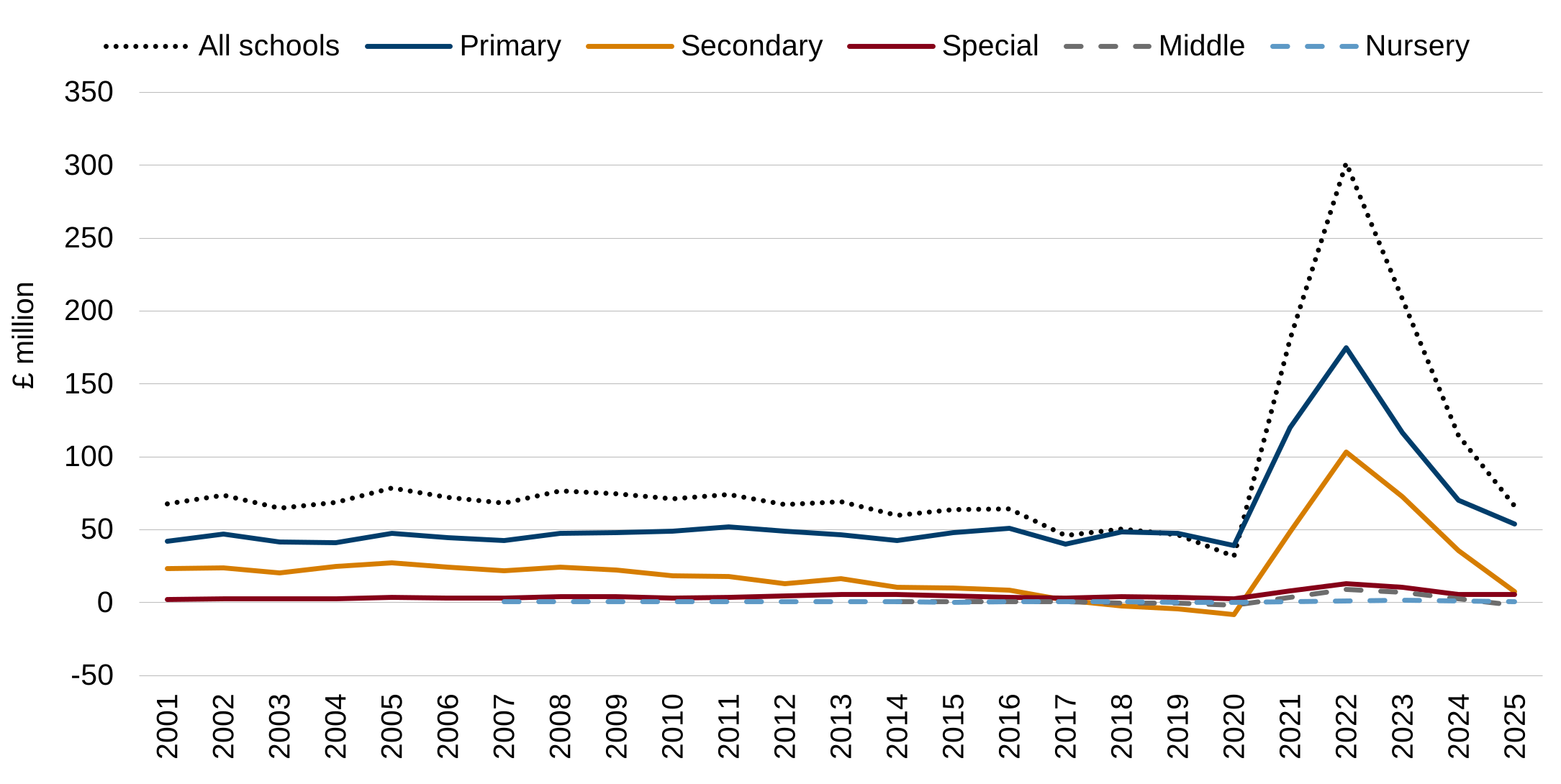
Description of figure 1: line chart showing the level of schools reserves by sector over time. The chart shows reserves increasing significantly due to the COVID-19 pandemic and decreasing during the following years.
Source: Welsh Government section 52 outturn returns.
More data on school outturn expenditure can be found in the associated data tables (MS Excel) and on the StatsWales website (Revenue).
Figure 2: level of reserves per pupil at 31 March 2025
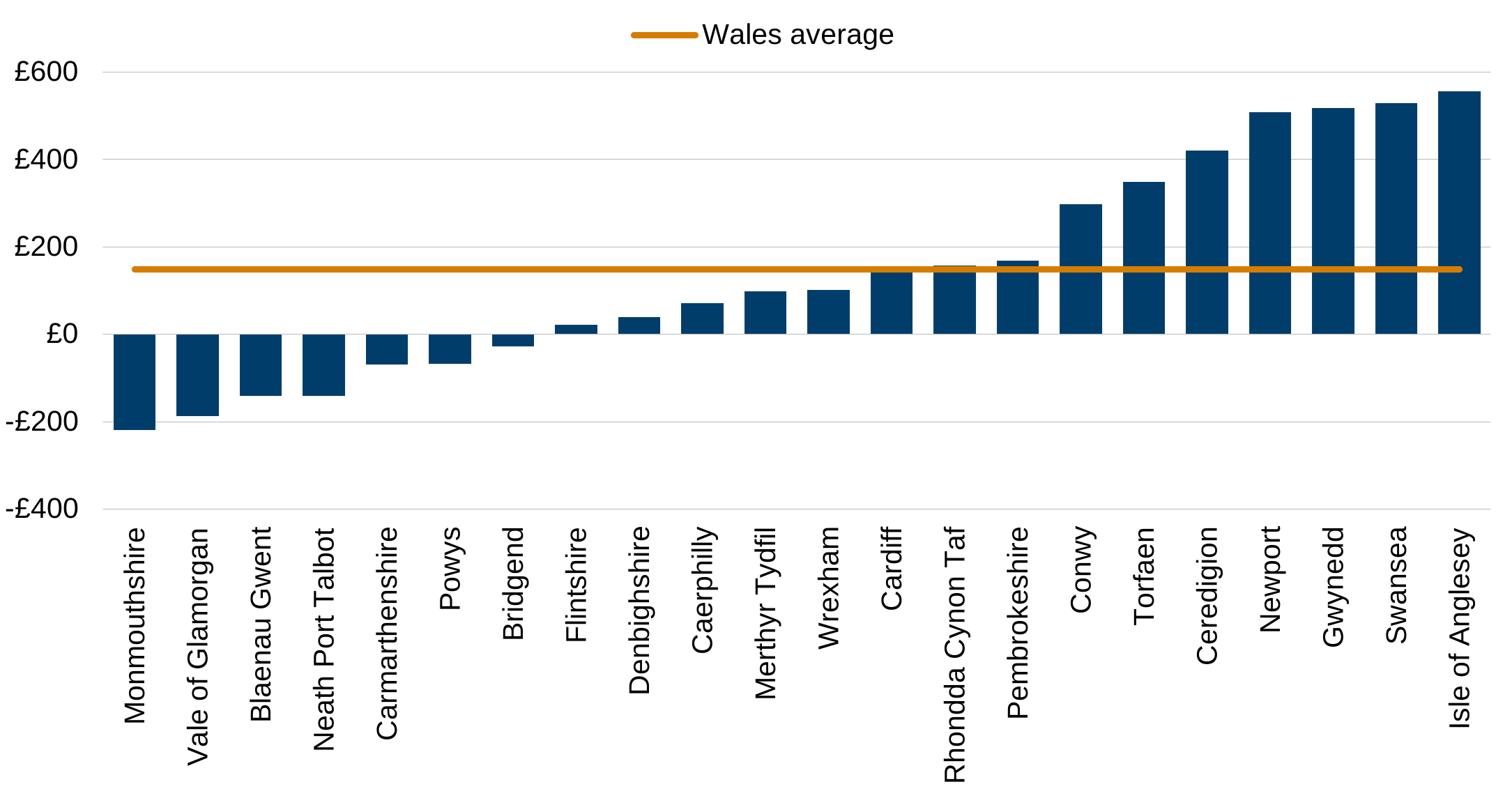
Description of figure 2: bar chart showing the level of school reserves per pupil by authority and how they compare to the Wales average. The chart shows that Isle of Anglesey has the highest level of school reserves per pupil and Monmouthshire has the lowest.
Source: Welsh Government section 52 outturn returns.
More data on school outturn expenditure can be found in the associated data tables (MS Excel) and on the StatsWales website (Revenue).
Figure 3: proportion of schools with reserves as a percentage of delegated schools expenditure, 2003 to 2025
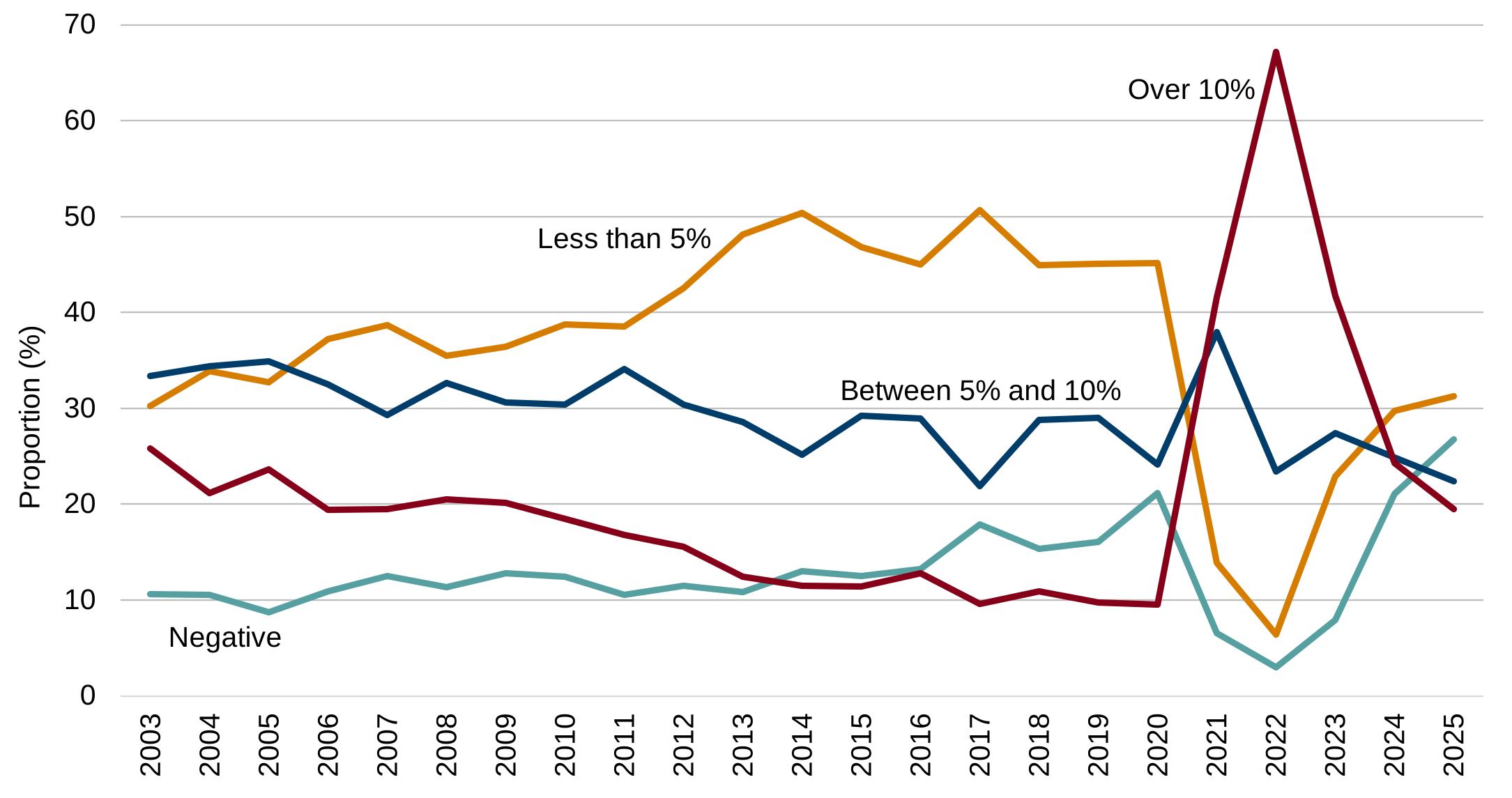
Description of figure 3: line chart showing the proportion of schools with differing levels of school reserves as a percentage of their overall delegated school expenditure. The proportion of schools with the level of reserves over 10% of overall delegated expenditure increased during the Covid-19 pandemic before decreasing in the following years.
Source: Welsh Government section 52 outturn returns.
More data on school outturn expenditure can be found in the associated data tables (MS Excel) and on the StatsWales website (Revenue).
Figure 4: school reserves as a percentage of delegated schools expenditure, 2024 and 2025
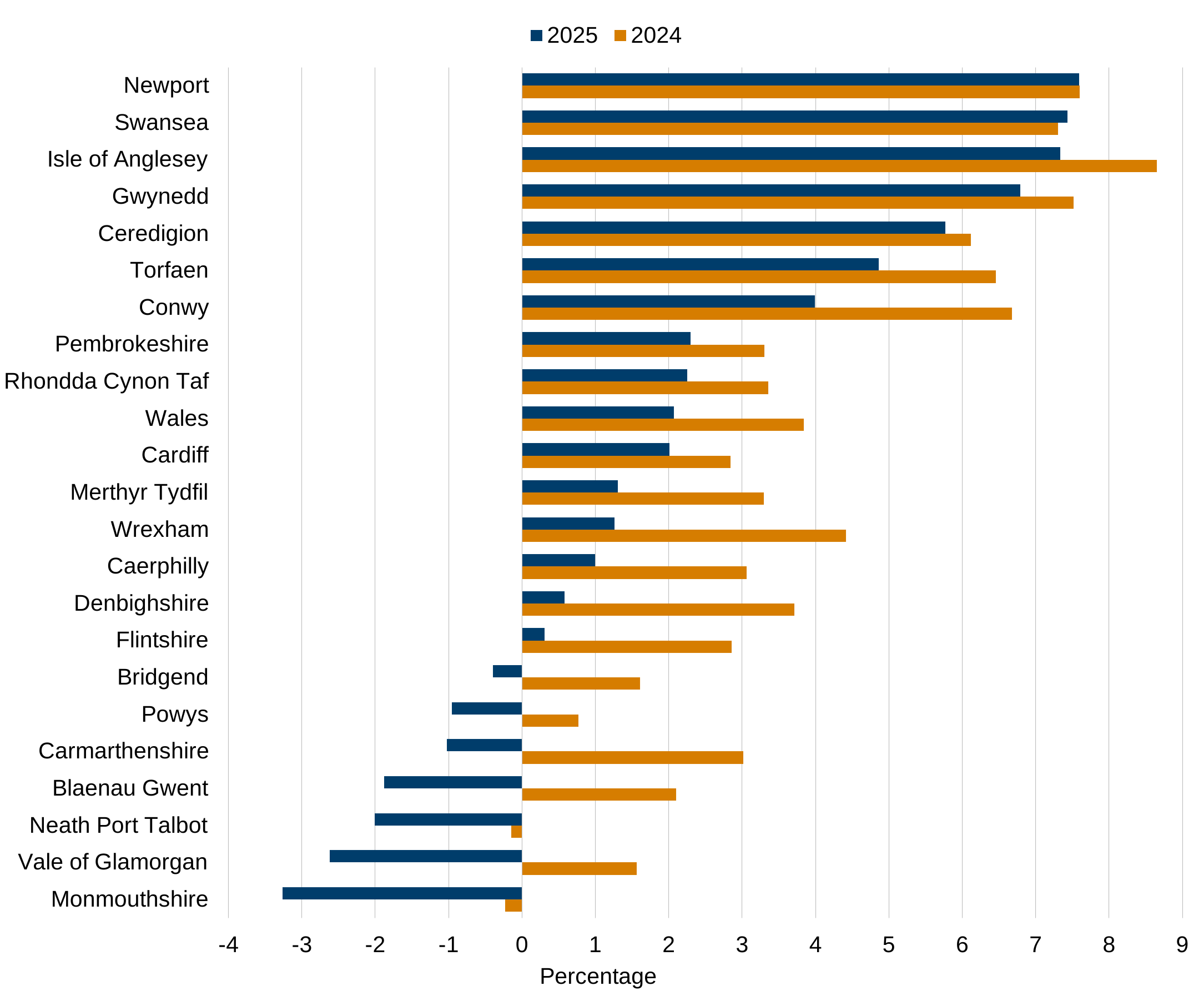
Description of figure 4: bar chart showing the level of school reserves as a proportion of overall delegated school expenditure by local authority. Newport has the highest proportion of school reserves and Monmouthshire has the lowest.
Source: Welsh Government section 52 outturn returns.
More data on school outturn expenditure can be found in the associated data tables (MS Excel) and on the StatsWales website (Revenue).
Glossary
Definitions
Reserves are sums of money that schools carry forward from one year to the next. They arise from underspends and overspends against school allocations over time.
Delegated school expenditure is actual education spending that is purely delegated or devolved by local authorities to schools and does not include any money held centrally by the local authority and spent on behalf of schools.
Background
Schools are responsible for managing their own finances. The level of reserves held by an individual school at any point in time will depend on a number of factors. These will include the timing of receipt of income and of payments, the level of contingency fund the school governing body considers appropriate and the particular plans each school has for expenditure.
Pupil numbers
The most recent data in this report relates to the situation as at January 2025.
Impact of COVID-19
During 2020-21 and 2021-22, school reserves increased significantly due to the effect of the COVID-19 pandemic and extra core funding announced late in the year. Schools continued to receive their normal core funding plus additional COVID-19 funding whilst having reduced expenditure on elements such as supply teachers, staff training, examinations, educational materials and utility bills due to various periods of school closure.
Quality and methodology information
Official statistics status
All official statistics should show the standards of the Code of Practice for Statistics (UK Statistics Authority).
These are accredited official statistics. They were independently reviewed by the Office for Statistics Regulation (OSR) in March 2019. They comply with the standards of trustworthiness, quality and value in the Code of Practice for Statistics.
It is Welsh Government’s responsibility to maintain compliance with the standards expected of accreditation. If we become concerned about whether these statistics are still meeting the appropriate standards, we will discuss any concerns with OSR promptly. Accreditation can be cancelled or suspended at any point when the highest standards are not maintained, and reinstated when standards are restored.
Accredited official statistics are called National Statistics in the Statistics and Registration Service Act 2007.
Statement of compliance with the Code of Practice for Statistics
Our statistical practice is regulated by the OSR. OSR sets the standards of trustworthiness, quality and value in the Code of Practice for Statistics that all producers of official statistics should adhere to.
All of our statistics are produced and published in accordance with a number of statements and protocols to enhance trustworthiness, quality and value. These are set out in the Welsh Government’s Statement of Compliance.
These accredited official statistics (OSR) demonstrate the standards expected around trustworthiness, quality and public value in the following ways.
You are welcome to contact us directly with any comments about how we meet these standards. Alternatively, you can contact OSR by emailing regulation@statistics.gov.uk or via the OSR website.
Trustworthiness
The main sources of information on schools outturn are the revenue outturn (RO) and section 52 outturn (S52O) returns.
We collect 100% of returns from all twenty-two county councils. The collection is a 100% survey and as such no estimation of the figures is calculated, and hence there is no sampling error.
The data collection is carried out in July and August. The data is normally published in October, this allows time to collect, collate and validate the data.
In tables where figures have been rounded to the nearest final digit there may be an apparent discrepancy between the sum of the constituent items and the total as shown.
The statistics that are collected adhere to recognised professional standards. Specifically, the finance data is required under legislation and also must adhere to CIPFA accounting procedures. However, further guidelines are also available on the interpretation of these standards to ensure consistency.
Adhering to the professional code (CIPFA’s SeRCOP) has meant that changes over time have been minimal. Where there have been time series which are not comparable from the start of the time series to the end this will be shown clearly in the outputs. Where advance warning is known of future changes these will be pre-announced in accordance with Welsh Government arrangements.
The existence of a professional code and our adherence to it provides assurance that the data are consistent across domains, such as local authorities.
The Welsh local government finance statistics are published in an accessible, orderly, pre-announced manner on the Welsh Government website at 9:30am on the day of publication. All releases are available to download for free.
All outputs adhere to the Code of Practice by pre-announcing the date of publication through the upcoming calendar web pages.
Access to the data during processing is restricted to those involved in the production of the statistics, quality assurance and for operational purposes.
Pre-release recipient information can be found on the Welsh Government website.
Quality
The published figures are compiled by professional analysts using the latest available data and applying methods using their professional judgement and analytical skillset.
Statistics published by Welsh Government adhere to the Statistical Quality Management Strategy which supplements the Quality pillar of the Code of Practice for Statistics and the European Statistical System principles of quality for statistical outputs.
When data is received through the returns, validation checks are performed by Welsh Government statisticians and queries referred to local authorities where necessary. The statistical release is then drafted and quality assured by senior statisticians and published in line with the Code of Practice for Statistics (UK Statistics Authority).
The data collection contains multiple validation checks at source to ensure the best quality data is provided. This includes year-on-year tolerance checks and arithmetic consistency checks.
Once we receive the data, it goes through further validation and verification checks, for example:
- spend per head by local authority
- extra arithmetic consistency checks
- cross checks with other relevant data collections
- thorough tolerance checks
- outturn comparison with budgets
- cross checks with data from other government departments
- verification that data outside of tolerances are correct
More detailed guidance on the steps taken to ensure quality can be found in the Local government finance statistics: quality report.
Value
The statistics are important and have a number of uses, for example: advice to Ministers; local government finance revenue settlement calculations; unitary authority comparisons and benchmarking; expenditure in Wales compared to other countries; informing the debate in the Senedd and beyond; assisting in research in public expenditure issues; economic analysis.
More detailed data are also available at the same time on the StatsWales website (Revenue) and this can be filtered online or downloaded into spreadsheets.
Data on school outturn are also available for England (Department for Education) and Scotland (School education statistics (Scottish Government)).
We aim to use Plain English in our outputs and all outputs adhere to the Welsh Government accessibility policy.
Well-being of Future Generations Act (WFG)
The Well-being of Future Generations Act 2015 is about improving the social, economic, environmental and cultural wellbeing of Wales. The Act puts in place seven wellbeing goals for Wales. These are for a more equal, prosperous, resilient, healthier and globally responsible Wales, with cohesive communities and a vibrant culture and thriving Welsh language. Under section (10)(1) of the Act, the Welsh Ministers must (a) publish indicators (“national indicators”) that must be applied for the purpose of measuring progress towards the achievement of the wellbeing goals, and (b) lay a copy of the national indicators before Senedd Cymru. Under section 10(8) of the Well-being of Future Generations Act, where the Welsh Ministers revise the national indicators, they must as soon as reasonably practicable (a) publish the indicators as revised and (b) lay a copy of them before the Senedd. These national indicators were laid before the Senedd in 2021. The indicators laid on 14 December 2021 replace the set laid on 16 March 2016.
Information on the indicators, along with narratives for each of the wellbeing goals and associated technical information is available in the Wellbeing of Wales report.
Further information on the Well-being of Future Generations (Wales) Act 2015.
The statistics included in this release could also provide supporting narrative to the national indicators and be used by public services boards in relation to their local wellbeing assessments and local wellbeing plans.
Further details
A full detailed breakdown over time of the data contained in this release is available on our StatsWales website (Revenue).
We want your feedback
If you have any feedback on this statistical release especially on the change from PDF to HTML and associated data tables (MS Excel) then please contact us using the email address below.