How The Food (Promotion and Presentation) (Wales) Regulations 2025 restricts 'less healthy' products.

First published: 23 October 2025
Last updated: 11 August 2026

Part 1: introduction

Introduction

As part of its Healthy Weight Healthy Wales strategy to reduce levels of obesity in Wales, the Welsh Government consulted in June 2022 on a suite of healthy food environment measures, including proposals to restrict the promotion and presentation of high fat, salt and sugar foods (HFSS) at key selling locations in retail settings and free refills of sugary drinks in the out of home sector.

In July 2024, the Welsh Government consulted on draft regulations and the enforcement approach for promotion and presentation restrictions, which largely mirrored existing equivalent regulations in England.

The Food (Promotion and Presentation) (Wales) Regulations 2025 (referred to as "the regulations" throughout this guidance unless otherwise stated) will come into force on 26 March 2026.

This guidance helps to illustrate how the regulations restrict promotion of HFSS or ‘less healthy’ products. Broadly speaking, the regulations restrict the promotion of HFSS products by:

  • volume price (for example, multibuy offers)
  • key in store locations (store entrances, aisle ends and checkouts) when retail stores are over 185.8 square metres (m2) (or 2,000 square feet (sq ft)) and the equivalent key locations online
  • free refills on certain drinks

These restrictions apply to medium and large businesses (with 50 employees or more), which are a qualifying business, as described in the regulations.

Failure to comply with the regulations may result in a business being issued with an improvement notice and subsequently a criminal fine or a fixed monetary penalty if compliance is not achieved as required.

Legal status

Compliance with the restrictions that the regulations provide for is ultimately the responsibility of individual businesses. Businesses and enforcement authorities should therefore revert to the regulations themselves when assessing compliance. While this guidance is intended to assist with the implementation of the regulations by helping to illustrate how they work, it is not an authoritative statement or interpretation of the law and therefore should only be read in conjunction with the regulations themselves.

Additional resources and support

One way of reducing the Nutrient Profiling Model score of products which are in scope of the restrictions would be to reformulate them. If you operate a business in Wales, you may be eligible for support from Food Innovation Wales. Their services include technical support in developing and reformulating healthier products.

If your business also operates in England, you may wish to refer to UK Government’s guidance on their equivalent regulations.

The descriptions and examples within this guidance have been aligned wherever possible with UK Government’s guidance to support businesses operating in both countries.

Common queries

In this section, you’ll find the answers to some common queries. If you have a question that you cannot find the answer to within this guidance, please email healthyweighthealthywales@gov.wales. We will periodically update this section of the guidance to reflect any new queries we receive.

How to determine what constitutes prepacked food

The regulations apply to prepacked food, as defined in Article 2(2)(e) of regulation (EU) number 1169/2011:

'prepacked food' means any single item for presentation as such to the final consumer and to mass caterers, consisting of a food and the packaging into which it was put before being offered for sale, whether such packaging encloses the food completely or only partially, but in any event in such a way that the contents cannot be altered without opening or changing the packaging; 'prepacked food' does not cover foods packed on the sales premises at the consumer’s request or prepacked for direct sale.

Where to find support to understand if a product is in scope of the regulations

Information to assist businesses in understanding if a product is in scope can be found under the what food is in scope section of this guidance. If you require any further support or information, you should contact your local authority.

How to calculate the relevant floor area within a store

Businesses should calculate their relevant floor area in order to understand whether their stores are in scope of the in-store location restrictions. The relevant floor area of a store excludes some areas within a store, such as storage areas. Further information on how to calculate the relevant floor area of a store can be found in regulation 6(3)(e) of the regulations and in the location promotions section of this guidance.

How to calculate the restricted area at the front of a store

Please refer to regulation 6 of the regulations, or the location promotions section of this guidance for information on how to calculate the restricted area at the front of your store.

How to determine the difference between an aisle and other types of units

The formation in which display units are presented (i.e. whether they form an aisle with an aisle end) may impact how the regulations apply to them. Further information on aisles can be found in the section of this guidance entitled "determining what may form an aisle". Also within the location promotions section of the guidance, you will find some examples of how the regulations may apply to freezer units in different formations, with graphic illustrations. If in doubt about whether restrictions will apply to freezer units within your store, you should contact your local authority for further guidance.

The exclusion of serving and queuing areas, associated with food concessions selling food for immediate consumption, from relevant floor area calculations

Serving and queuing areas associated with food concessions, which are a part of the store used mainly for the sale of food intended for immediate consumption (whether on or off the premises), can be excluded for the purposes of determining the relevant floor area.

How the regulations apply to online only businesses

The regulations may apply to online only businesses. You can find further information in the businesses in scope section of this guidance or in regulation 4.

The differences between product categories for these regulations and those listed for equivalent regulations in England (The Food (Promotion and Placement) (England) Regulations 2021)

Generally, the overarching product categories in these regulations are intended to align. However, businesses should defer to the regulations applicable in the relevant UK nation when considering whether an item falls within a product category.

The differences between promotions restrictions in these regulations and in England’s equivalent regulations (The Food (Promotion and Placement) (England) Regulations 2021)

Promotional restrictions in Welsh regulations are intended to largely mirror regulations in England. There are, however, some differences which businesses will wish to note. For example, in relation to on-pack promotions and aisle end restrictions:

On-pack promotions

UK Government’s guidance on their regulations explains that there is a transition period in England until 30 September 2026, which allows retailers to sell existing stock that was produced before October 2025 with volume price promotions on the packaging that they cannot remove. After 30 September 2026, if a volume price promotion is marked on the packaging for sales in other parts of the UK where such promotions are permitted, the packaging must state clearly and prominently that the promotion does not apply in England.

In Wales, the regulations do not restrict the offering for sale of in scope products with volume price promotions on their packaging. Retailers may choose to continue selling products with price promotions on their packaging, however those products must not be offered for sale as part of that volume price promotion. This restriction is not subject to any transition period. It should be clearly communicated to consumers that the product is not offered for sale as part of that promotion. You can find further guidance on on-pack promotions in the section of this guidance entitled on-pack promotions.

Aisle end restrictions

Regulation 7(1)(c)(i) of The Food (Promotion and Placement) (England) Regulations 2021 provides that a qualifying person must not place specified food inside a store in a display:

at the end of (but not in) an aisle, where the aisle end is adjacent to a main customer route through the store.

Or on a separate structure connected or adjacent to, or within 50cm, of, such an aisle end. In Wales, aisle end restrictions apply, regardless of their proximity to the ‘main customer route’ through a store, as reflected in regulation 6(1)(c) of the Welsh regulations. You can find further guidance on aisle end restrictions in the section of this guidance entitled aisle ends.

The difference between location restrictions in these regulations and in England’s equivalent regulations (The Food (Promotion and Placement) (England) Regulations 2021)

Location restrictions in these regulations are intended to largely mirror restrictions in England. However, the in-store restrictions in these regulations apply to a display at the end of (but not in) an aisle end, regardless of whether the aisle end is adjacent to a main customer route through the store (please see regulation 6(1)(c) of these regulations).

Calculating the NPM score of products where the information of the product’s packaging is only listed as consumed, rather than as sold

Please refer to annex 4 of this guidance for information on calculating NPM scores for different products. You can also find further information in the NPM technical guidance 2011.

How the regulations impact free refills on sugar-free drinks

A qualifying business for the purposes of the free refill restrictions may continue to offer free refills on drinks which do not meet the criteria specified at regulation 8(1) of the regulations. Drinks which are not prepared soft drinks containing added sugar ingredients, as described in schedule 2 to the regulations, will not meet those criteria. Please see regulation 8 or the section of this guidance entitled free refills for further information on how free refill restrictions apply.

How the food categories these regulations apply to differ from those set out in the UK Government’s broadcast and online advertising regulations

Generally, the overarching product categories in these regulations are intended to align with those in categories 1 to 12 of the UK Government’s broadcast and online advertising regulations. There are however some differences evident in the products in category 13. You can find further information on the interaction between both sets of regulations under the section of this guidance entitled "broadcast and online advertising restrictions".

How the promotion and presentation restrictions set out within the regulations apply to out of home businesses

An out of home businesses that would otherwise be a qualifying business, but which meets the definition of a restaurant in the regulations, is exempt from the promotion and presentation restrictions. This exemption is set out in regulation 4(1)(c)(iii). However, they may be in scope of the free refill restriction. Further information on the type of businesses in scope of the restrictions can be found in the section of this guidance entitled which businesses must comply with the promotions restrictions.

How the regulations apply to meal deals and TPRs

Meal deals and temporary price reduction (TPR) promotions are not within scope of these regulations. You can find more information on which promotional offers are in scope of the regulations under the promotions restrictions section of this guidance or in regulation 5(2).

How to demonstrate compliance with the regulations to an enforcement officer during an inspection

Please see the information provided under the how to demonstrate compliance to inspecting enforcement officers section of this guidance.

Definitions

Food

For the purposes of these regulations, food has the same meaning as in section 1(1) of the Food Safety Act 1990 (“the 1990 act”), which refers to regulation (EC) number 178/2002 of the European Parliament and of the Council laying down the general principles and requirements of food law, establishing the European Food Safety Authority and laying down procedures in matters of food safety. In regulation (EC) number 178/2002, food includes, among other things, drink.

Unless otherwise stated, references to food in this guidance include food and drink.

Consumer

The regulations use the definition of consumer as given in section 2(3) of the Consumer Rights Act 2015. This defines consumer as an individual acting for purposes that are wholly or mainly outside that individual’s trade, business, craft or profession.

Online marketplace

For the purposes of the regulations, online marketplace means any software (including a website, part of a website, or an application) that is used to offer the qualifying business’s products for sale to consumers. Qualifying business’s products could include any product sold by a qualifying business, including own brand and other branded products.

Prepacked food

Prepacked food is defined as in article 2(2)(e) of regulation (EU) number 1169/2011 of the European Parliament and of the Council of 25 October 2011 on the provision of food information to consumers:

'prepacked food' means any single item for presentation as such to the final consumer and to mass caterers, consisting of a food and the packaging into which it was put before being offered for sale, whether such packaging encloses the food completely or only partially, but in any event in such a way that the contents cannot be altered without opening or changing the packaging

For the purposes of both the assimilated regulation (EU) number 1169/2011 on food information to consumers and The Food (Promotion and Presentation) (Wales) Regulations 2025, prepacked food does not cover foods packed on the sales premises at the consumer’s request or prepacked for direct sale.

Schedule 1 food

Schedule 1 food means food or drink falling within a category in schedule 1 to the regulations.

Specified food

Specified food means food contained in a prepacked food item that falls in a schedule 1 category and is scored as ‘less healthy’ in accordance with the nutrient profiling technical guidance 2011. It is not food that is:

  • provided by a charity in the course of its charitable activities (whether that be free or for a price that is less than the cost of providing that food)
  • offered for sale by or on behalf of a charity, at a single event, to raise funds for its charitable activities

Qualifying business

Businesses that are subject to the regulations.

Restaurant

A business whose premises are used mainly for the preparation or sale of food intended for immediate consumption, whether on or off the premises. This includes a:

  • café
  • coffee shop
  • fast food
  • takeaway business
Part 2: which businesses must comply with the promotion restrictions

Which businesses must comply with the promotion restrictions?

Businesses in scope of restrictions

Businesses in scope of the restrictions are referred to as qualifying businesses, and are defined in regulation 4. Qualifying businesses could include, but are not limited to, retail establishments with 50 or more employees (in store and online) such as:

  • supermarkets
  • online food retailers
  • online retailers who sell any pre-packed food (for example, gifting websites)
  • convenience stores
  • department stores
  • clothing stores
  • pharmacies
  • petrol forecourts and service stations
  • florists
  • DIY stores
  • garden centres
  • retail at transportation hubs (this includes airside and landside retailers, duty-free retailers at airports, and retailers at train stations or ferry ports)
  • retail in visitor attraction or entertainment venues (for example, gift shops that sell prepacked chocolate)
  • retailers in hospitals

Businesses offering any drink to which regulation 8(1) applies for sale which has 50 or more employees is a qualifying business for the purposes of the free refill restrictions, unless they fall within a relevant exemption.

Businesses exempt from the location and volume price promotion restrictions

The following businesses are exempt from the location and volume price promotion restrictions:

  • Micro or small businesses (businesses with under 50 employees).
  • Schools, colleges and other such educational institutions that provide only education and that education is wholly or mainly provided to children aged under 18.
  • Restaurants, even if they sell prepacked HFSS food suitable for immediate consumption. However, restaurants are subject to the restriction on free refills of sugary drinks. Please see the "restaurants" section below for more information.
  • Care homes that provide a service wholly or mainly to persons aged 18 or over and which provide food solely to residents without requiring payment per food item. This exemption could include social care settings such as:
    • residential homes
    • rest homes
    • convalescent homes
    • respite care
    • mental health crisis houses
  • Military establishments for operational personnel (sea, land and air), prisons, young offenders’ institutions and hospitals, and other institutions not operating a business when providing food to residents. A restaurant that offers any drink to which regulation 8(1) applies to the public in return for payment may be however a qualifying business for the purposes of regulation 8 on free refills.
  • Food that is provided by a charity in the course of its charitable activities (whether it is free or for a price that is less than the cost of providing that food), or food offered for sale by or on behalf of a charity to raise funds for its charitable activities at a single event. However, specified food that is sold by a non-charitable retailer with a percentage or set amount of the cost going to charity (for example, "20p from the sale of this product is donated to charity") is in scope of the promotions restrictions and therefore subject to the location and volume price promotion restrictions.
  • Manufacturers unless they are selling directly to consumers.
  • Businesses (for example, wholesalers) who only sell food to other businesses and not directly to consumers. Non-transactional software, such as websites or apps where you cannot purchase a product (for example, a manufacturer’s brand website, which may contain information about their range of products but a consumer cannot purchase the product on that site). If a non-transactional website includes a link to a transactional website, the non-transactional website itself is still not in scope of the promotions restrictions.

Businesses exempt only from the location restrictions

The following businesses, if qualifying businesses, will be exempt from location restrictions but still be subject to volume price promotion restrictions:

  • A business that would otherwise be in scope but which has a relevant floor area of less than 185.8m2 (2,000 square feet) taking it outside of scope of the location restrictions.
  • A business that would otherwise be in scope but is a specialist retailer that only or mainly sells food from a single category in schedule 1 (included under the what food is in scope section). Examples of specialist retailers may include, but are not limited to:
    • a chocolatier selling mainly chocolates, but also some biscuit and cake products
    • a sweet shop selling mainly confectionary, but also some biscuit and ice cream products
    • a chocolatier selling only chocolates
    • a sweet shop selling only confectionary
    • an online shop selling only cakes and cupcakes
    • an online shop selling mainly cakes
    • an online chocolatier selling mainly chocolates

Stores that claim they are a specialist store will need to be assessed on a case-by-case basis by the enforcement authority.

Employee count

To be a qualifying business, a business must have 50 or more employees on the first day of the financial year during which an offer for sale took place.

The number of employees is not restricted to Wales, it is the total number of employees a business has in its entirety.

Whether individuals engaged on a zero hours contract are considered as employees for these purposes will depend on the individual case and their contract and would ultimately be a question of employment law.

Franchises

The restrictions will apply to medium and large businesses (which we consider to be 50 or more employees) that sell food or drink in Wales.

For franchises or arrangements (like symbol groups) where multiple businesses operate under the same name, a business carried on pursuant to a franchise agreement is to be treated as part of the business of the franchisor and not as a separate business carried on by the franchisee for the purpose of determining how many employees a business has, and therefore whether they are in scope of the regulations.

If symbol group retailers operate as part of a franchise arrangement where the total sum of employees operating under the franchise are at least 50, they may be in scope of the regulations. Symbol groups are typically a form of a franchise of convenience stores. For the purpose of determining how many employees a business has and therefore whether the restrictions apply, the business of the symbol group retailer will be treated as part of the business of a franchisor with whom it has a franchise agreement.

Under these regulations, a franchise agreement is seen to exist where one undertaking (the franchisee) and another undertaking (the franchisor) agree that the franchisee carries on a business activity that includes the sale or distribution of food (the franchise business).

The following 3 matters must also be agreed by the franchisor for a franchise agreement to exist and be similar to those of other undertakings entered into by the franchisor under comparable contractual arrangements:

  • the food provided in the franchise business
  • the internal or external appearance of the premises where the franchise business is carried on
  • the business model used for the operation of the franchise business

If these features of the business are agreed by the franchisor and are similar to that of other undertakings in respect of which the franchisor has entered into comparable contractual arrangements, then for the purposes of the regulations a franchise may be a qualifying business. Contractual arrangements can vary from business to business.

Restaurants

Restaurants do not need to comply with location and volume price restrictions but must comply with the restrictions on the free refills promotion of certain drinks.

A restaurant is defined in the regulations as a business whose premises are used mainly for the preparation or sale of food intended for immediate consumption, whether on or off the premises (including a café, coffee shop, fast food or takeaway business).

Food sold in restaurants may be considered intended for immediate consumption if it is either:

  • offered for sale for immediate consumption on the premises on which it is sold
  • offered for sale for consumption off the premises and does not require any preparation by the consumer before it is consumed (preparation may include peeling, hulling or washing, cooking, thawing, and heating or reheating pre-cooked food)

Examples of out of home businesses (restaurants) where the promotions restrictions (aside from free refills) may not apply include but are not limited to:

  • coffee shops or cafes (including cafes located in department stores, supermarkets, convenience stores and petrol stations)
  • sandwich bars or shops
  • dessert shops or houses
  • bakery stores
  • restaurants at travel hubs
  • hotel restaurants
  • pub restaurants
  • chain restaurants or branded casual dining restaurants
  • quick service restaurants
  • visitor attraction or entertainment venues (such as cinemas and restaurants in theme parks)
  • contract catering including:
    • workplace canteens (including staff canteens in hospitals)
    • university or further education canteens
    • event catering in venues such as arenas or stadiums and so on
    • hospital visitor canteens

Concessions

Concessions are commonly considered to be separate businesses occupying an area within the store premises of another business which is primarily responsible for managing and operating the store (“the primary business”). Concessions may be excluded when calculating the relevant floor area of the primary businesses store, if they operate their own payment facilities.

However, a concession located within a primary business’s store, but not part of its business, is treated as a separate business that must comply with any restrictions that apply to it, if it meets the criteria to be considered a qualifying business in its own right.

Examples to determine a potential concession

Example 1: retail concessions

A retail concession located inside a supermarket may be a qualifying business in its own right, if it meets the criteria as stated in the regulations.

If a retail concession is a qualifying business in its own right, any in scope prepacked food being sold in the business will be subject to the volume price promotions restrictions and the location restrictions. However, the concession will only be subject to the in-store location restrictions if its relevant floor area is over 185.8m2 (2,000 square feet). If the retail concession is not a qualifying business in its own right, it will not be subject to any of the restrictions.

Example 2: restaurant concessions

Restaurant concessions located within a retailer (for example, a café that is a separate business operated in a supermarket), are not subject to the volume price or location promotion restrictions because restaurants are exempt from those restrictions. However, a restaurant concession may be a qualifying business in its own right for the purposes of the free refill restriction.

Example 3: vending machines

Vending machines that have payment facilities owned and operated by a business other than the primary business may be considered a concession, and therefore not part of the calculation of the relevant floor area of the store of the primary business.

Vending machines which are a concession may not be subject to the location restrictions if they have a relevant floor area of less than 185.8m2. They may also not be subject to the location restrictions applicable to the primary business they are placed in, where that primary business is a qualifying business. However, in any event we would encourage qualifying businesses not to allow vending machine concessions selling specified food to be placed in restricted areas of their stores. Vending machines may be subject to the volume price promotion restrictions if operated by a qualifying business.

Example 4: areas within retail stores

Areas within retail stores, for example, the bakery section or deli section within a supermarket that is owned and operated by that supermarket, are not concessions as they form part of the same business.

Part 3: what food is in scope

What food is in scope

The products in scope of the regulations, known as specified food, are only subject to the restrictions if they are sold by a qualifying business.

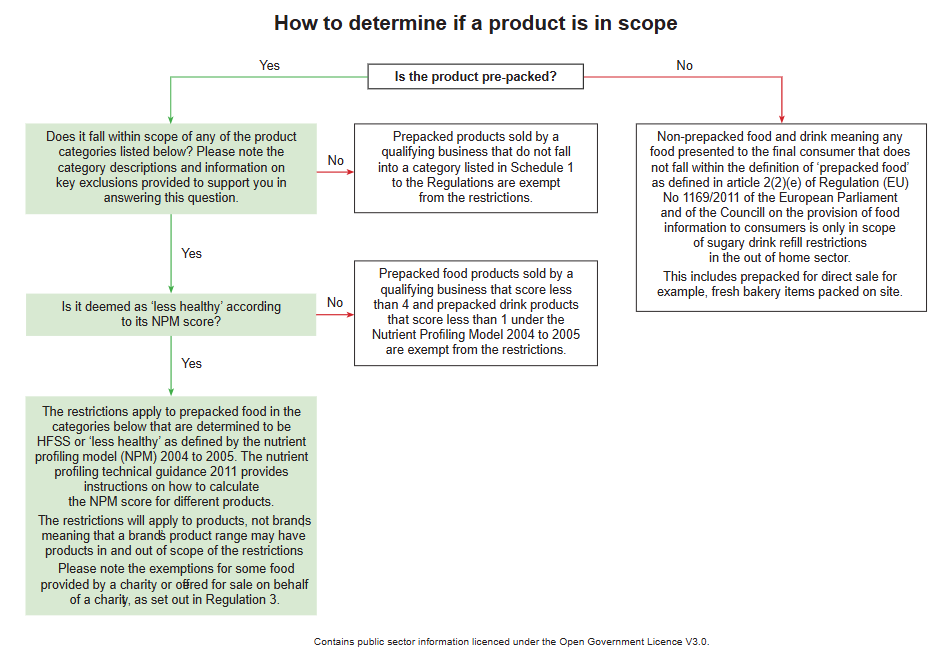
Image

Product categories in scope

Products listed below are examples of what may be in and out of scope of the regulations.

These lists are not exhaustive, unless otherwise stated.

While the categories of food in the regulations do not overlap, some types of food product may have multiple ingredients or features potentially capable of falling under more than one category, for example, a chocolate covered cereal bar. If it should be necessary to determine which category the product falls under, this is done by an objective overall assessment of the ingredients and features of the specific product being offered for sale, in order to determine which category best describes the product in question.

Category 1

As stated in the regulations:

  • prepared soft drinks containing added sugar ingredients (other than exempt soft drinks)

Examples of products that may be in scope:

  • soft drinks with added sugar, including lemonades, colas and fruit-based squash drinks
  • milk-based drinks with added sugar or sweeteners, and milk substitute drinks with added sugar or sweeteners (for example, soya, almond, oat, hemp, hazelnut or rice and so on)
  • juice-based drinks with added sugar
  • fruit juices or smoothies (including smoothies with dairy) with added sugar
  • breakfast drinks with added sugar
  • ready-to-drink tea and coffee containing added sugar before sale
  • coffee or tea powders with added sugar (sachets, pods or syrups)
    • for powders, the NPM score should be calculated based on 100g of the drink as reconstituted according to the manufacturer’s instructions; as with all products, please refer to the NPM technical guidance 2011 for support calculating the NPM scores
  • 2 in 1 (coffee and milk powder) or 3 in 1 (coffee, milk powder and sugar) containing added sugar
  • hot chocolate powders, pods, syrups and ready-to-drink products containing added sugar
  • malt drink powders with added sugar
  • milkshake powders and milkshake syrups with added sugar
  • flavoured and unflavoured milk substitute drinks with added sugar
  • chai latte with added sugar
  • kombucha with added sugar
  • energy drinks with added sugar
  • protein powders with added sugar

Examples of products that may not be in scope:

  • drinks without added sugar, including milk (as defined in regulation 7 of SDIL)
  • unsweetened milk-based drinks and unsweetened smoothies
  • drinks with no added sugar and sweetened only with milk, fruit or vegetable juice, or any combination of these
  • alcoholic drinks and alcohol substitute drinks with more than 1.2% alcohol by volume (ABV)
  • ‘infant formula’, ‘follow-on formula’, ‘processed-cereal based food’ and ‘baby food’ as defined in assimilated regulation (EU) number 609/2013 of the European Parliament and of the Council
  • total diet replacements as defined in assimilated regulation (EU) number 609/2013
  • meal replacement products which use an approved ‘health claim’ provided in the annex to assimilated regulation (EU) number 432/2012
  • food for special medical purposes as defined in assimilated regulation (EU) number 609/2013 of the European Parliament and of the Council

Category 2

As stated in the regulations:

  • savoury snacks whether intended to be consumed alone or as part of a complete meal including:
    • products made from potato, other vegetables, grain or pulses
    • extruded, sheeted and pelleted products
    • bagged savoury crackers, rice cakes or biscuits, such as crisps, pitta bread-based snacks, pretzels, poppadums, salted popcorn and prawn crackers (but not raw, roasted, coated, or flavoured nuts)
  • pork rind-based snacks whether intended to be consumed alone or as part of a complete meal

Examples of products that may be in scope:

  • crisps
  • savoury crackers, rice cakes and biscuits sold and eaten as alternatives to crisps
  • corn puffs
  • potato hoops
  • tortilla chips
  • chickpea or lentil-based crisps
  • fried flavoured or seasoned chickpeas
  • seaweed-based snacks
  • Bombay mix

Examples of products that may not be in scope:

  • raw, coated, roasted or flavoured nuts and seeds (or mixes of these products, for example, a mix of nuts and seeds)
  • fruit-based snacks such as dried fruit, fruit crisps or chips (includes both sweetened and unsweetened fruit ingredients)
  • trail mix made up of dried fruit and nuts or seeds
  • meat jerky
  • ‘dunker’ type products, which include breadsticks and a dip
  • savoury pressed seed bars
  • larger packs of breadsticks which are not intended to be eaten in the same way or on the same eating occasion as crisps

Category 3

As stated in the regulations:

  • breakfast cereals, including ready-to-eat cereals, granola, muesli, porridge oats and other oat-based cereals

Examples of products that may be in scope:

  • granola
  • muesli
  • ready-to-eat cereals
  • porridge oats, including instant porridge and other hot oat-based cereals

Category 4

As stated in the regulations:

  • confectionery, including chocolates and sweets

Examples of products that may be in scope:

  • sweet popcorn, and mixed sweet and salty popcorn
  • chocolate-coated nuts, peanuts, seeds and fruit
  • white, milk and dark chocolate
  • cooking chocolate
  • chocolate bars and boxed chocolates
  • bagged slabs or tubed sweets
  • jellied fruit sweets
  • chewing gum
  • marshmallows
  • chocolate-covered products, for example, chocolate-covered pretzels

Examples of products that may not be in scope:

  • all dried fruit
  • sweet coated nuts (other than chocolate-covered nuts), for example, honey coated, syrup coated, carob coated, sweet chilli flavours, and mixes of sweet and salty or savoury
  • sugar-free sweets and sugar-free chewing gum

Category 5

As stated in the regulations:

  • ice cream, ice lollies, frozen yoghurt, water ices and similar frozen products

Examples of products that may be in scope:

  • ice cream tubs
  • handheld ice cream
  • ice lollies
  • choc ices
  • frozen yoghurt
  • vegan ice cream
  • sorbets
  • gelato-style ice cream
  • lactose-free ice creams
  • ice cream desserts, for example, arctic roll
  • alcohol-flavoured products, for example, rum and raisin-flavoured ice cream, that are below 1.2% ABV or alcohol-free

Examples of products that may not be in scope:

  • ice cream ‘accessories’, such as sauces, sprinkles and other similar cake-type decorations or toppings
  • ice cream wafers (these are referred to under category 7)
  • roulade and gateaux (these are referred to under category 9)

Category 6

As stated in the regulations:

  • cakes and cupcakes

Examples of products that may be in scope:

  • all sponge cakes
  • cupcakes
  • cake bars and slices
  • doughnuts
  • American muffins
  • flapjacks
  • swiss rolls
  • brownies
  • tray bakes
  • cream cakes
  • mini rolls
  • éclairs
  • frozen cakes

Examples of products that may not be in scope:

  • cake decorations, including icing and sauces

Category 7

As stated in the regulations:

  • sweet biscuits and bars based on one or more of nuts, seeds or cereal

Examples of products that may be in scope:

  • cereal bars (cereal bars may be similarly shaped to a chocolate bar, made of cereals and typically other ingredients such as fruits and nuts, but can also include nut and seed-based bars)
  • filled and unfilled sweet biscuits
  • breakfast biscuits
  • shortbread
  • ice cream wafers or cones
  • coated chocolate biscuit bars

Category 8

As stated in the regulations:

  • morning goods, including croissants, pains au chocolat and similar pastries, crumpets, pancakes, buns, teacakes, scones, waffles, Danish pastries and fruit loaves

Examples of products that may be in scope:

  • Danish pastries
  • croissants
  • pains au chocolat and similar pastries
  • crumpets
  • pancakes
  • buns
  • teacakes
  • scones
  • waffles
  • English muffins
  • bagels (plain and sweet)
  • fruit loaves
  • hot cross buns
  • fruited and sweet non-fruited buns (including iced buns)
  • Brioche
  • Malt loaf (both sweetened with sugar or fruit)

Category 9

As stated in the regulations:

  • desserts and puddings, including pies, tarts and flans, cheesecake, gateaux, dairy desserts, sponge puddings, rice pudding, crumbles, fruit fillings, powdered desserts, custards, jellies and meringues

Examples of products that may be in scope:

  • sweet pies, for example apple pie, mince pies and so on
  • tarts and flans
  • cheesecake
  • gateaux
  • dairy desserts
  • sponge puddings
  • rice pudding
  • crumbles
  • fruit fillings
  • roulade
  • powdered dessert mixes
  • custards
  • jellies
  • meringue desserts
  • choux pastry desserts
  • mousses
  • Christmas pudding
  • trifle
  • roly poly
  • dessert pizzas

Examples of products that may not be in scope:

  • creams such as whipped cream and flavoured or sweetened creams
  • syrups
  • condensed caramel
  • dessert toppings and sauces
  • tinned or canned fruit

Category 10

As stated in the regulations:

  • sweetened (whether with sugar or otherwise) yoghurt and fromage frais

Examples of products that may be in scope:

  • sweetened flavoured Greek-style yoghurts
  • sweetened probiotic yoghurts
  • sweetened split yoghurts or twin chamber pots
  • sweetened kids’ yoghurts
  • sweetened fat free and low-fat yoghurts
  • sweetened dairy-free yoghurts
  • sweetened fromage frais
  • sweetened drinking yoghurts, for example, a drinkable yoghurt, with no additional liquids (such as milk, water or fruit juice)

Examples of products that may not be in scope:

  • natural yoghurt and unsweetened yoghurt and fromage frais, including plain Greek yoghurt

Category 11

As stated in the regulations:

  • pizza (except plain pizza bases)

Examples of products that may be in scope:

  • deep pan, deep dish, thin crust and stuffed crust pizzas
  • all topping varieties and all sizes
  • flatbread pizzas

Examples of products that may not be in scope:

  • plain pizza bases
  • garlic bread and cheese garlic bread, and ‘loaded’ varieties

Category 12

As stated in the regulations:

  • roast potatoes, potato and sweet potato chips, fries and wedges, potato waffles, novelty potato shapes (such as smiley faces), hash browns, rostis, crispy potato slices, potato croquettes

Examples of products that may be in scope:

  • as listed above in the category description

Examples of products that may not be in scope:

  • plain potatoes or sweet potatoes that are not treated, cooked, cut or shaped
  • potato salads

Category 13

As stated in the regulations:

  • products that are marketed as ready for cooking or reheating without requiring further preparation and intended to be consumed as a complete meal
  • products, other than products that contain pastry, in or with a sauce (but not a marinade, glaze, dressing, seasoning or similar accompaniment) that are marketed as ready for cooking or reheating without requiring further preparation and intended to be consumed as the main element of a meal
  • breaded or battered:
    • vegetable, fish, shellfish, meat, or poultry products
    • substitute fish, shellfish, meat or poultry products, including fish fingers, fish cakes and chicken nuggets

Examples of products that may be in scope:

  • Ready meals: prepared meals (often suggested for heating in the microwave or oven), such as Chinese, Thai, Italian, traditional and so on, with carbohydrate accompaniment (potato, rice, noodles, pasta and so on) made from meat, poultry, fish, meat alternatives or vegetables. Filled or stuffed pasta (for example, ravioli and tortellini) whether chilled or tinned. Includes dishes such as vegetable curries, dhal and other dishes that can be consumed as a meal. Potato-topped pies (for example, shepherd’s pie), burgers in a bun, and fries, chips or wedges with toppings (often referred to as ‘dirty fries’ or ‘loaded fries’), and filled jacket potatoes.
  • Fresh pasta, rice or noodles with added ingredients and flavours, including filled or stuffed pasta (for example, ravioli and tortellini).
  • Meal centres: prepared meal centres (often suggested for heating in the microwave or oven), such as Chinese, Thai, Italian, traditional and so on, made from meat, poultry, fish, meat alternatives or vegetables. Products of this type are in scope where they are served in a sauce or with a sauce as part of the product, for example, in a packet or sachet intended to be poured on during or after heating.
  • Battered or breaded products (fresh, chilled or frozen): a number of products that might be consumed as the main element of a meal such as fish fingers, chicken nuggets, battered fish, fish or chicken goujons, breaded meat substitutes, scampi, kievs, breaded chicken fillets, ‘lightly dusted’ products, cereal-coated products and gluten-free alternatives.

Examples of products that may not be in scope:

  • Retail meal kits: for example fajita or enchilada meal kits or other kits that contain ingredients requiring preparation and combining for cooking a meal.
  • Breaded or battered cheese-based products intended to be consumed as a starter or side.
  • Cooked breaded ham or charcuterie products.
  • Savoury pastry products: ambient, chilled and frozen processed and ready-to-eat or on-the-go products such as meat, fish, vegetable or meat alternative pastry pies, pasties, sausage rolls, tarts, tartlets, quiches, slices, lattices and plaits.
  • Meat, poultry, fish, shellfish or meat alternatives, either served plain, smoked or with a marinade (a marinade differs from a sauce as it is intended to be absorbed into the food before or during cooking so that, after cooking or heating the food product, no significant liquid remains to be poured over the food), glaze, dressing, seasoning rub or similar accompaniment. ‘Meat’ includes meat and processed meat products such as ham, salami, chorizo, bacon, gammon, chicken thighs, grills, burgers (without a bun), sausages and steaks.
  • Meats, fish, shellfish or meat alternatives that are plain (for example, raw plain chicken breasts) or have been smoked (for example, smoked meat and fish) or are processed meats (such as ham, salami and bacon).
  • Savoury pies made with pastry.
  • Quiches.
  • Sandwiches.
  • Sushi.
  • Other foods that are not cooked or reheated before consumption.
  • Party food (other than breaded or battered food) that is not intended to be consumed as a main meal, for example, mini quiche or mini sausages (this is not an exhaustive list).

Individual products versus composite meals

There may be products that, when sold as a single item, are out of scope of the promotions restrictions, but when they are included within a ready meal or whole product, they are in scope of the restrictions (for example, sausages are out of scope of the promotions restrictions, but a sausages and mash ready meal is in scope).

This is due to evidence showing that product categories, such as ready meals, are a contributor to children’s calorie intake and are heavily promoted.

Seasonal products and seasonal promotions

There are multiple seasonal promotion points running through the year including, but not limited to, Christmas, Diwali, Valentine’s Day, Easter, Mother’s day, Father’s Day and Halloween.

Products in scope of schedule 1 categories are still subject to the restrictions, regardless of whether they are branded as seasonal. However, businesses are able to promote seasonal products that are in schedule 1 categories if they are not less healthy in accordance with the NPM.

Selections, platters, hampers and gift sets

If an item of prepacked food comprises more than one type of food and contains a specified food within it, the whole item is to be treated as specified food.

This includes examples such as selections or platters, hampers and gift sets that include multiple different items of food.

Food to go

Specified food sold in qualifying businesses will be in scope of the restrictions irrespective of being marked as ‘food to go’.

Part 4: volume price promotions

Volume price promotions

Qualifying businesses must not offer food in scope of the regulations, that is, specified food, for sale as part of a volume price promotion (whether in store or on an online marketplace).

Volume price promotion means:

  • a multibuy promotion, being the express offer of a financial incentive for buying multiple items compared with buying each item separately (including ‘3 for the price of 2’, ‘3 for £10’ or ‘buy 6 and save 25%’)
  • a promotion that indicates that an item, or any part of an item, is free (including ‘50% extra free’ or ‘buy one get one free’)

Financial incentives may also include incentives such as loyalty points, where these can be used to make further purchases. For example, ‘buy 3 of these products now and get 1,000 more loyalty points’.

A multipack sold as a single item is not necessarily the same as a multibuy promotion. However, a multipack sold as a single outer pack containing 6 separate packs of crisps may be in scope of the volume price promotion restrictions if its packaging promoted its price of a single multipack in comparison with separate individual packs as ‘6 for the price of 4’ or ‘50% extra free’. There may also be a volume price promotion where a business offers on multiple purchases of the multipacks themselves, for example, ‘buy 2 multipacks and get one multipack free’ or ‘20% extra for the same price’.

The regulations explain that specified food must not be offered for sale as part of a volume price promotion. This includes a promotion in which non-specified food items or non-food items are also included. For example, a promotional offer on a newspaper and chocolate such as ‘buy a newspaper and get a chocolate bar free’ would not be permitted because it indicates that a specified food is being offered for free. One of the definitions of a volume price promotion within the regulations is a promotion that indicates that an item, or any part of an item, is free.

Offers that are not volume price promotions do not fall in scope of the restrictions.

Examples of permitted versus restricted volume price promotions

Example 1: 2 for 1 on plain water bottles

Permitted. This offer does not include specified food products.

Example 2: 2 for 1 on a range of plain water and sugary soft drinks that have an NPM score of ≥1

Not permitted. This offer includes specified food products. The NPM score should be calculated on a product-by-product basis and, if at least one product in the offer is considered HFSS or ‘less healthy’, then the offer is not permitted.

Example 3: 2 for 1 offer on only sugary soft drinks that have an NPM score of ≥1

Not permitted.

Relevant special offer exemption

Offers commonly referred to as ‘meal deals’ or ‘dine in for 2’, where an offer of a discounted price is made for multiple items promoted as intended to be consumed together as, or as part of, a single meal by one person or by two or more people together, are out of scope of volume price promotion restrictions.

Meal deals (which are generally targeted as lunch options for adults to consume on the go that day) or ‘dine in for 2’ types of offers (which are reducing the cost of ‘complete’ meals for multiple people, rather than being stockpiled at home) aim to reduce the cost of a single meal.

However, all specified food, whether part of a meal deal or not, cannot be placed in restricted locations.

Each case will of course be assessed on its individual facts by an enforcement officer to determine whether the deal in question is in scope of the restrictions.

The following are not known to be typically promoted as intended to be consumed as, or as part of, a single meal:

  • platters
  • party food (that is not intended to be consumed as a main meal)
  • a multibuy promotion on a packet of crisps, a bar of chocolate and a soft drink
  • a packet of crisps and a soft drink
  • a promotion on a sharing bag of crisps, bag of confectionery and 2 litre soft drink, even if it was marketed as a ‘big night in’ to be consumed together by 2 or more people (for example, families as a take home sharing occasion)

It is good practice for volume price promotions to only be applied to genuine ‘meal deal’ offers.

Meal deals online

Examples of meal deals that businesses could promote online:

  • Qualifying businesses could promote a chocolate bar when a consumer searches for a sandwich if the chocolate bar is part of a relevant special offer.
  • Qualifying businesses could also promote a dessert when a consumer searches for a ready meal when the dessert is part of a ‘dine in for 2’ offer (or similar relevant special offer). In other words, if a customer part-buys into a meal deal (for example, a sandwich), it would be permitted to prompt a customer with other items sold with the sandwich as part of a relevant special offer (for example, a snack or a drink).

However, it is not permitted for a qualifying business to promote a specified food that is part of a relevant special offer on a homepage, favourites page or a checkout page to ensure a consistent approach between locations promotions in qualifying stores and online.

On-pack promotions

Qualifying businesses who choose to sell products with volume price promotional offers on their packaging should ensure that they clearly communicate to consumers that the product is not offered for sale as part of that promotion. Any approach taken to ensure this should clearly:

  • explain that the on-packaging promotion does not apply
  • confirm the revised price of the products

Businesses should ensure their chosen method for communicating this is sufficiently clear so as not to mislead consumers. They should also assess how to approach on-packaging promotional offers on a product-by-product basis, to ensure that they comply with the regulations and any relevant consumer protection legislation.

Price promotions not in scope

Discount promotions such as ‘50% off’, ‘half off’ or ‘save £1’ are out of scope of this policy. Vouchers for these deals are also not in scope of the regulations.

Free samples or vouchers for free products are also not in scope of the volume price promotion restrictions.

A multipack is considered a single item for the purposes of volume price promotion restrictions. If the packaging does not promote the item in comparison with individual packs (such as ‘6 for the price of 4’ or ‘50% extra free’), then it does not fall within the scope of the regulations. Similarly, multiple multipacks would fall into scope if, for example, a ‘2 for 1’ promotion was offered on multiple multipacks.

Sampling in store

Vouchers do not necessarily fall under the definition of a volume price promotion if they do not involve offering the food for sale. Similarly, free samples may be outside of scope if they:

  • are not in a prepacked item
  • do not involve offering the food for sale

However, if specified food associated with such vouchers or free samples is prepacked and offered in the store as part of a volume price promotion or placed within restricted areas, this is prohibited by the regulations.

Part 5: free refills

Free refills

The restriction on free refill promotions applies to non-prepacked sugary drinks, which are defined as HFSS or ‘less healthy’ by the NPM and are not charity food sales. A qualifying business, for the purposes of this restriction, includes restaurants. It does not however include care homes or educational institutions. Qualifying businesses must not offer a free refill promotion on drinks in scope of the restriction.

Regulation 8(1) of the regulations provides that drinks in scope of the restriction on free refills would be:

  • non-prepacked
  • within category 1 of schedule 1 (covered in the product categories in scope section)
  • drinks that are HFSS or ‘less healthy’ (as defined by the NPM)
  • not food to which the exemption on charity food sales applies

A free refill promotion means a promotion that offers the consumer the same drink or another drink to which regulation 8(1) applies (including free top-ups of any such drink) for free after consumption of a first drink.

Consumer-operated drinks machines may be in scope of these restrictions if they offer free refills and are placed within a qualifying business. For example, coffee machines within a convenience store or a forecourt offering sweetened coffee.

Examples of drinks that may be in and out of scope of the restrictions of free refills can be seen below.

Drinks in scope:

  • non-prepacked or open cup soft drinks that are in scope of the SDIL with an NPM score of ≥1
  • all other drinks under category 1 of schedule 1 with an NPM score of ≥1, including hot chocolate, tea or coffee that is pre-sweetened before sale

Drinks out of scope:

  • drinks with a content of more than 1.2% ABV
  • drinks in category 1 but not considered HFSS or ‘less healthy’ (with an NPM score under 1)
  • plain water and other drinks with no added sugar

Part 6: location promotions

In store restrictions on location promotions

The regulations describe where qualifying businesses must not present specified food inside a physical store. They provide that the location restrictions apply to stores that have 185.8m2 (2,000 ) or greater of ‘relevant floor area’ and which do not only or mainly sell food from a single category in schedule 1. Please note the meaning of ‘relevant floor area’ set out within these regulations differs from that set out within the Sunday Trading Act 1994.

Parts of the store that do not count towards the relevant store area:

  • parts which are not used for displaying goods or for serving customers in connection with the sale of goods
  • parts used mainly for the preparation or sale of food intended for immediate consumption, whether on or off the premises (whether something is intended for immediate consumption will need to be assessed by the enforcement authority)
  • rooms used for consultation with customers in connection with any medical services offered in the store
  • a part occupied by a business (‘a concession’) other than the business primarily responsible for managing and operating the store, but only where the concession operates its own payment facilities (the definition of a concession is not dependent on whether staff working for the primary businesses run or work at the concession)

Examples of places that may be viewed as this part of a store (not exhaustive):

  • storage areas
  • stock rooms
  • communal staff areas such as:
    • break rooms
    • locker rooms
    • staff kitchens
  • food preparation areas, for example, areas used mainly to cook and prepare items intended for immediate consumption
  • deli counters if selling food intended for immediate consumption
  • sandwich counters if selling food intended for immediate consumption
  • coffee shops
  • canteens
  • pharmacy
  • opticians’ services
  • post office
  • automated machines, for example, photobooths and vending machines that take their own payments and are not operated by the business primarily responsible for managing and operating the store

Diagrams of examples of the location restrictions can be found in annex 3.

Concessions

Concessions are defined in the regulations as being a business other than the business primarily responsible for managing and operating the store.

Concessions in stores do not contribute towards the calculation of the 185.8m2 (2,000 square feet) necessary for application of location promotion restrictions.

Concessions can be out of home businesses or retail businesses.

Example 1: on-site cafés

If a store has a total floor area of 2,500 square feet, but had a café on site that is run by a separate out of home franchise that is 550 square feet, this would take the relevant floor area to under the 185.8m2 (2,000 square feet) threshold and therefore the store would not be subject to the location restrictions.

The square footage of a store, however, does not determine its exemption from volume price promotions. Any business in scope of the policy, regardless of physical size, will be restricted from offering volume price promotions.

Example 2: retail concession counters

If a convenience store has a retail concession counter (for example, a counter selling prepacked food or a counter selling clothing with separate payment facilities), this retail concession counter will be exempt from the relevant floor area of that convenience store.

If said concession counter is a qualifying business but under 185.8m2 (2,000 square feet) it would be exempt from the location restrictions, but not the volume price promotion restrictions.

If a store has a concession which is a qualifying business and over 185.8m2 (2,000 square feet), the concession itself it would be subject to both the price and location restrictions as a qualifying business in its own right.

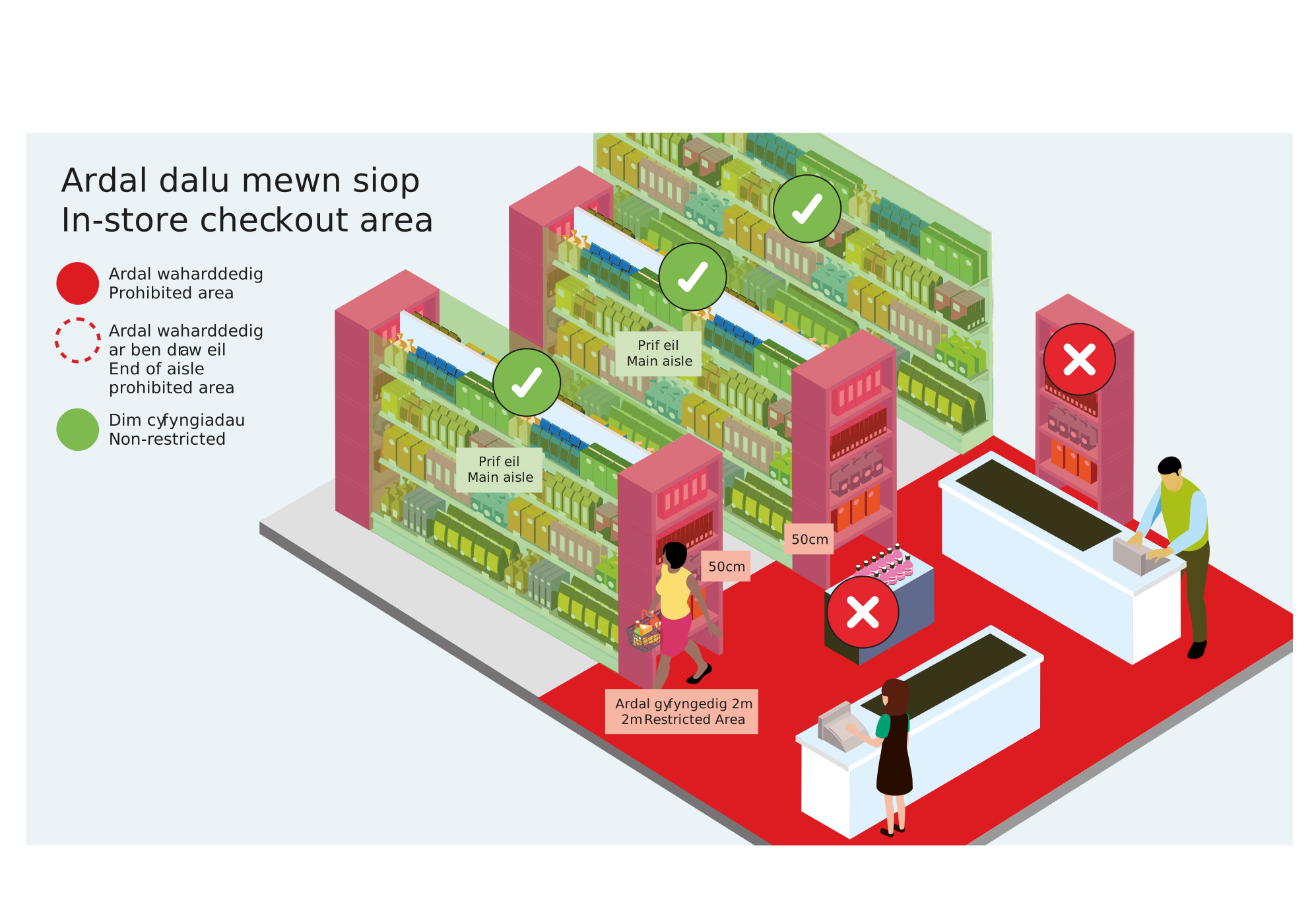
Restricted areas in store

Businesses in scope must not present specified food in store at any of the following areas.

Any area within 2m of a checkout facility

Checkout facility means a facility in the store intended to be used by consumers to pay for products. This includes a counter at which a cash register is used (including the area behind the counter) and a self-checkout terminal. It may also include other till points or electronic points of sale. However, specified food can be presented within 2m of a checkout facility if it is presented in (but not at the end of ) an aisle.

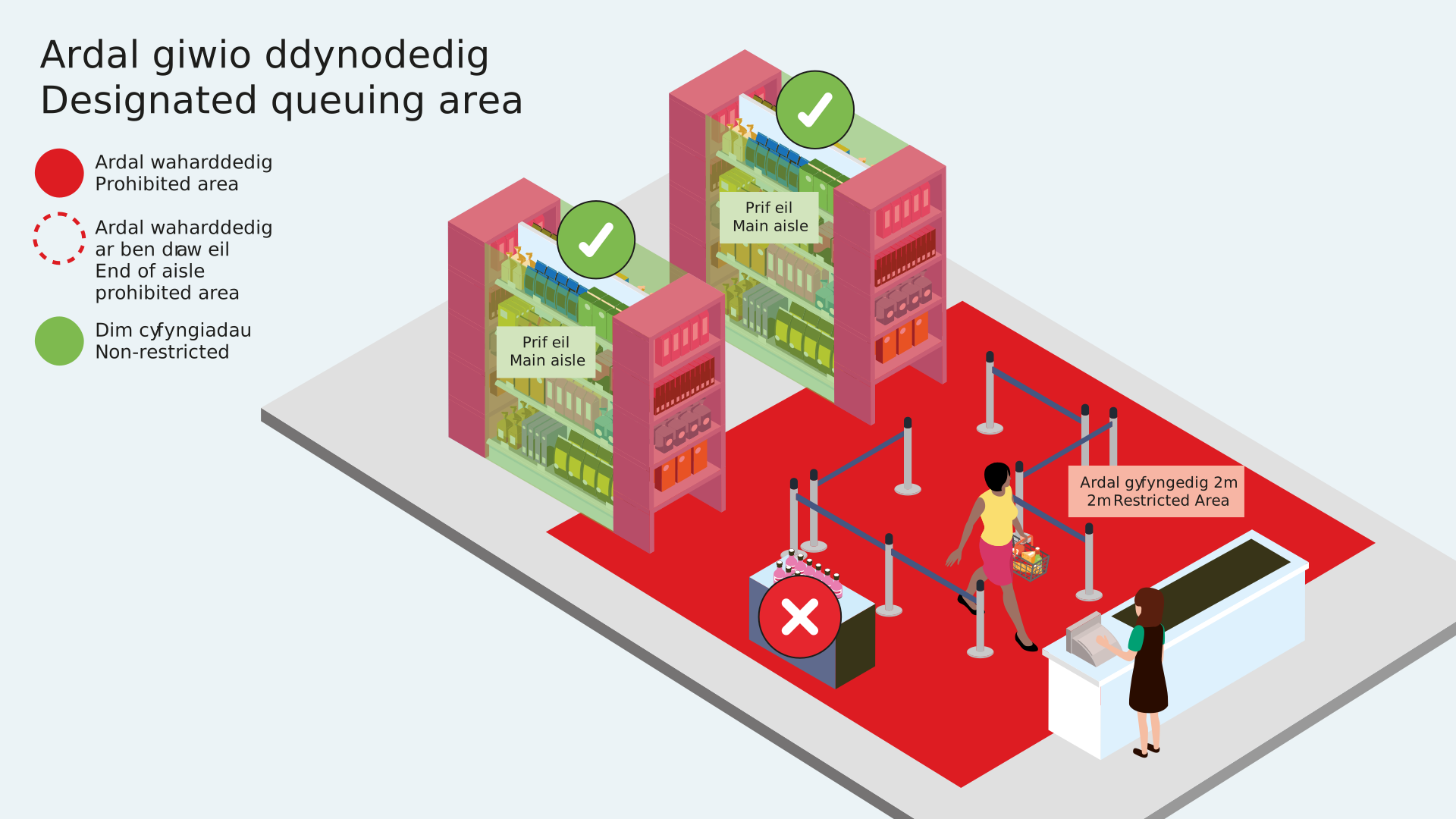
Any area within 2m of a designated queuing area

This can be defined as an area set aside and marked for the purpose of providing a place for consumers to wait to make a purchase. For example, it could be set aside or marked by signs, floor markings, barriers, units or shelving designed to guide customers in a queue to the point of purchase. However, specified food can be presented within 2m of a designated queueing area if it is presented in (but not at the end of) an aisle.

Ends of aisle displays

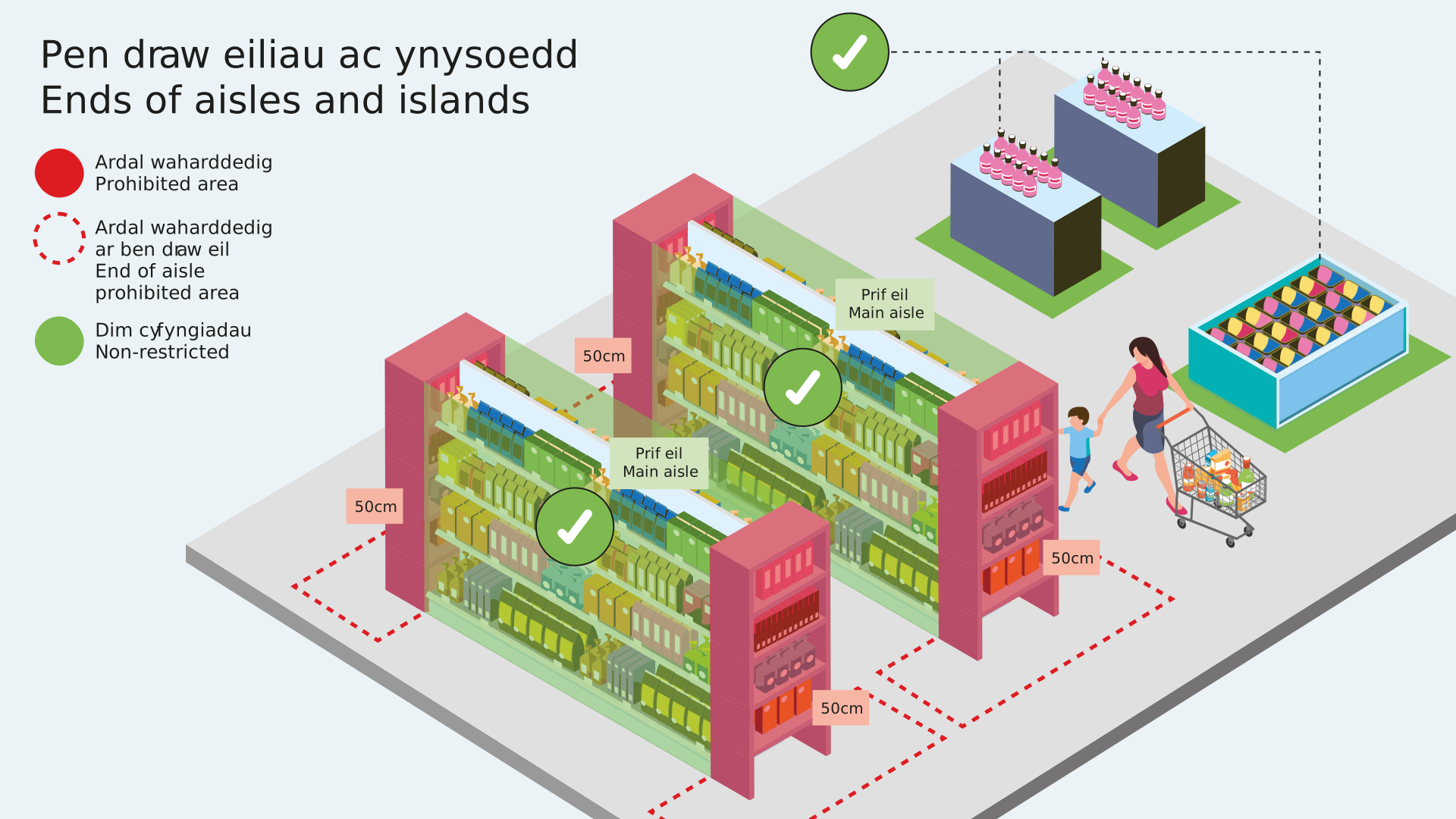
These are displays at the end of (but not in) an aisle, or on a separate structure (for example, an island bin, free-standing unit which could be a fridge or freezer, side stack or clip strip) connected or adjacent to, or within 50cm of, the end of an aisle. An end-of-aisle display may include displays facing the checkout, into the store or the store perimeter. An ‘end-of-aisle display’ is not in an aisle but instead the perpendicular end of the aisle, which will need to be assessed by the enforcement authority when assessing the premises.

Store entrances

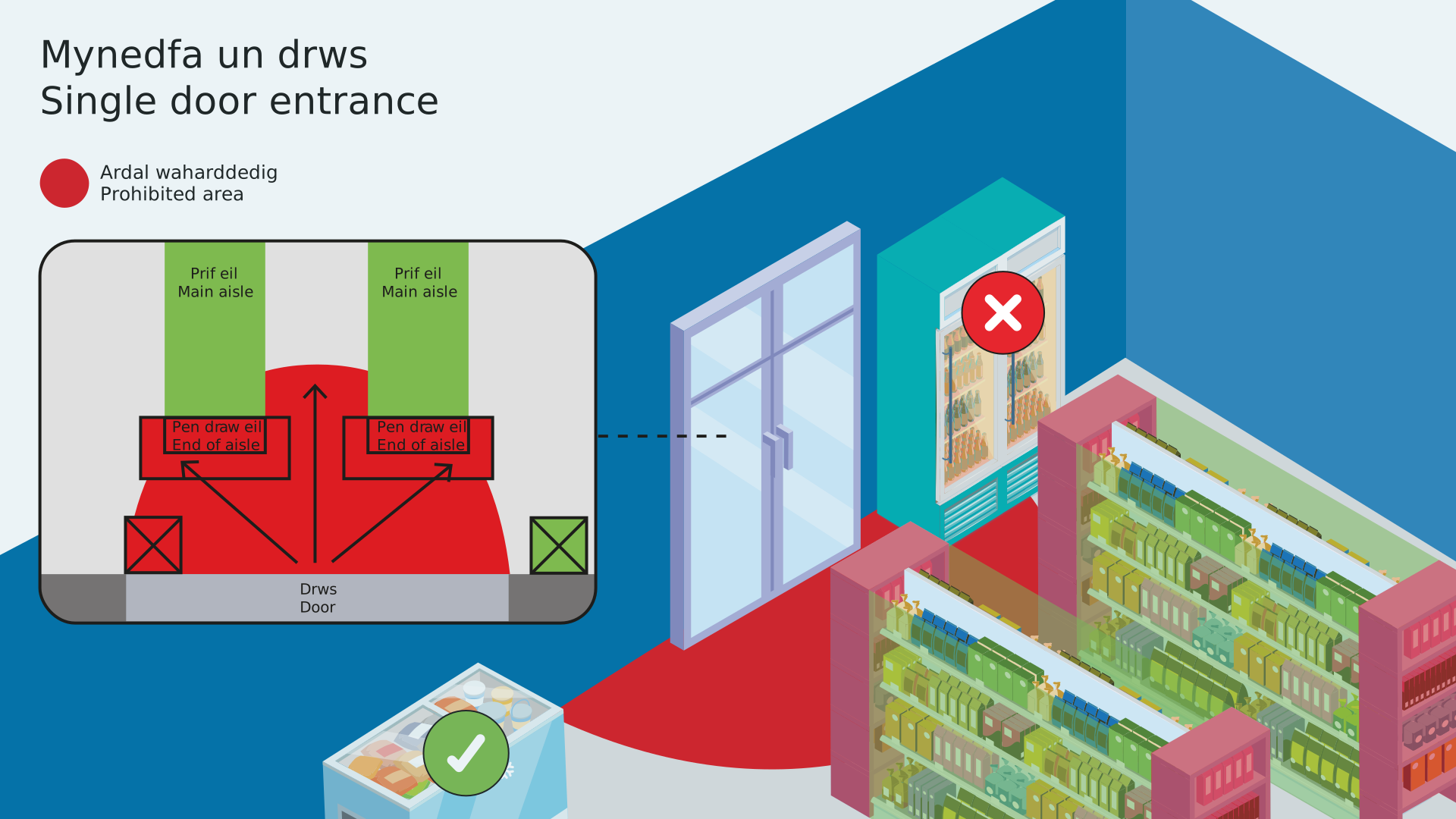
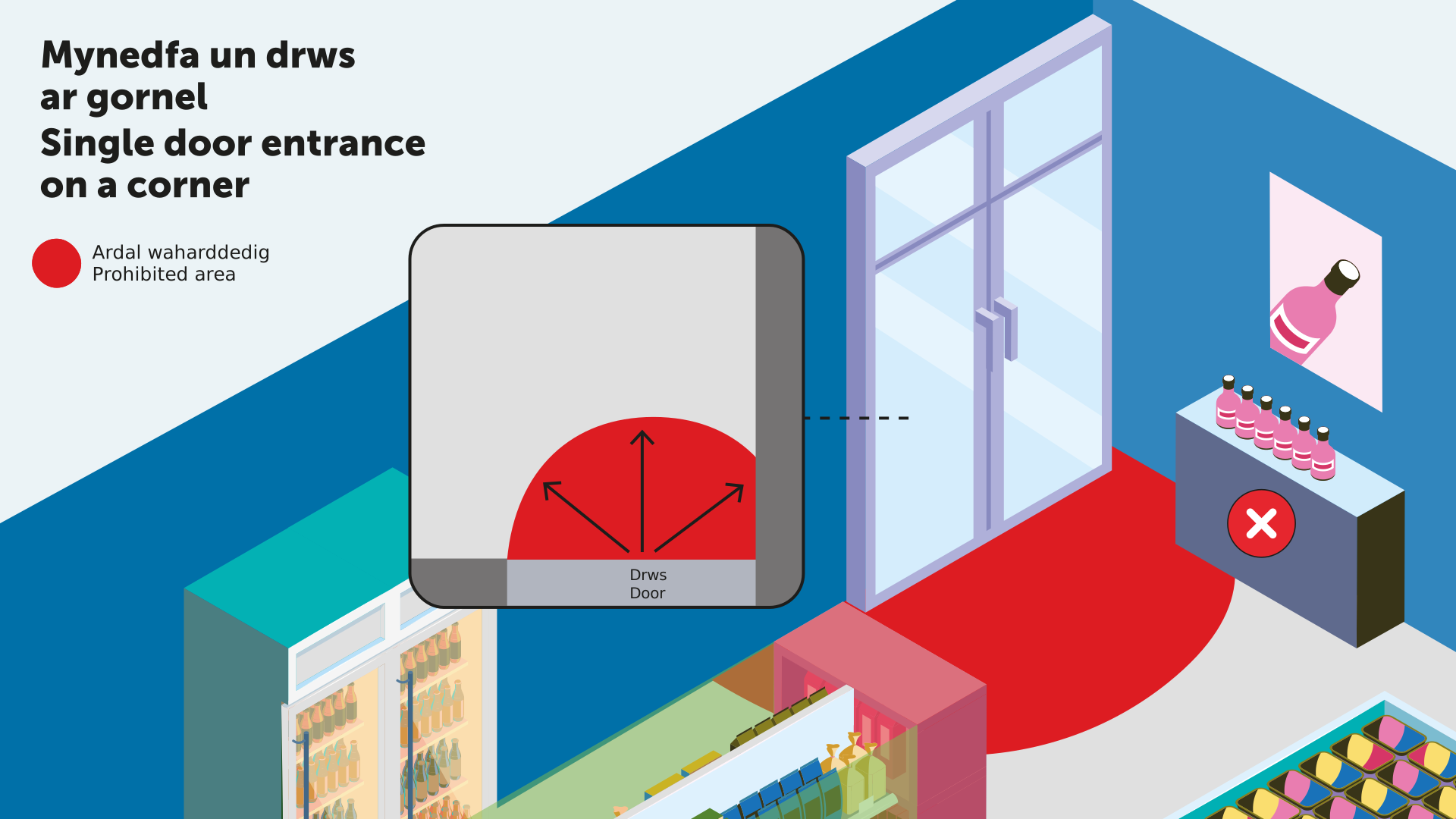
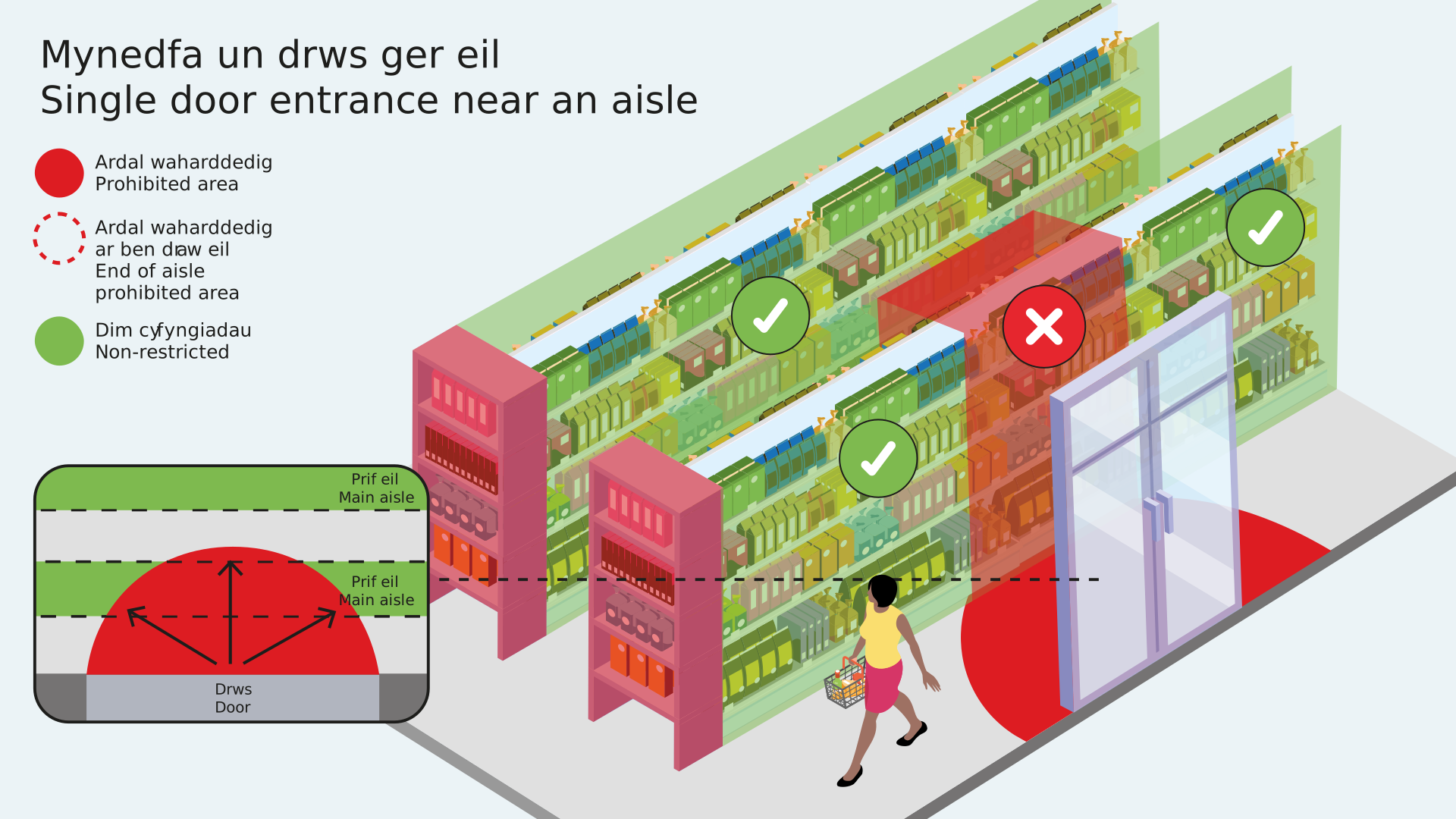
The regulations restrict the presentation of specified food at any point within the prohibited distance of the midpoint of any public entrance to the store’s main shopping area. Specified food should not be placed at any point within this area, irrespective of whether it can be seen from the store entrance. Diagrams can be found in annex 3.

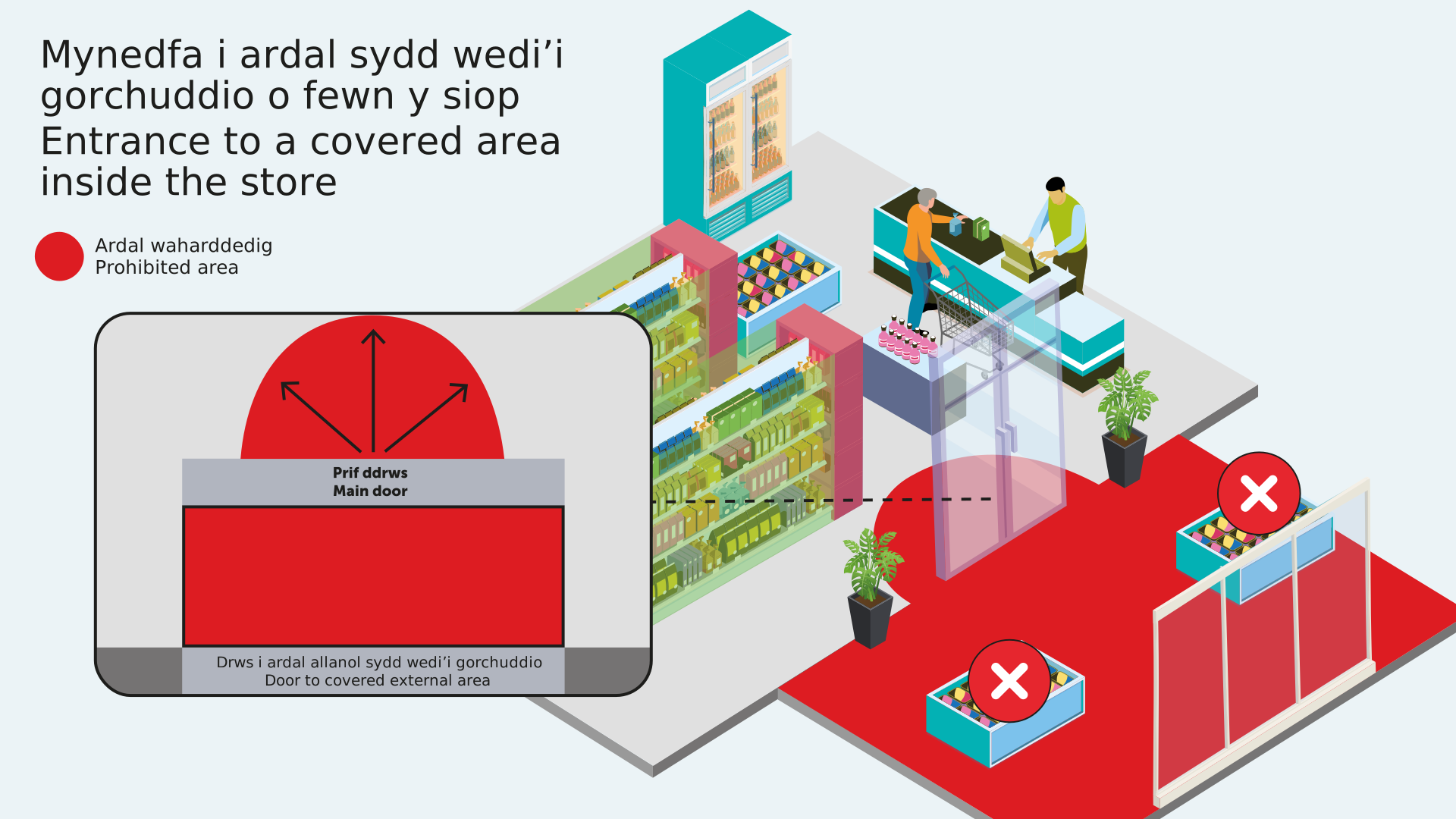
A covered external area

This restriction applies to covered areas, outside and connected to a store’s main shopping area, through which the public passes to enter the main shopping area (for example, the foyer, lobby or vestibule). Individual cases will of course be considered and assessed individually by an enforcement officer to determine whether the area in question is in scope of the restrictions.

Aisle ends

The ‘aisle end’ restrictions in the regulations capture promotion of products presented in a display at the ends of (but not in) aisles in stores, or on a separate structure connected to or adjacent to, or within 50cm of, the ends of the aisle. For example, island bin displays, side stacks or clip strips. An end-of-an-aisle display is not the last section in the aisle, but instead the perpendicular end of the aisle, which may be assessed by the enforcement authority when assessing the premises.

Only displays of specified food are restricted at aisle ends. If freestanding equipment is placed within an aisle (at least 50cm from the aisle end) or is attached to the aisle itself, so long as it is not ‘connected or adjacent to’ the aisle end, it is not in scope of the ‘aisle end display’ location promotion restrictions.

If an aisle ends in a wall, by definition there is no aisle end at that point upon which food can be displayed.

Diagrams are provided in annex 3 showing examples of aisle ends in scope.

Determining what may form an aisle

When carrying out an inspection, enforcement officers will need to assess on a case-by-case basis whether a display unit is considered an aisle or another free-standing or island-type unit. Businesses who are unsure if display units in their store are in scope of aisle end restrictions should contact their Local Authority for support. A display unit which is not an aisle with an aisle end may still be a separate structure connected or adjacent to, or within 50cm of, the end of an aisle. To assist businesses in complying with this aspect of the regulations, this section of the guidance seeks to illustrate what enforcement officers may consider when assessing a business’ compliance.

To determine what constitutes an aisle, this is likely to depend on the formation in which the relevant structures are displayed. An ‘aisle’ takes its natural meaning whereby there’s a long, narrow space or passageway between rows.

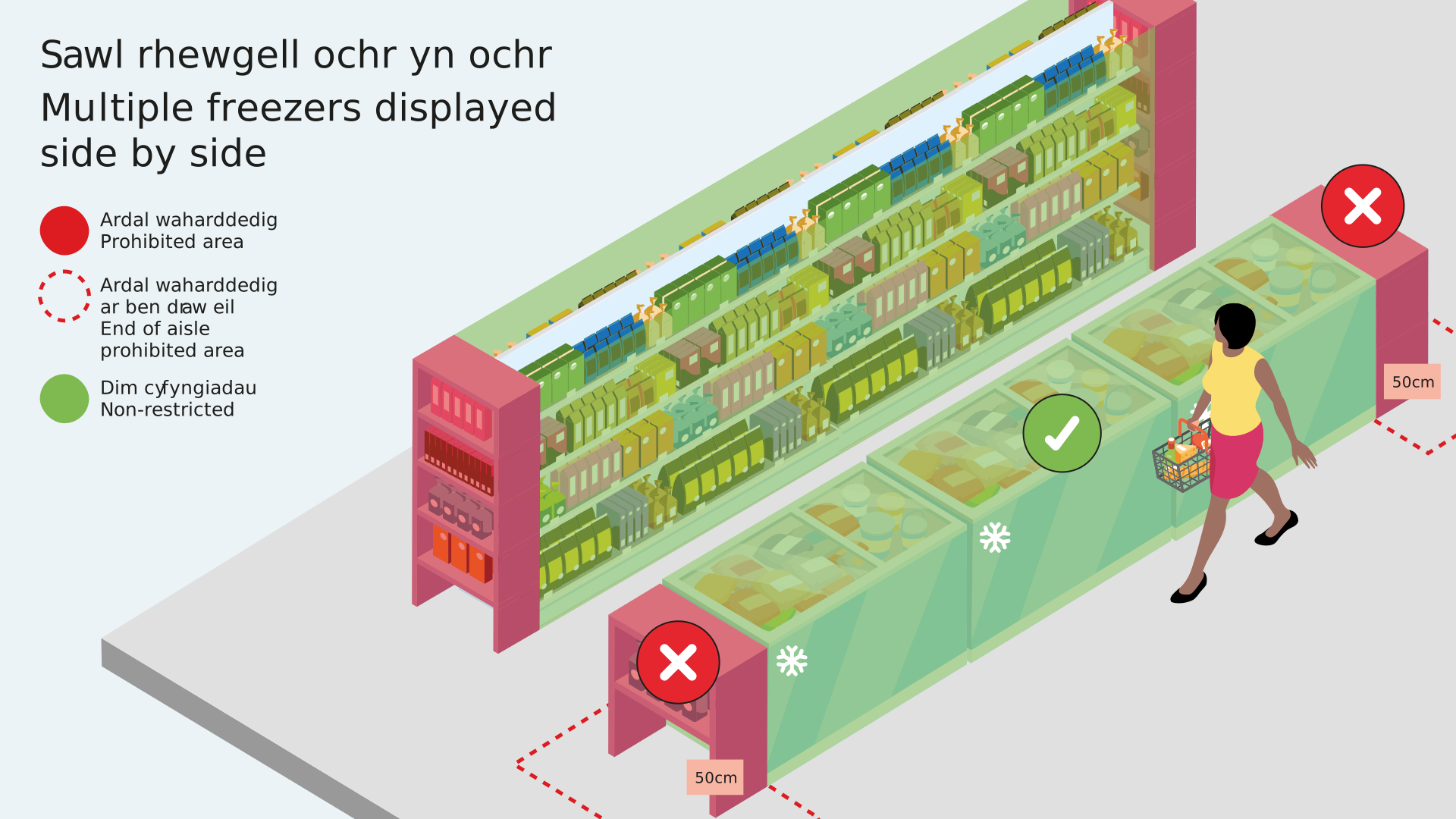
Example 1: freezer units displayed side-by-side

If multiple freezer units are displayed side-by-side with another freezer unit, as in the image below, the units may form an aisle with an aisle end.

Image
Multiple freezers displayed side by side

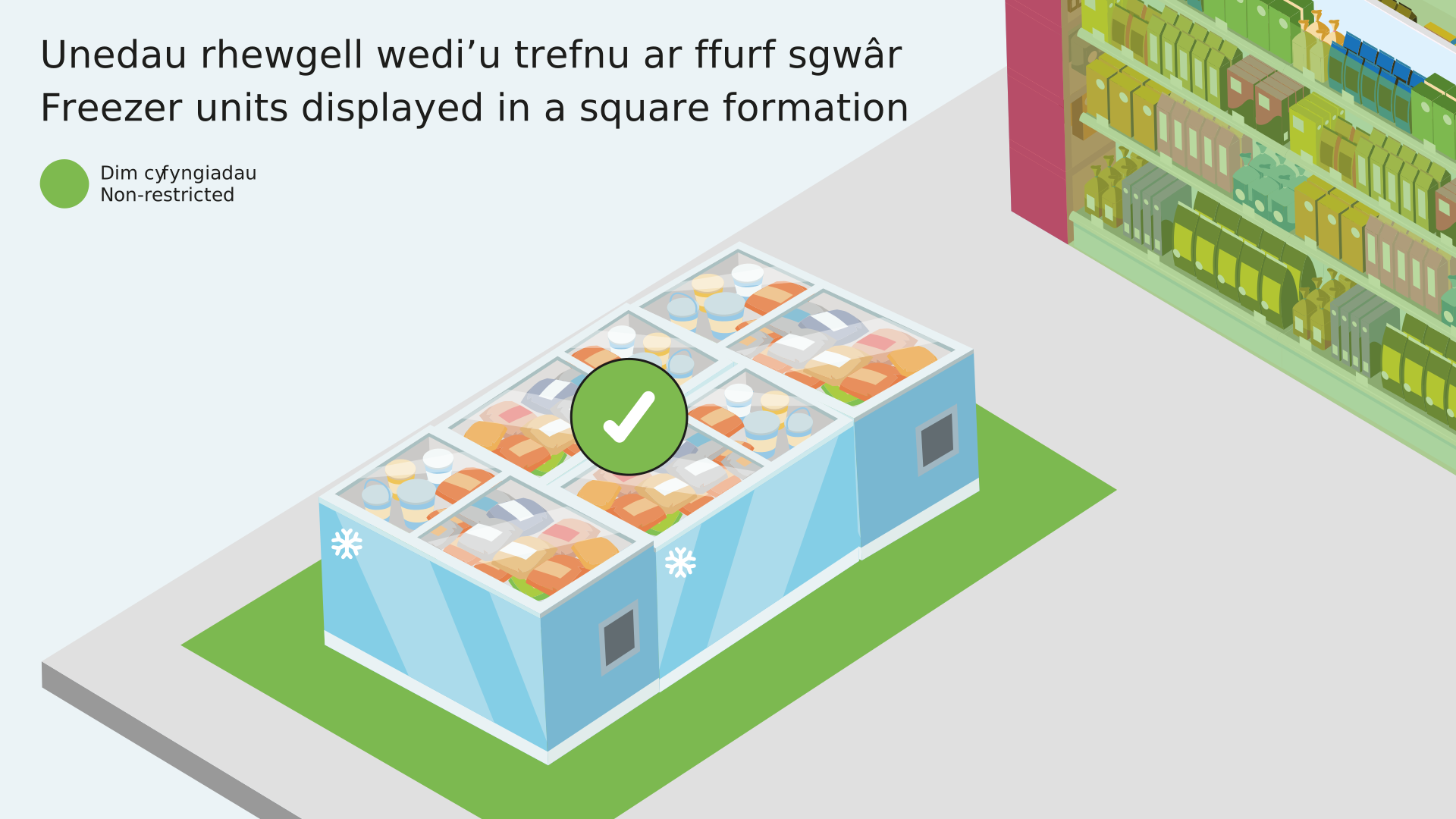
Example 2: freezer units displayed in a standalone square or rectangular formation

If a single freezer unit is displayed on its own or several units are displayed back-to-back in a standalone square or rectangular formation, which does not create any long space or passageway between rows, the units may typically be considered a separate structure to an aisle, such as an island.

Image
Freezer units displayed in a square formation

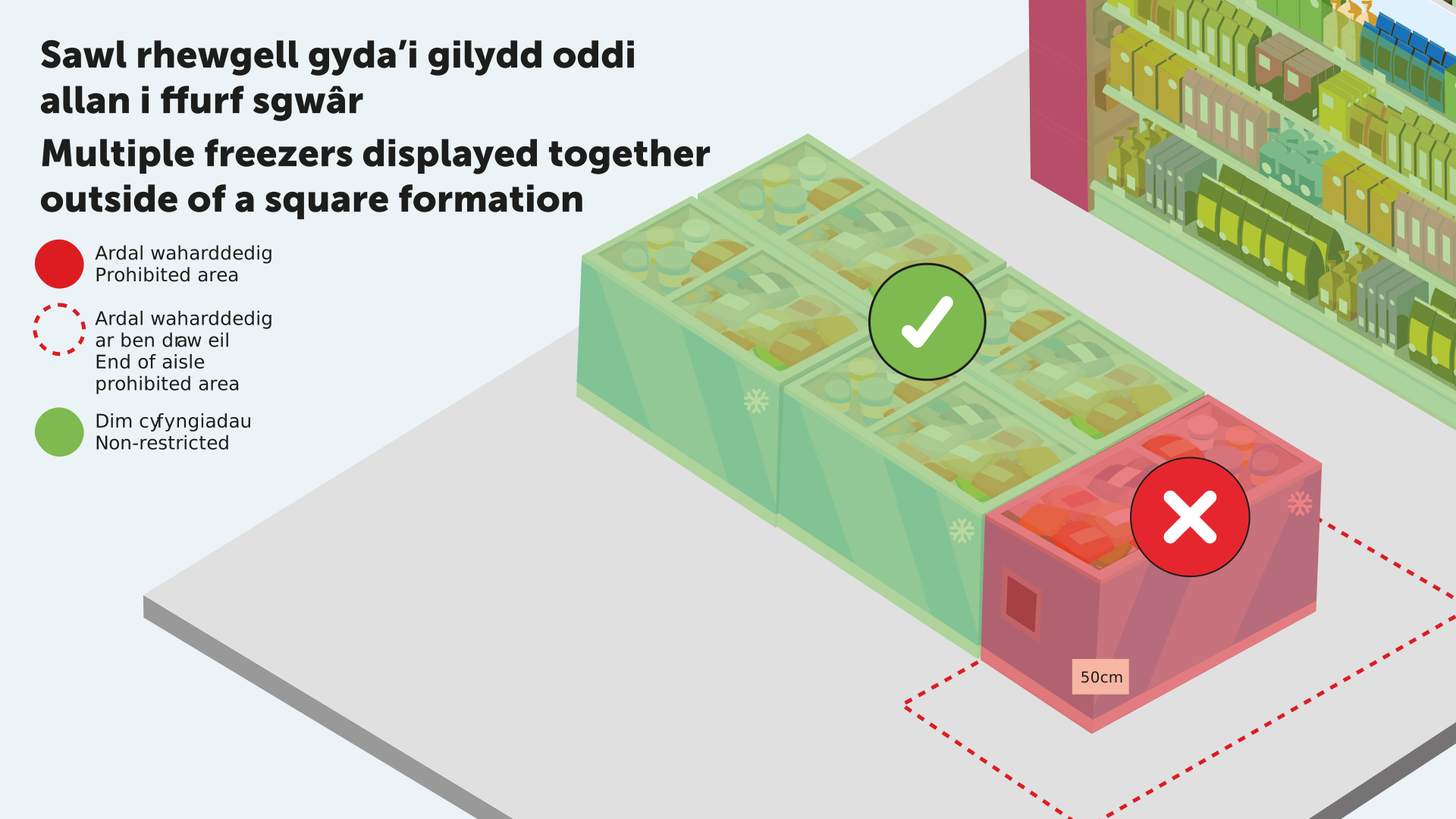
Example 3: multiple freezer units displayed together in a longer formation

If an additional freezer was added to the square formation of freezer units above, and the formation was displayed adjacent to another aisle creating a long space or passageway, the units may become an aisle with an aisle end.

Image
Multiple freezers displayed together outside of a square formation

Store entrances

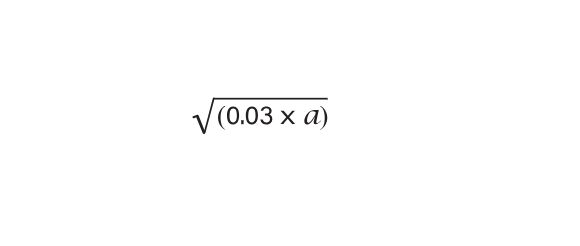
No specified food is permitted to be displayed within 15m, or the distance described by the formula below, of the midpoint of any public entrance to the store’s main shopping area, whichever is smaller. The midpoint is the point halfway from the left side of the store entrance to the right side.

Formula: prohibited distance from the store entrance

Image

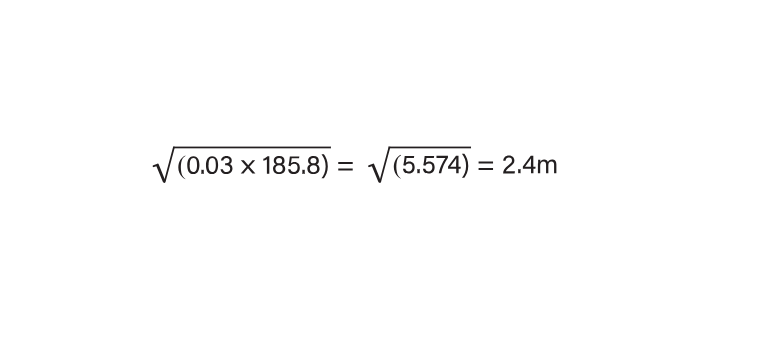
In the equation above, α is the ‘relevant floor area’ of the store. A distance is determined using this equation by multiplying the ‘relevant floor area’ by 0.03 and finding the square root of that figure. For example, a store of 185.8m2 would be prohibited from displaying a restricted product within 2.4m, or just over 7.7 feet, of the entrance. This can be seen in the following equation:

Image

In the equation above, the store’s relevant floor area of 185.8m2 is multiplied by 0.03. This equals 5.574. The prohibited floor area is therefore calculated by finding the square root of 5.574. The square root rounded by one decimal place is 2.4m.

The table below illustrates the prohibited entrance areas, as a measure of ‘relevant floor area’.

Relevant floor areaProhibited distance
185.8m2 (2,000 square feet)2.4m
278.7m2 (3,000 square feet)2.9m
371.6m2 (4,000 square feet)3.3m
464.5m2 (5,000 square feet)3.7m
557.4m2 (6,000 square feet)4.1m
650.3m2 (7,000 square feet)4.4m
743.2m2 (8,000 square feet)4.7m
836.1m2 (9,000 square feet)5.0m
929.0m2 (10,000 square feet)5.3m

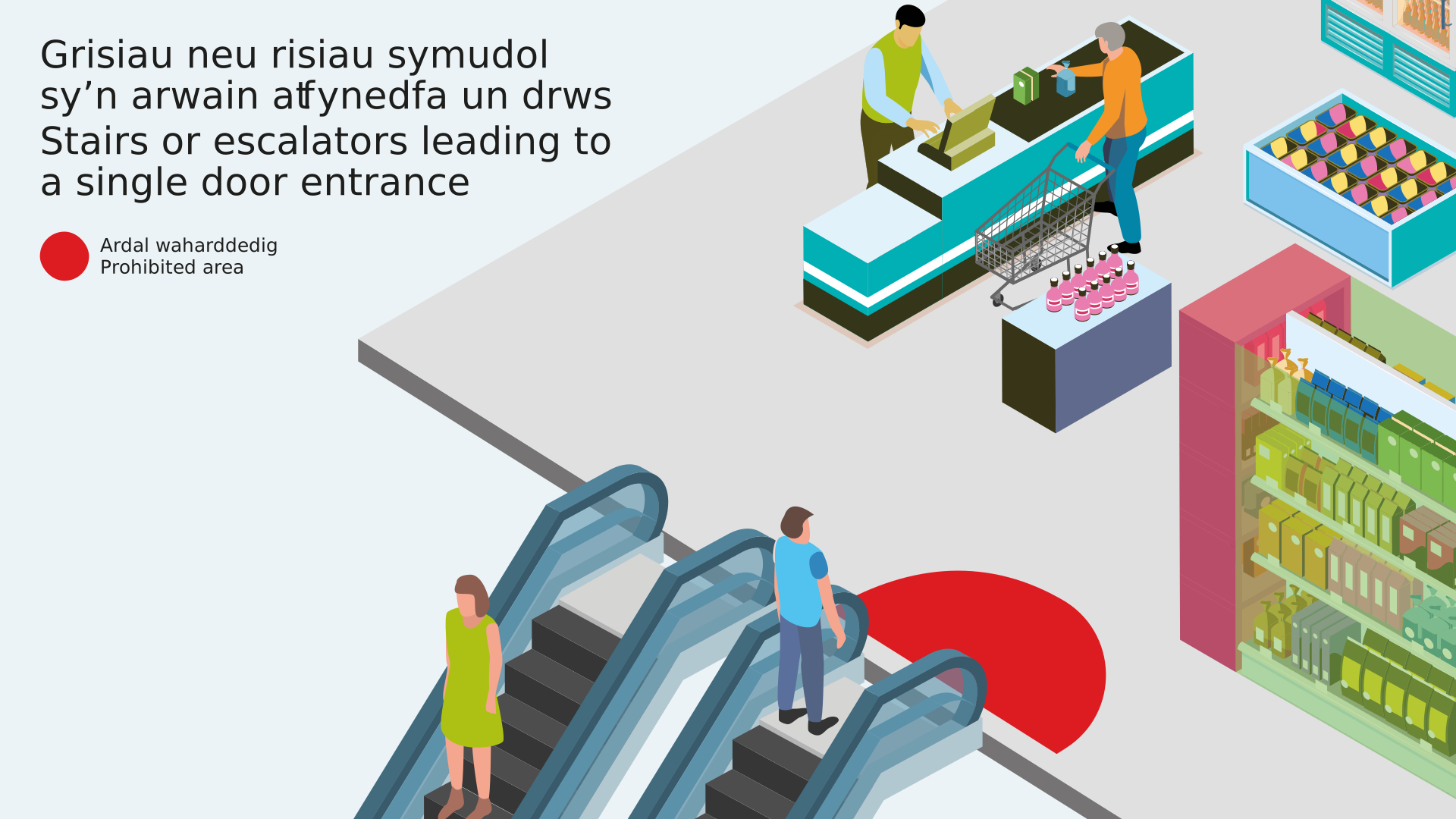
This prohibited distance would form a semi-circle inside the store around the relevant public entrance. An illustration of a store entrance restriction can be found in annex 3.

Examples of application of the prohibited distance from the public store entrance:

  • if the store entrance is a lift, the midpoint of that entrance would be the midpoint of the lift door through which the lift is exited and the store entered
  • if the store entrance is by escalators or stairs, the midpoint of that entrance would be the top of the last step into the store

Aisles within a restricted store entrance area

In instances where an aisle is within the restricted store entrance area, specified food cannot be placed in this area, even if it is in the aisle and not an aisle end. In some cases, both sides of the aisle may be within the restricted store entrance area. In these instances, qualifying HFSS products cannot be placed in the restricted areas of the aisle on either side of the aisle, as illustrated in the example provided in annex 3.

The restricted store entrance area must be free of all specified food, however it is displayed.

Covered external areas

Specified food must not be placed in a ‘covered external area’, which means a covered area, outside and connected to a store’s main shopping area, through which the public passes to enter the main shopping area (such as a foyer, lobby or vestibule).

This is a separate restricted area to the prohibited store entrance area.

Further examples of areas that could be assessed by enforcement authorities as a ‘covered external area’ include petrol forecourts and shop awnings.

Internal entrances to food halls within a department store (or similar)

Entrance areas to different sections or departments within the same store occupied by the same qualifying business may not be a public entrance for the purposes of the restriction on store entrance areas. For example, a food hall within a department store may only be accessible internally within the store building. The prohibited store entrance area applies in respect of any public entrance to the department store’s main shopping area, and not the point where the food hall begins.

However, if a concession within a larger store is a qualifying business and its area within the store is over 185.8m2 (2,000 square feet) in size then the entrance to the concession’s area may be the public entrance to the concession’s main shopping area.

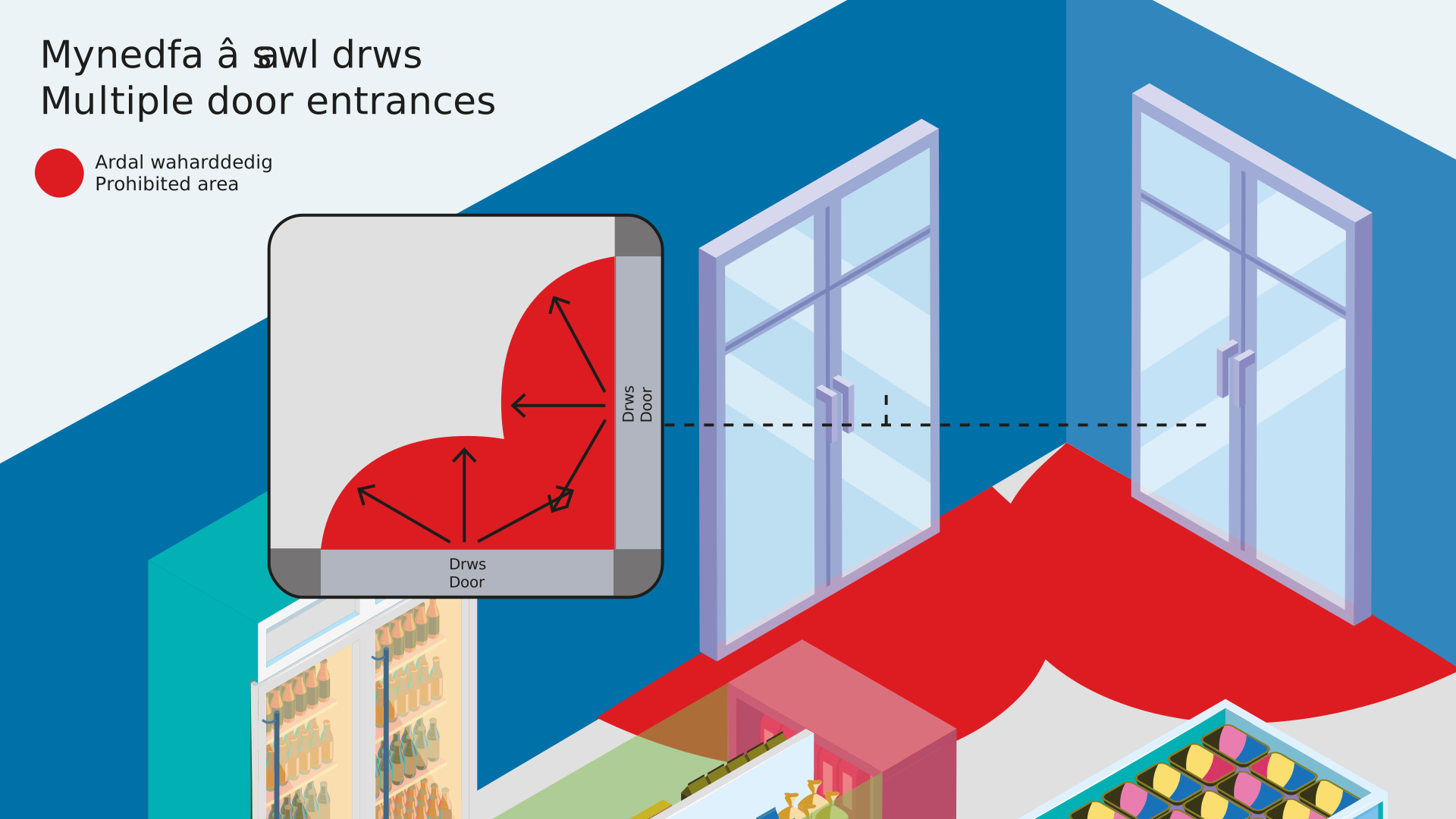
Multiple store entrances

The restriction on store entrance areas applies to any public entrance to the store’s main shopping area. Prohibited distances may overlap for store entrances that are close to each other

Online restrictions for location promotions

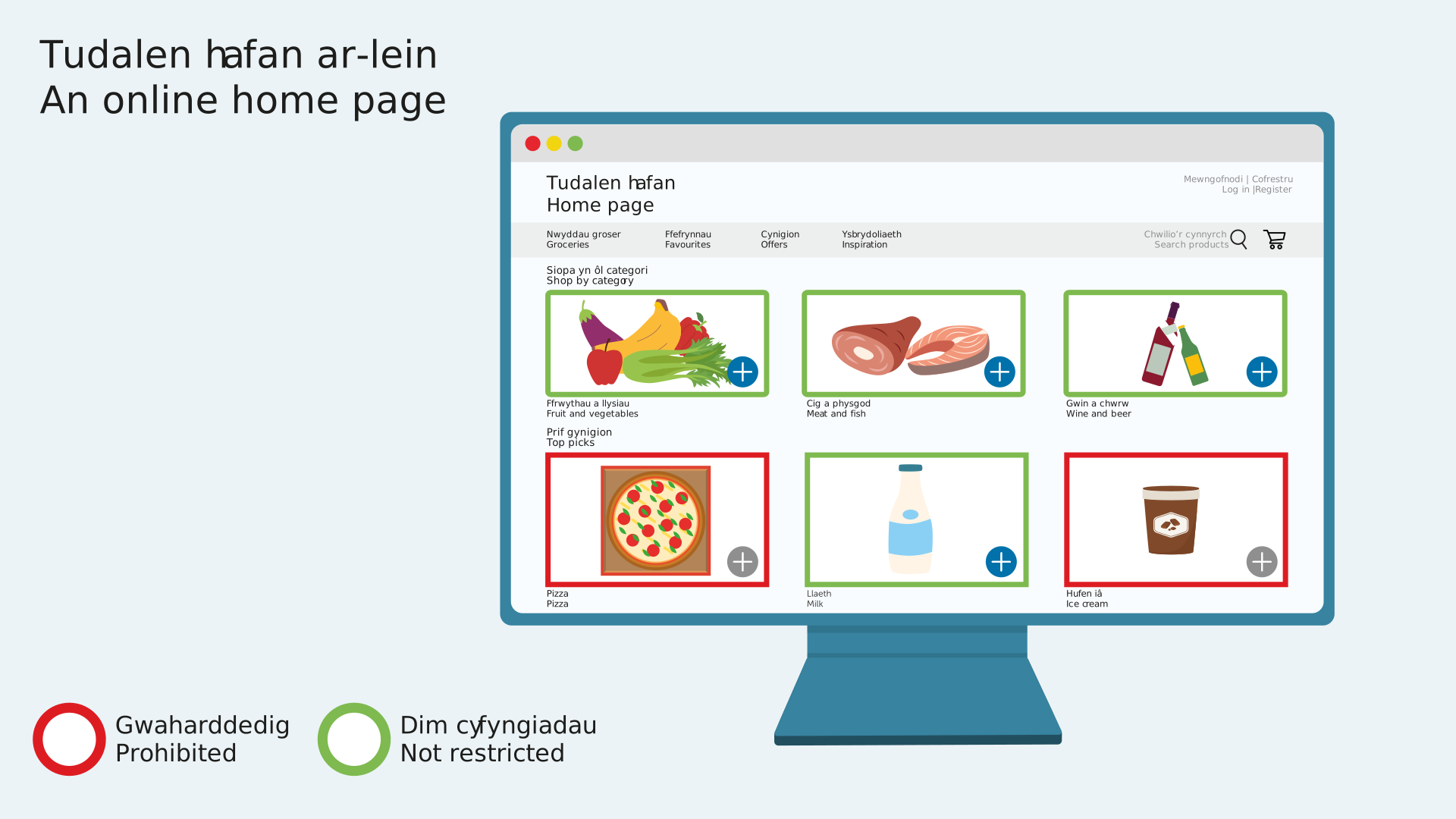
Businesses in scope of the regulations must not cause specified food online (including in apps), to be offered for sale in specified locations considered equivalent to key locations in stores. For example, offering specified food for sale on the homepage of a website is considered equivalent to placing specified food at the store entrance of a physical store.

These restrictions do not apply to a qualifying business which only or mainly sells food from a single category in schedule 1. For example, an online cake shop or specialist shops for chocolate or sweets.

The restrictions apply to qualifying businesses selling food online in Wales.

Alongside ensuring compliance with these regulations, businesses should also check whether they are in scope of UK Government’s broadcasting and online advertising regulations. There is a section within this guidance (entitled ‘broadcast and online advertising regulations’) which seeks to support you in understanding the key areas of alignment and difference between these 2 regulations.

Restricted locations online

A qualifying business must not cause specified food to be offered for sale on an online marketplace in the following online ‘locations’:

  • The homepage (whether or not the consumer enters the online marketplace via the homepage). For example, an image of a specified food that a consumer could add to their shopping basket from that point on a homepage (such as, via an ‘add to basket’ icon) may not be permitted. However, an image of a specified food signposting to a taxonomy page that may have specified food on or not (including category pages that are ‘offers’ pages) may be permitted on a homepage, subject to compliance with UK Government online advertising regulations.
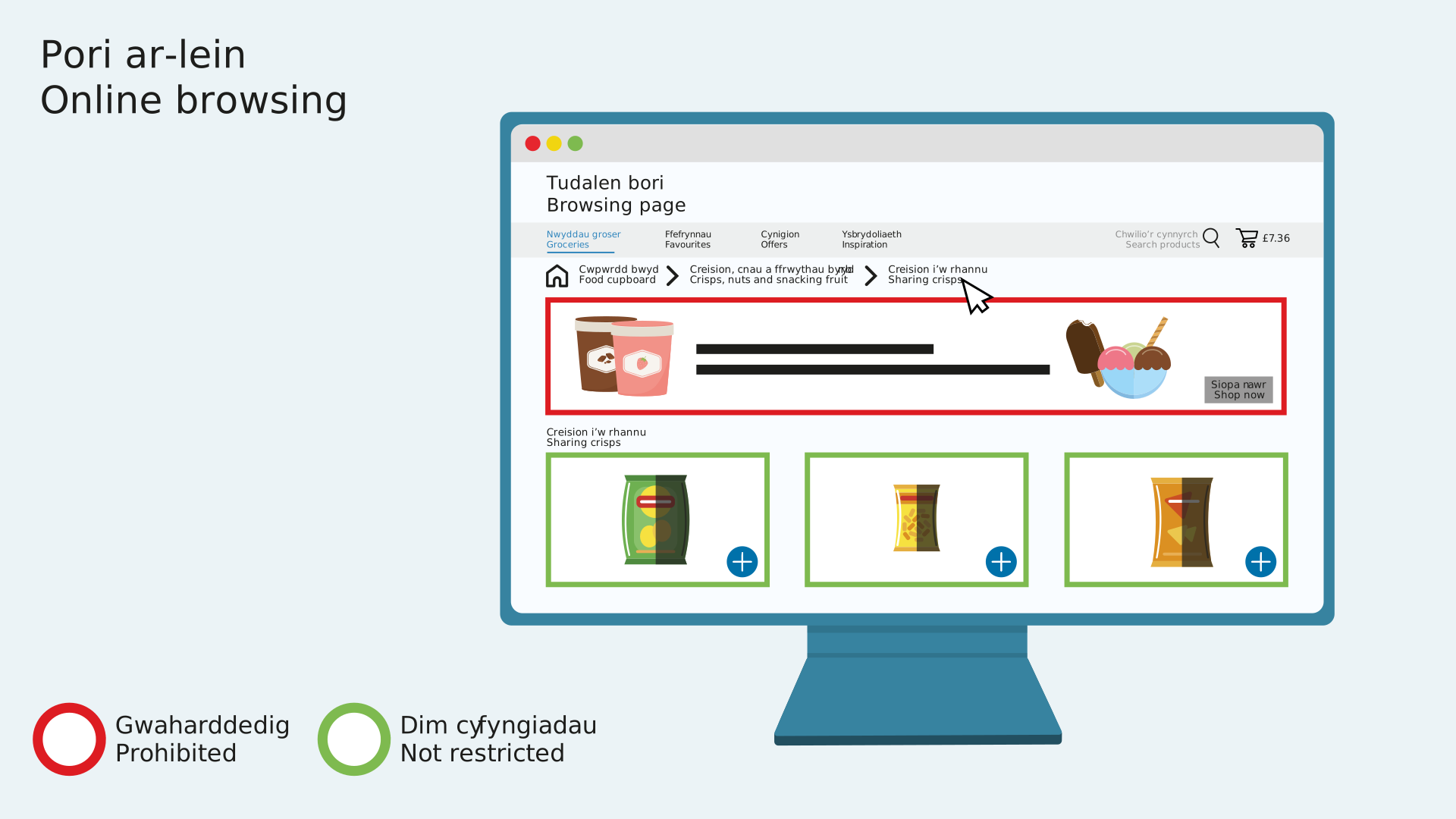
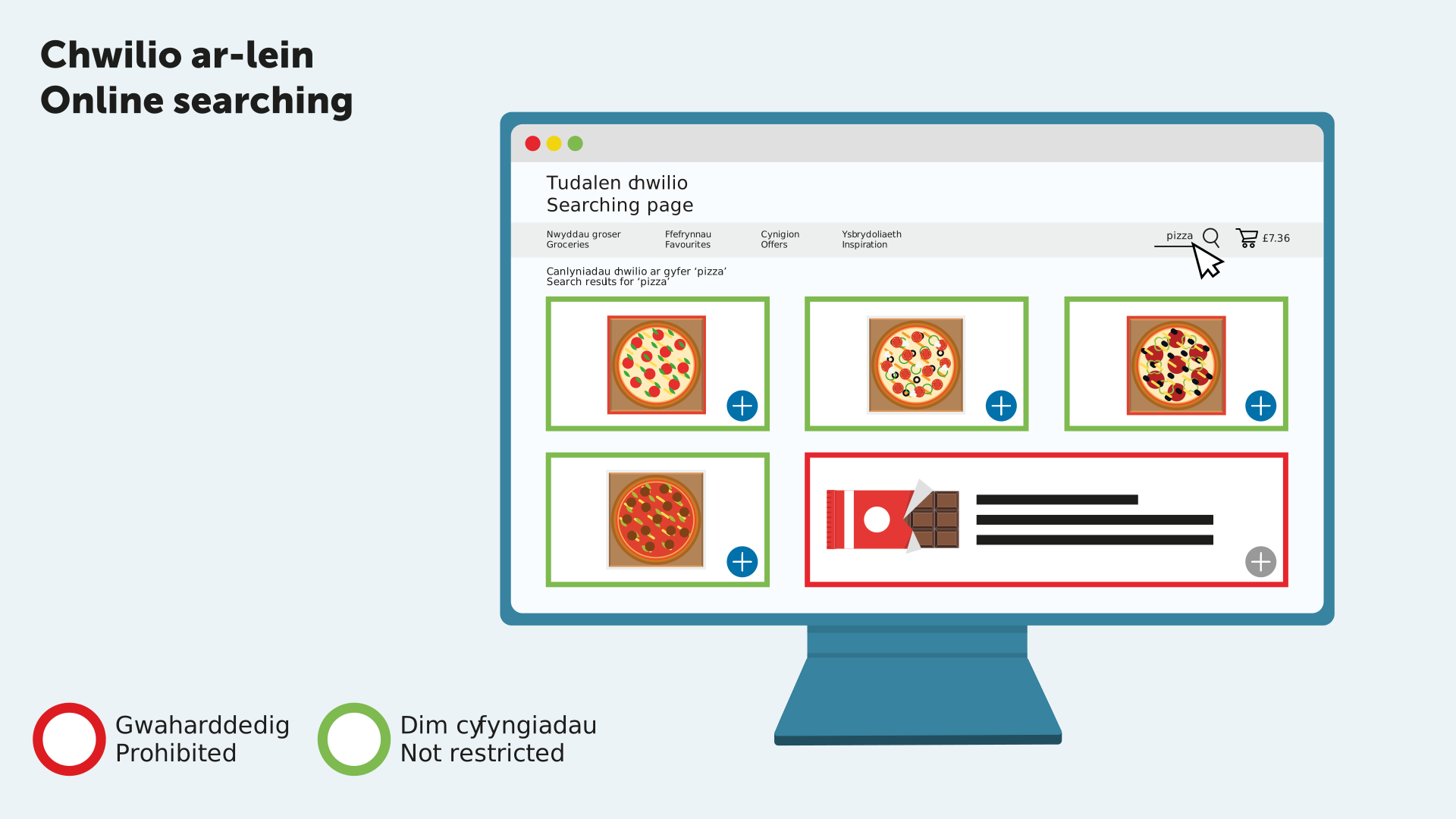
  • While a consumer is searching for or browsing products other than schedule 1 food, unless certain instances apply (see regulations 7(4) and (5) in the regulations and the examples below, which illustrate some common scenarios businesses may encounter).
  • While a consumer is searching for or browsing schedule 1 food, unless the specified food falls within the same schedule 1 category or certain instances apply (also see regulations 7(4) and (5) of the regulations and the non-exhaustive examples below).
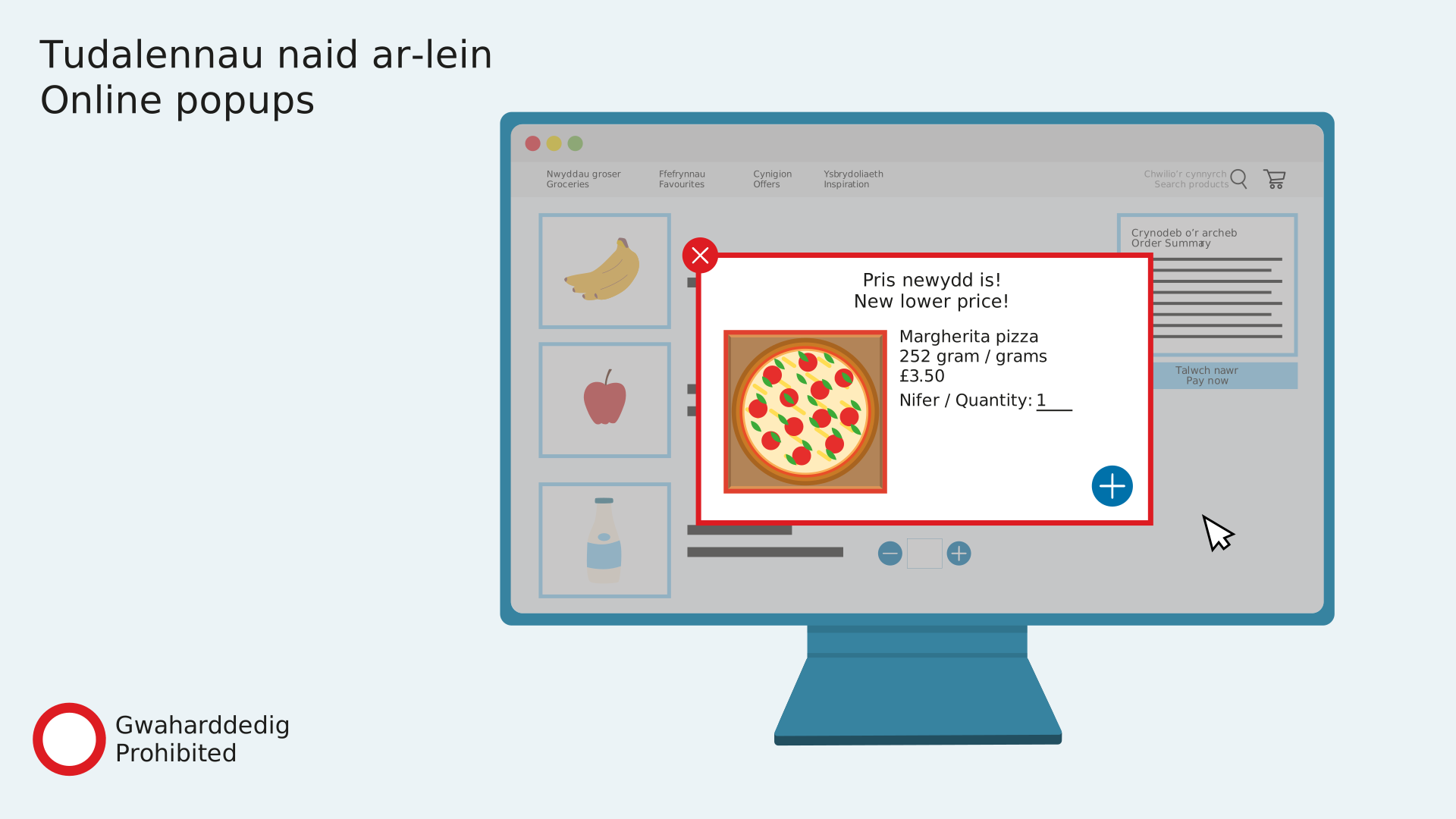
  • On a page not opened intentionally by the consumer, such as a pop-up page or a brand burst. When, for example, customers are proceeding to payment, there must not be a promotion (pop-up or under, or otherwise) of a HFSS or ‘less healthy’ food, even if the customer purchased this item on their last shop or it is a favourite item. This restriction also covers pop-up pages that may open when a consumer is browsing a schedule 1 category page, even if the pop-up page is promoting the same schedule 1 food. For example, a pop-up page promotion of a biscuit cannot open while a consumer is browsing the ‘biscuits’ page that they intentionally opened.
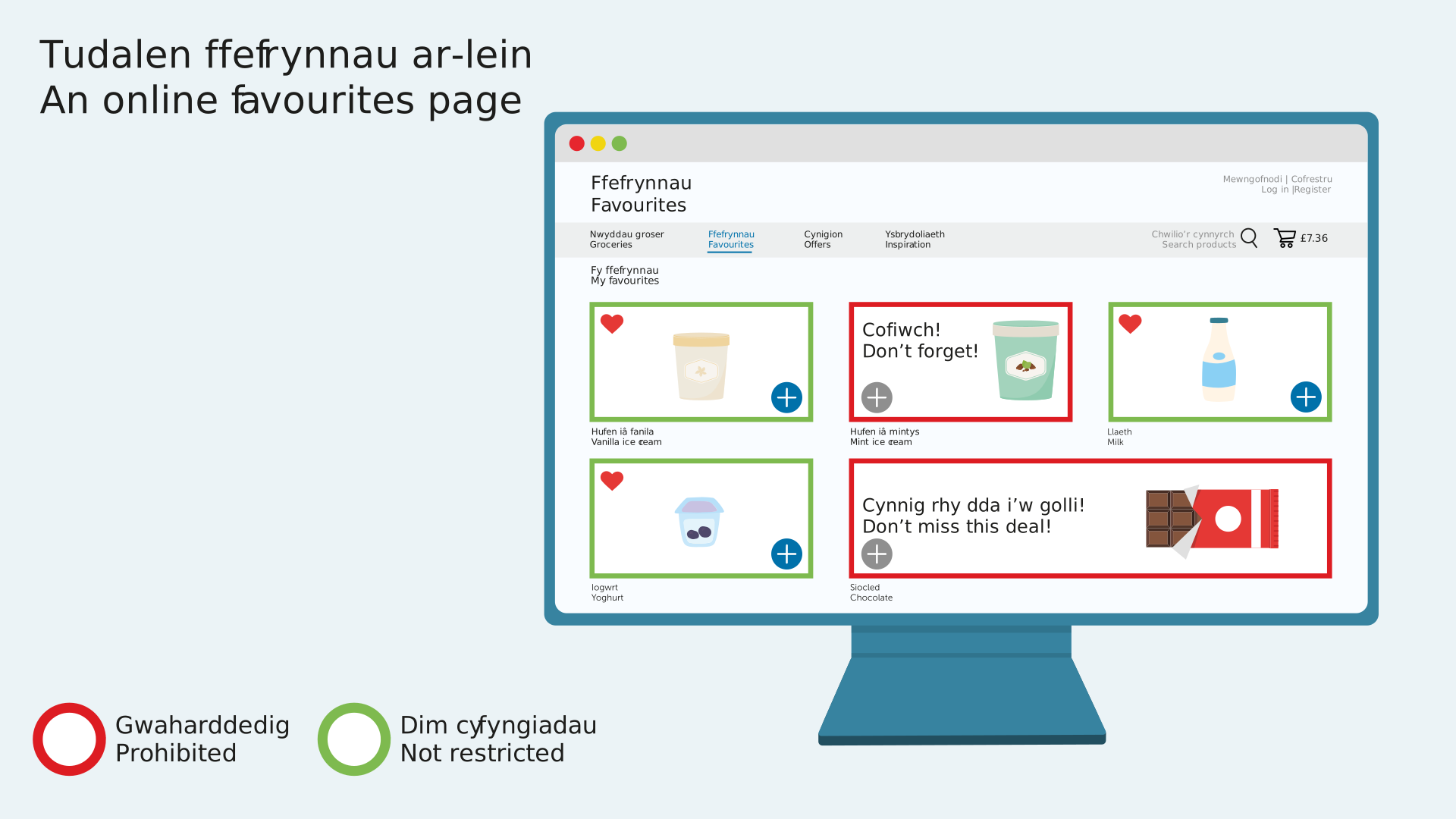
  • On a ‘favourite products’ page. This restriction applies unless the consumer has previously purchased the specified food (whether in store or online) or intentionally identified it as a favourite product. However, specified food must not, in any event, be given greater prominence than other products on a’ favourite products’ page. For example, within the list or grid of favourites, a specified food that is made bigger, ‘flashier’ or given special prominence in other ways over other products. Specified food flavour variants, different pack sizes, other products within the same category, or any other products that have not been previously purchased or identified by the consumer are not permitted to be promoted within the ‘favourites’ page because they have not been previously purchased or intentionally identified as favourite products. If a favourite product that has been previously purchased or intentionally identified is out of stock, a substitution can only be made if the product suggested as a substitute is a homogenous product and not a variation. A homogeneous product is one that cannot be distinguished from competing products from different suppliers. The product has essentially the same physical characteristics and is the same quality as similar products from other suppliers on a checkout page.
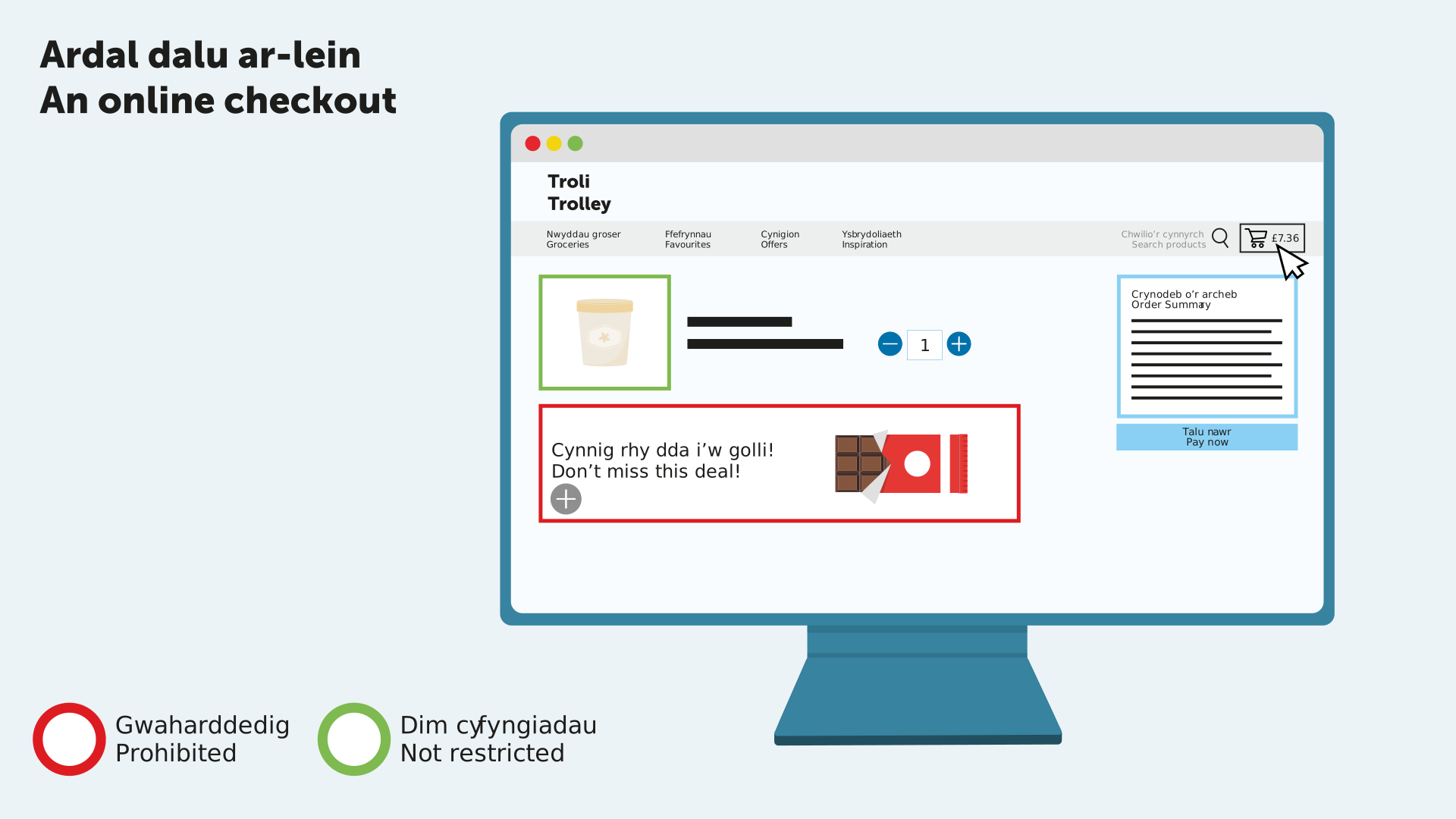
  • On a checkout page. This covers all pages shown to a consumer as part of the checkout process, such as the consumers basket or any pages dealing with payment, collection or delivery. If a ‘favourites’ page opened by the consumer is part of the checkout flow, the ‘favourites’ page restriction applies to this page.

Specified food must not be offered for sale as part of a volume price promotion anywhere on an online marketplace of a qualifying business in scope.

The regulations prevent specified food being offered for sale online while a consumer is searching or browsing food products. The examples below outline some exemptions to these restrictions.

Examples of searching restrictions

Example 1: searching for a schedule 1 food

If a consumer intentionally searches for a schedule 1 food, for example ‘chocolate’, in any part of their search, the search results may be any food within the same schedule 1 category, food offered for sale together with ‘chocolate’ as part of a relevant special offer, food marketed under a name which matches ‘chocolate’ in whole or in part, or food with an ingredient listed on the packaging which matches ‘chocolate’ in whole or in part. For example, chocolate confectionery, chocolate biscuits, chocolate-flavoured confectionery or chocolate ice cream.

Example 2: searching for a food other than schedule 1 food

If a consumer intentionally searches for a food product that is not in schedule 1, specified food must not appear in the search items list, but may be able to if:

  • The name under which the specified food is marketed matches, in whole or in part, with the search term. For example, ‘prawn cocktail crisps’ may be permitted to show on the search listings (in whatever form, for example, banners or featured products and so on) if ‘prawn’ was the search term, as they share part of the name under which the specified food is marketed.
  • An ingredient listed on the packaging of the specified food matches, in whole or in part, with the search term. For example, a prawn-based ready meal may be shown in the search listing as they contain the same ingredient as the search term ‘prawn’.
  • The specified food is offered for sale together with the food product searched for as part of a relevant special offer. For example, a retailer may be able to promote a dessert product when a consumer searches for a ready meal if the dessert is part of a ‘dine in for 2’ offer.

Example 3: general categories

Specified food may appear in the search items list where a general category of product is used as a search term by the consumer and it includes the specified food. Any specified food that feasibly falls under that general category may then be permitted on the search listings page. For example, if a customer searched for ‘vegan food’, vegan cakes and vegan pizzas may show up in the search results. A general category of product may include categories relating to seasonality such as ‘Christmas’ (where Christmas confectionery, Christmas cake and other Christmas-related products could be shown) and browsing categories relating to nutritional or dietary characteristics, such as ‘low-calorie meals’, ‘BBQ’ and so on.

Example 4: hampers

If a consumer searches for ‘chocolate’ and a chocolate product was part of a hamper or kit containing other products that included specified food items from different schedule 1 categories, the hamper product itself may be able to be shown on the search listings.

Potential examples of this could be where the hamper:

  • is marketed under a name which matches, in whole or in part, with the search term, for example, a hamper marketed under the name of ‘chocolate fudge brownies’ where the search term was ‘chocolate’
  • includes specified food with an ingredient listed on its packaging that matches, in whole or in part, the term that is searched for, for example, a hamper containing chocolate and salted caramel tray bake where the search term is ‘chocolate’

Examples of browsing restrictions

Example 1: browsing for a schedule 1 food

If a consumer browses a ‘chocolate’ taxonomy tab page, generally no other specified food should be shown on that page.

Exceptions to this are if:

  • The specified food is in the same schedule 1 category as the food being browsed for.
  • A specified food is offered for sale together with the food the consumer is browsing as part of a ‘relevant special offer’. For example, if a consumer browses a ‘chocolate’ taxonomy page and chocolate was in a meal deal with crisps, sandwich and a soft drink, these items may be able to be shown on the taxonomy tab page.
  • The specified food is feasibly included within the general category of product the consumer searched for. For example, if a consumer browses a taxonomy page such as ‘chocolate, any specified food which feasibly falls under this general category may show up on this taxonomy page, such as chocolate cakes and chocolate ice cream. A general category of product may include categories relating to ‘Christmas’ (where Christmas confectionery, Christmas cake and other Christmas-related products can appear on the taxonomy page) and browsing categories relating to nutritional or dietary characteristics, such as ‘low-calorie meals’, ‘BBQ’ and so on.

Example 2: browsing for products other than schedule 1 food

If a consumer intentionally browses a taxonomy category page, for example, ‘vegan food’ specified food must not appear on the taxonomy page, but may be able to if:

  • The specified food is feasibly included within the general category of product the consumer searched for. For example, if a consumer browses a taxonomy page such as ‘vegan food’, any specified food which feasibly falls under this general category may show up on this taxonomy page, such as vegan cakes and vegan pizzas.
  • A specified food is offered for sale together with the food the consumer is browsing as part of a ‘relevant special offer’. For example, a retailer may promote a dessert product which is a specified food when a consumer browses vegan food, if the dessert is part of a ‘dine in for 2’ offer.

Example 3: hampers

If a consumer browses a ‘chocolate’ taxonomy page and a chocolate product was part of a hamper containing other products that included specified food items from the same schedule 1 category only, the hamper product itself would be able to be shown on the browsing page.

However, other such hampers including specified food items from different schedule 1 categories may not be permitted to be shown on the ‘chocolate’ taxonomy browsing page, unless the other specified food items within the hamper were included in the general category of chocolate products. For example, a hamper containing chocolate and chocolate biscuits may be shown on the ‘chocolate’ taxonomy page.

There is no exemption for retail online marketplaces that mainly sell non-food items but offer food in scope in restricted locations. These businesses are in scope of the regulations.

Special offers pages

Some taxonomy tabs on a retailer’s website that are dedicated special offer pages. For example, a page opened intentionally by a consumer for the purpose of browsing ‘special offers’, are not prohibited from offering specified food. Therefore, products under such a taxonomy tab could contain a mix of specified food and non-specified food belonging to different categories.

Special offers may include ‘deals of the week’ and so on. The restriction on offering specified food for sale as part of a volume price promotion however continues to apply.

Banners or headers

Banners or headers on an online marketplace may also be in scope of the online restrictions. Factors to consider include whether they are owned and controlled by the qualifying business (such as, they are not advertisements linking through to third-party websites) and whether they are offering specified food for sale in a location which is not permitted.

Broadcast and online advertising restrictions

The UK government has committed to implementing the advertising restrictions for less healthy food or drink on television and online. The restrictions are set out in the Communications Act 2003 (as amended by the Health and Care Act 2022) and are due to come into force UK wide on 5 January 2026. In agreement with the government, broadcasters and advertisers, with the support of online platforms and publishers, have made a public commitment to voluntarily comply with the restrictions from 1 October 2025. The Advertising (Less Healthy Food Definitions and Exemptions) Regulations 2024 provide the definitions for products, businesses and services in scope of the lab advertising restrictions and there is supporting guidance on the products in scope. The advertising restrictions are intended to work alongside other regulatory interventions on obesity, such as these regulations.

The below illustrates the areas of alignment between The Food (Promotion and Presentation (Wales) Regulations 2025 and The Advertising (Less Healthy Food Definitions and Exemptions) Regulations 2024.

Product categories in scope

Category 1 to 12 in both sets of regulations are intended to align as much as possible. However, there are some clear differences in category 13 that businesses should note. These differences reflect that the UK-wide advertising restrictions on less healthy food or drink also apply to products sold in the out of home sector as well as retailers and manufacturers, whereas these regulations apply only to products sold by retailers and manufacturers (with the exemption of sugary drinks in the out of home sector).

Businesses in scope

The UK Government advertising restrictions apply to businesses with 250 or more employees that pay to advertise less healthy food and drink products. Conversely, The Food (Promotion and Presentation) (Wales) Regulations 2025 apply to businesses with 50 or more employees offering pre-packed food for sale online and in store. The Welsh regulations do not apply to the out of home sector, except where businesses offer free refills on non-pre-packed sugary drinks.

Liability

Under The Food (Promotion and Presentation (Wales) Regulations 2025, retailers are liable for breaches in store, and retailers or online aggregators may be responsible for sales online.

Under UK government’s advertising restrictions, advertisers are liable for any breaches of the prohibition on paid-for advertising on the internet. Service providers for on-demand programme services under UK jurisdiction are liable for any breaches of the broadcast restrictions.

In areas of overlap, such as if a company has paid for advertising of an identifiable HFSS product displayed in an area restricted under the promotions regulations (for example, on a retail homepage, checkout page or page not intentionally opened by the consumer), the retailer or aggregator may be liable for the breach of promotions regulations.

It is possible that the frontline regulator of the advertising restrictions (Advertising Standards Authority) could also find the retailer liable in breach of the advertising restrictions if in its capacity as an advertiser, it has paid for placement of an advert for an identifiable less healthy product online.

Part 7: liability

Liability

Businesses in scope of the regulations that promote food in scope in a way that does not meet the requirements of the legislation will be liable to enforcement action, unless an exemption applies.

It is expected that qualifying businesses will need to assess whether the products they sell fall within the Schedule 1 categories in the regulations. If they do, businesses will need to assess whether these products are ‘less healthy’ by calculating their NPM score. If a product is deemed to be ‘specified food’, then it will be the responsibility of the business to ensure that they comply with the restrictions on promotions as set out in the regulations.

Qualifying businesses are responsible for ensuring the products they are promoting are compliant. Most of the necessary information to calculate NPM scores (for example, the amount of energy, kilojoules (kJ), sugars, saturated fat and so on in 100g of the food or drink) is already provided on packaging.

If businesses require further information (for example fibre, fruit, vegetable and nut content), then they may choose to seek this from manufacturers (if it is not already publicly shared). Manufacturers may choose to provide NPM scores to businesses if they wish for them to promote a product that is in a Schedule 1 product category but that is not HFSS or ‘less healthy’ due to its NPM score.

Nutrition or ingredient information provided by a manufacturer should be accurate and not misleading. If information provided by a manufacturer is considered misleading, an enforcement authority may take enforcement action against the manufacturer under separate legislation. Manufacturers already have certain obligations about nutrition information with which they need to comply and it is an offence to put misleading nutrition information on the packaging.

Online apps and delivery platforms

If qualifying businesses are offering food in scope on a third party website or online platform, they will have to comply with location and volume price promotions restrictions in respect of the products they are selling. Restaurants are out of scope of promotions restrictions (except for free drink refills), but retailers are in scope and liable to enforcement action.

Retailers must therefore not cause specified food to be offered for sale on parts of online aggregator sites or apps (such as, the online marketplace) that may be captured by promotions restrictions, such as checkout pages or pop-ups on retailers’ sections of the app or site.

Retailers are responsible for ensuring any contracts in place with the online delivery platform make clear that the law must be followed. They must also ensure that the products they sell are compliant with the location and volume price promotions restrictions on these types of platforms, where they remain responsible for this food being offered for sale.

Although retailers are responsible for the sale of their products online, online aggregators may also have such a responsibility. This could arise, for example, when aggregators advertise, promote or facilitate the sale of products on behalf of a trader.

A court will consider the facts of each case when deciding if the actions of online delivery platforms and aggregators have led or contributed to a breach of the regulations. Enforcement officers may contact all relevant parties when considering compliance and may consider other mechanisms for enforcement.

Part 8: enforcement

Enforcement

We would encourage enforcement authorities to:

  • be pragmatic in their enforcement approach
  • discuss areas where businesses may not be compliant with the regulations, issuing improvement notices where necessary
  • focus on supporting compliance rather than penalising non-compliance

Enforcement authorities have a number of tools at their disposal to enforce the regulations, as set out below. In the first instance, we would encourage enforcement authorities to work with businesses informally or by way of an improvement notice to support and encourage compliance.

Enforcement of the regulations

The regulations will be enforced by food authorities. In practice, this will be your local authority. The regulations may be enforced by trading standards or environmental health officers depending on local arrangements. Officers will be authorised to carry out their functions to enforce these regulations.

Businesses may work with their primary authorities to ascertain whether their businesses fall in scope of the regulations. Enforcement authorities may wish to liaise with primary authorities when a partnership exists to establish any advice that may have been given to the business.

Enforcement authorities are likely to check:

  • whether a store is part of a medium or large business (where the total number of employees operating under that business name is 50 or more)
  • whether a store is a specialist store selling one type of product
  • whether a store size is less than 185.8m2 (2,000 square feet)
  • the presence of any products that are part of the food in scope categories in a restricted volume price or location promotion, in store and online
  • if there are products in these categories on volume price or location promotions, to ascertain from the retailer how they have ensured that these are not HFSS or ‘less healthy’ as defined by the NPM score

Enforcement officers have discretion in choosing how to conduct initial or further investigations. In deciding whether to investigate a matter, or investigate it further, factors that they may take into account include information from the retailer, or evidence obtained from wholesalers or manufacturers on the content of food products.

To assess compliance with the restriction on free refills of sugary drinks in scope of the regulations, enforcement authorities are likely to check:

  • whether the business (for example, restaurant) is part of a medium or large business (where the total number of employees operating under that business name is 50 or more)
  • the presence of any ‘free refill’ offers on drinks that are in scope of the regulations
  • if there are free refills offered on drinks, to ascertain from the business how they have ensured that these are not HFSS or ‘less healthy’ as defined by the NPM score

How to demonstrate compliance to inspecting enforcement officers

Where enforcement officers require access to this information as a means of assessing a business’ compliance with the regulations, the regulations provide enforcement officers with powers of entry, which include the ability to inspect the records (in whatever form they are held) relating to a food business. It would assist enforcement officers in assessing a business’ compliance with promotion and presentation restrictions, if the businesses had available:

  • store planograms, for example, planograms that provide the store’s dimensions and the size and location of concessions within the store
  • details of the total number of employees operating under the business’ name

Enforcement officers may also ask you how you are calculating the NPM score for your products and what information you hold from suppliers. It may be helpful for you to retain any records which could assist you in answering these questions.

Penalties for non-compliance

Enforcement officers of food authorities will work with businesses to support their compliance with the law. If a food authority has reasonable grounds to believe that a person is failing to comply with the regulations, they could serve an improvement notice on that person.

However, improvement notices are discretionary and need not be the first action taken when an enforcement officer uncovers a potential infraction. Enforcement officers are permitted and encouraged to have initial conversations with businesses to resolve potential non-compliance and advise on how to comply before issuing formal notices. Serving an improvement notice may be a means of escalation following continued non-compliance. Further information and a flowchart outlining the processes for enforcement of the regulations have been included in annex 1 and annex 2.

Online enforcement

Businesses in scope of the policy that may have a primary authority relationship are encouraged to discuss compliance matters with them. Enforcement teams responsible for compliance issues can also be contacted for support.

Advertising Standards Authority’s role in enforcement of online promotions restrictions

The Advertising Standards Authority (ASA) is the UK’s independent advertising regulator.

They have been administering the UK code of non-broadcast advertising and direct and promotional marketing (written and maintained by the Committee of Advertising Practice) for over 50 years and the UK code of broadcast advertising (written and maintained by Broadcast Committee of Advertising Practice) for over 15 years, with their remit further extended in 2011 to include advertising claims on companies’ own websites and in social media spaces under their control.

The ASA might be made aware of a relevant promotion through its complaint handling or otherwise identify one in the course of its proactive monitoring activities.

These regulations only apply to volume price promotions and location restrictions pertaining to specified food sold in qualifying businesses. The regulations act independently of the existing Committee of Advertising Practice code.

If a piece of content is in scope of the promotions restrictions and potentially in breach of the UK advertising codes, and this comes to the attention of the ASA, then it will refer the matter to the relevant enforcement authorities. Compliance with these regulations takes precedence over the non-statutory UK advertising codes.

The ASA will refer cases it identifies to the relevant enforcement authorities for action. Only food authorities have the power to issue improvement notices and fixed monetary penalties under these regulations.

Annex 1: enforcement process

Annex 1: enforcement process

Improvement notices

Improvement notices provide businesses with the ability to take corrective steps before any penalty is levied. Improvement notices should provide a roadmap to compliance. The regulations require these notices to specify details such as the:

  • matters which constitute the failure to comply
  • time period within which measures must be taken to secure compliance

The period given for a business to secure compliance under an improvement notice will be for enforcement authorities to consider on a case-by-case basis, when exercising their functions.

There will be an appeal process available if an improvement notice is contested (appeals will be made to a Magistrates’ Court), which will effectively ‘stop the clock’ for the time allowed to comply until the appeal has been heard.

Any person who fails to comply with an improvement notice may be guilty of an offence.

There are 2 options following an offence committed:

  • The offending business is criminally prosecuted, which may result in an unlimited fine per offence.
  • An enforcement officer can impose a fixed monetary penalty (FMP) of £2,500 (a civil sanction). In accordance with the Regulatory Enforcement and Sanctions Act 2008 (RESA), enforcement authorities will exercise their powers to impose an FMP in a way which is proportionate, consistent and targeted only at cases in which action is needed.

Enforcement actions will be taken in accordance with the authorities’ enforcement policy.

Process for issuing fixed monetary penalties

When an enforcement officer proposes to impose an FMP on a person who has failed to comply with an improvement notice, the officer must serve a notice of intent on the recipient. The notice of intent will:

  • set out the grounds for the proposal to impose an FMP
  • state that the proposed FMP will be £2,500

Information that must be included on a notice of intent is included in the regulations.

The FMP proposed can be discharged if a person who receives a notice of intent pays 50% of the amount of the penalty within 28 days (beginning with the day on which the notice was received).

Additionally, a person on whom a notice of intent is served may, within 28 days (beginning with the day on which the notice was received), make written representations and objections to an enforcement authority in relation to the proposed imposition of the FMP, setting out why they feel an FMP would not be appropriate, which an enforcement authority will consider before coming to a final decision.

Final notice

If the person who has received a notice of intent does not discharge liability within 28 days, an enforcement officer may serve a final notice imposing an FMP of £2,500.

The information that must be included on a final notice is included in the regulations, this will include:

  • information on the grounds for imposing the FMP
  • how payment must be made
  • the consequences of non-payment

The enforcement officer may not serve a final notice on a person where the officer is satisfied that the person would not, by reason of any defence, be liable to be convicted of the offence to which the notice relates. Where an enforcement officer serves a final notice relating to an FMP, they may not serve any other notice under these regulations in relation to the offence.

If a person who is served with a notice of intent makes representations or objections concerning that notice within the time limit, that person may discharge the final notice by paying 50% of the penalty within 14 days (beginning with the day on which the final notice was received).

A person receiving the final notice may appeal against it. Persons will have a period of 28 days after a final notice is served to appeal the notice. Rights of appeal will be made clear in any final notice served and appeals will be dealt with by a First-tier Tribunal in the General Regulatory Chamber.

The grounds for appeal are that the decision was:

  • based on an error of fact
  • wrong in law
  • unreasonable
  • wrong for any other reason

Enforcement authorities can, at any time in writing, withdraw a notice imposing a fixed monetary penalty (see paragraph 13 in schedule 2 to the regulations).

Non-payment after 28 days

The FMP must be paid within 28 days of receipt of the final notice. If the FMP is not paid within Done days of the final notice, the amount payable is increased by 50%.

In the case of an appeal, it is payable within 14 days of the determination of the appeal (if the appeal is unsuccessful) and, if it is not paid within 14 days, the amount of the FMP is increased by 50%.

Criminal proceedings

If a notice of intent for an FMP is served on any person:

  • No criminal proceedings for the offence may be instituted against that person in respect of the act or omission to which the notice relates before the expiry of the period of 28 days (starting from the date on which the notice of intent is received).
  • If that person discharges liability, that person may not at any time be convicted of the offence. If an FMP is imposed on a person, that person may not at any time be convicted of the offence in respect of the act or omission giving rise to the penalty.

As mentioned previously, FMPs provide a means to respond to non-compliance of the regulations with a civil sanction as an alternative to prosecution.

However, it is in the discretion of an enforcement officer to criminally prosecute an offence committed after not meeting the terms of an improvement notice. Each case will be assessed on its own merits. For example, an enforcement officer may consider a prosecution is more appropriate if they consider that the business has committed a serious, deliberate or repeated breach of the regulations.

Guidance

Enforcement authorities will be required to produce guidance about their use of the power to impose FMPs and how they will be used to enforce an offence. This will include:

  • information on the circumstances in which a penalty is likely to be imposed or not
  • how liability for the penalty may be discharged
  • rights to make representations and objections or to appeal

This could be done as part of the usual consultation, development and publication of an enforcement authority’s policy. Enforcement authorities must consult with such persons as they consider appropriate before publishing or revising guidance.

For example, this is likely to include business that fall in the scope of the regulations, and they may also wish to consult smaller business (with under 50 employees) and local partners.

Publication of enforcement action

Each enforcement authority must publish reports from time to time about the enforcement action it has taken under the regulations. These reports must specify the cases in which:

  • an FMP has been imposed, except where it has been overturned on appeal
  • liability to the FMP has been discharged by payment of the penalty following the notice of intent and without further action being taken

In line with the regulations, enforcement authorities will consider case sensitivity and refrain from publication of information where they consider that would contravene data protection legislation.

Annex 2: enforcement flowchart

Annex 2: enforcement flowchart

Image

Annex 3: diagrams of location restrictions

Annex 3: diagrams of location restrictions

The below diagrams are designed to illustrate some of the key restrictions under the regulations. For clarity, we have not marked out all restrictions that will apply to the area of the store depicted. In reality, areas in store or online may be in scope of more than one of the location restrictions set out in the regulations (for example, in-store checkout area restrictions and designated queuing area restrictions).

In store restrictions

In store checkout area

Image

In the image, the restricted area is within 2m of the checkout facility and specified foods cannot be placed here. This includes any point within 2m from a counter at which a cash register is used, including the area behind the counter and any point within 2m of a self-checkout terminal. It also includes other facilities intended to be used by consumers to make a purchase, which may include other till points or electronic points of sale. This does not prevent specified food being placed in an aisle, even if it is within 2m of the checkout, but specified food should not be placed at the end of an aisle or within 50cm of the end of the aisle.

Designated queuing area

Image

In the image, the restricted area is within 2m of a designated queuing area and specified foods cannot be placed here. There is also a 2m prohibited area around the checkouts, not shown here, where specified foods cannot be placed. This does not prevent specified food being placed in an aisle (but not at the end of an aisle) even if it is within 2m of the designated queuing area.

End of aisle and islands

Image

In the image, the ends of (but not in) aisles and within 50cm of the aisle end are restricted areas and specified foods cannot be placed here. Specified food can be placed on separate island-type structures that can be dotted around the store, which are not aisles themselves, or which are not separate structures connected or adjacent to, or within 50cm of the end of an aisle.

Single door entrance

Image

In the image, there is a single door entrance with the prohibited distance shown from the midpoint of that entrance to the store’s main shopping area.

Single door entrance on a corner

Image

In the image, there is a single door entrance on a corner with the prohibited distance shown from the midpoint of that entrance to the store’s main shopping area, even when intersected with a wall.

Single door entrance near an aisle

Image

In the image, there is a single door entrance with the prohibited distance shown from the midpoint of that entrance to the store’s main shopping area. There is a main aisle within the prohibited distance of the door. The main aisle area that is within the prohibited distance of the door shows that specified food should not be placed at any point within the prohibited distance, irrespective of whether it can be seen from the store entrance.

Stairs or escalators leading to a single door entrance

Image

In the image, stairs or escalators lead up to the store entrance. The prohibited distance shown is from the midpoint of the entrance to the store’s main shopping area.

Multiple door entrances

Image

In the image, there are multiple door entrances with the prohibited distance shown from the midpoint of each of the entrances to the store’s main shopping area.

Entrance in a covered external area inside the store

Image

In the image, there is an entrance to a covered external area which is connected to the store’s main shopping area, through which the public passes to enter the main shopping area (for example, the foyer, lobby or vestibule). This covered area is restricted, as is the prohibited distance shown from the midpoint of the entrance to the store’s main shopping area.

Online restrictions

Homepage

Image

In the image, the homepage of a website shows a list of categories (fruit and vegetables, meat and fish, and wine and beer), which are not generally restricted (subject to, for example, the meat and fish being breaded or battered). The page also shows ‘top picks’, including:

  • a pizza (restricted where it meets the definition of a specified food)
  • milk (not restricted)
  • an ice cream tub (restricted where it meets the definition of a specified food)

Pop-ups

Image

In the image, a pop-up promotes a HFSS pizza, which is restricted.

Favourites page

Image

In the image, a ‘favourites’ page shows items that have been intentionally marked as favourite products by the consumer. All the items that have been intentionally identified as favourites by the consumer are not restricted from being offered for sale on that page, including vanilla ice cream and sweetened yoghurt which meet the definition of ‘specified food’ set out in the regulations. On this page, there are also ‘don’t forget’ offers shown for HFSS mint ice cream and chocolate, which have not been favourited or previously purchased by the consumer. These are prohibited.

Online checkout

Image

In the image, a checkout page shows items that are in the trolley. All foods that the consumer has chosen to put in their trolley are not restricted. There is a message saying: "don’t miss out on this deal" offering a HFSS chocolate bar, which is prohibited.

Browsing

Image

In the image, there is a browsing page where the customer has opened the ‘crisps’ page. On this page, crisps are not prohibited even if they meet the definition of a specified food under the regulations as they fall within the same schedule 1 category as the food that the consumer was browsing for. There is a banner for ice cream that may meet the definition of a specified food. This banner would be restricted, unless the ice cream was being offered together with crisps as part of a relevant special offer.

Searching

Image

In the image, there is a search page where the consumer has searched for ‘pizza’. All pizzas are not restricted even if they are HFSS as they fall within the same schedule 1 category that the customer has searched for, such as, ‘pizza’. A HFSS chocolate is also shown on the page, which is restricted in these circumstances, unless the chocolate was being offered together with pizza as part of a relevant special offer.

Annex 4: the 2004 to 2005 nutrient profiling model

Annex 4: the 2004 to 2005 nutrient profiling model

The nutrient profiling model (NPM) was developed by the Food Standards Agency in 2004 to 2005 to provide Ofcom, the broadcast regulator, with a tool to differentiate foods on the basis of their nutritional composition in the context of television advertising of foods to children. The NPM technical guidance 2011 sets out how to calculate the NPM score for different products.

From July 2017, following public consultation, the Committee of Advertising Practice introduced HFSS or ‘less healthy’ rules that aligned non-broadcast advertising (including print, cinema, online and in social media) with broadcast advertising.

The nutrient profiling model uses a simple scoring system where points are allocated on the basis of the nutrient content of 100g of a food or drink. Points are awarded for ‘A’ nutrients (energy, saturated fat, total sugar and sodium) and for ‘C’ nutrients (fruit, vegetables and nut content, fibre and protein). The score for ‘C’ nutrients is then subtracted from the score for ‘A’ nutrients to give the final nutrient profile score.

The 2004/04 NPM technical guidance is clear when the NPM should be calculated for a product on an ‘as sold’ basis. In most instances, the NPM score will need to be calculated for products ‘as sold’ rather than as consumed. Where a product needs to be reconstituted before it is eaten, for example custard powder, the NPM score should be calculated based on 100G of the product as reconstituted according to the manufacturer’s instructions. The onus is on the retailer to evidence compliance. If retailers do not have all the information required to calculate the NPM scores of their products and it is not available to them through other methods, retailers may choose to approach manufacturers to request it. They may also calculate the nutritional values based on generally established and accepted data. In the UK, “generally established and accepted data” can be found in a book from McCance and Widdowson, The Composition of Foods, or online in McCance and Widdowson’s The Composition of Foods Integrated Dataset (CoFID).

Where enforcement officers require access to this information as a means of assessing a business’ compliance with the Regulations, the Regulations provide enforcement officers with powers of entry, which include the ability to inspect any records (in whatever form they are held) relating to a food business. They may therefore request records which are held by a retailer.

NPM scores for packaged products of multiple foods

Example 1: schedule 1 food and non-schedule 1 food packed together

If a prepacked product contained a scone and jam (the scone being in scope of schedule 1 under the morning goods category, but jam not falling under any schedule 1 category), both the scone and the jam would be treated as schedule 1 food for the purposes of determining whether the prepacked product is specified food and the NPM score would need to be calculated for the product as a whole.

If the whole prepacked product has an NPM score of 4 and above, then it would be subject to the promotions restrictions (but also to any relevant exemptions).

A pre-packed curry dish and pre-packed rice side dish may be packaged together in a single outer package as a ready meal falling under schedule 1. If the nutrition information is provided for the product as a whole (for example, main and rice combined) as it is intended to be consumed together, then for the sake of pragmatism the NPM score should be calculated on this basis.

However, if nutrition information is provided separately for the individual components of the ready meal, then the NPM score should only be calculated for the component within scope of schedule 1 of the regulations. If this component scores 4 or higher in the NPM, then the entire ready meal is within scope of the restrictions.

Example 2: prepacked schedule 1 food and prepacked schedule 1 food packed together

In the case where 2 or more schedule 1 foods are prepacked separately but then combined together in a single outer package, for example, granola with sweetened yoghurt, there may be a mix of schedule 1 foods.

If either the granola or the sweetened yoghurt has an NPM score of 4 or above, then the whole prepacked product would be subject to the promotions restrictions (but also to any relevant exemptions).

Example 3: hampers and platters containing schedule 1 food and non-schedule 1 food

Products that are composed of multiple prepacked items, all packaged together and sold as one product may be in scope of regulations if at least one item is a specified food.

If any single item in the hamper or platter has an NPM score of 4 or above and meets all the criteria for specified food, then the entire hamper or platter is to be treated as specified food. This means the hamper or platter would be subject to the promotions restrictions (but also to any relevant exemptions). In other words, each product is assessed individually to determine its NPM score and whether it is specified food.