
Welsh Procurement Policy Note WPPN 008: Sourcing steel in major construction and infrastructure projects in Wales
This WPPN addresses public procurement actions to support the strategically important steel sector in the UK.
This file may not be fully accessible.
In this page
Well-being of Future Generations Act’s well-being goals supported by this WPPN
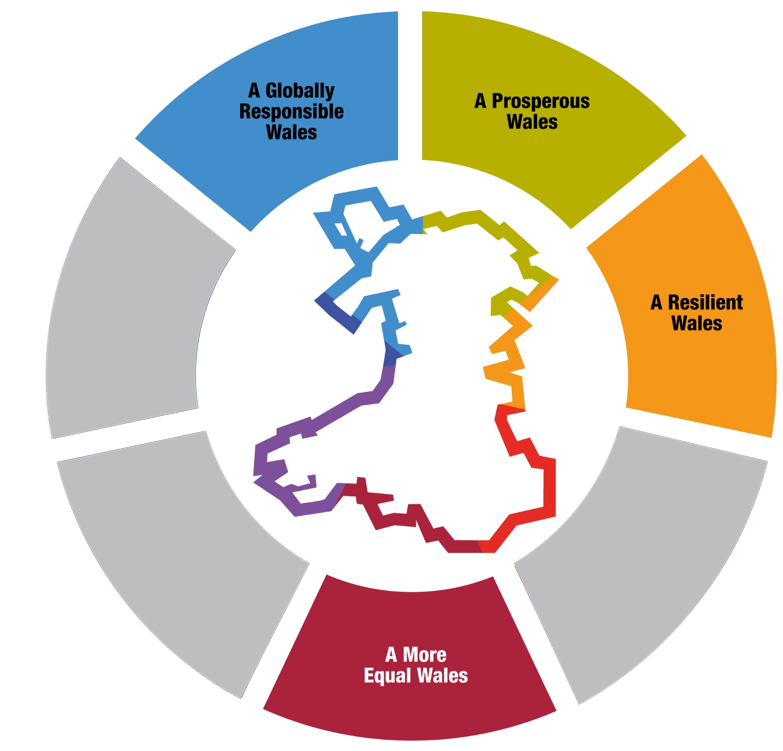
- A prosperous Wales
- A resilient Wales
- A more equal Wales
- A globally responsible Wales
Points to note
- Version 2 of Welsh Procurement Policy Note (WPPN) 008 ‘Sourcing Steel in Construction and Infrastructure Projects in Wales’, replaces version 1 ‘WPPN 008: Sourcing steel in major construction and infrastructure projects in Wales’.
- Version 2 includes a request for Welsh Contracting Authorities to collect and report both forward‑looking pipeline data and actuals data on steel procurement for projects over £2 million.
- For procurements started prior to 24 February 2025 (the date of commencement of the Procurement Act 2023 and the Procurement (Wales) Regulations 2024), please refer to WPPN 01/21.
- Any policy should be read in conjunction with the:
- Wales Procurement Policy Statement
- The Procurement Act 2023
- The Procurement (Wales) Regulations 2024
- Social Partnership & Public Procurement (Wales) Act 2023
- Social Partnership & Public Procurement (Wales) Regulations 2026
- It should not be treated as legal advice and is not intended to be exhaustive – contracting parties should seek their own independent advice as appropriate. Please also note that the law is subject to constant change and advice should be sought in individual cases.
- The note assumes a certain level of knowledge of public procurement. It is available via the Welsh Government website GOV.WALES and any queries should be directed to CommercialPolicy@gov.wales or via the Welsh Governments’ customer services.
1. Issue
This WPPN addresses public procurement actions to support the strategically important steel sector in the UK.
2. Dissemination and scope
This WPPN is directly applicable to all Welsh Contracting Authorities (WCAs) whose functions are wholly or mainly Welsh devolved functions and should be applied to any procurement project with a value of above £2 million including VAT.
Projects in which steel is likely to be a critical component (‘critical component’ is considered to be a structural product(s) such as steel frames, reinforcing bars, etc.), may include, but not be limited to the following:
- Infrastructure – such as rail and roads
- Construction – such as the building of and or refurbishment of prisons, hospitals, universities, housing, community centres, bridges and schools
- Flood defences
This WPPN should be circulated within your organisation, particularly drawing it to the attention of those with a procurement or contract management role.
3. Background
The UK steel sector plays an important role in our economy, providing high quality steel products and helping to deliver our country’s infrastructure. The manufacturing of basic iron and steel supports c.39,000 well-paid jobs in steel production and a further 60,000 jobs in upstream supply chains across many important parts of the UK economy (2021 figures derived from Nomis - Official Census and Labour Market Statistics). The public sector is an important buyer of steel, procuring it to build critical infrastructure such as our railways, roads, buildings, defence equipment, schools and hospitals.
The 2016 Public Procurement of Steel report identified opportunity to support the steel sector through interventions in public procurement processes; its recommendations remain relevant. In 2019 the Welsh Government signed up to the UK Steel Charter, committing to work with industry to consider how our construction, infrastructure and civil engineering design decisions and resulting procurements can create opportunities for the UK steel industry. 'UK steel' is defined by UK Steel (a trade association for the industry in the UK) as ‘any steel made in a UK-based blast furnace or electric arc furnace'.
The UK government’s Steel Strategy will take a further look at the public procurement of steel.
4. Actions required by Devolved Welsh authorities
WCAs should use the procurement life cycle to identify any opportunity to support the UK steel industry to maximise the socio economic and environmental impact of the contract delivered.
4.1 Pre-procurement planning
WCAs’ pre-procurement planning should include an assessment for all projects where steel will be a critical component and where the WCA has the opportunity to influence the way in which the steel component is sourced.
It is important to consider how and when steel inputs will be procured through the supply chain as advance notice of relevant programmes or individual projects allows the steel sector to better prepare and cater for future needs by ensuring that the right capabilities are in place. In addition, the steel sector can help deliver better project outcomes through early dialogue and identifying the potential for innovative solutions.
WCAs are therefore requested to record their predicted steel requirements. (The steel pipeline should not be confused with the pipeline notice under the Procurement Act 2023 which is for setting out specified information on all public contracts with an estimated value of more than £2 million. WCAs should refer to section 93 of the Procurement Act 2023 for more information.)
The steel pipeline:
- WCAs are requested to provide data on their predicted steel requirements on a financial year basis, to the Welsh Government.
- Each organisation should provide a named contact within the organisation responsible for providing returns under this WPPN.
- Projects should be included as far in advance as possible to stimulate the market.
- An Excel spreadsheet ‘2026 WG Steel Pipeline Report’ is available with this WPPN to download for your data return.
Consider your design options and their implications for steel requirements, identifying specific steel products and volumes that will be required against the potential to source these from within the UK. Preliminary market engagement (PME) is a useful method to engage with suppliers in the market. Under the Procurement Act 2023 it can be used to assist WCAs in developing their steel requirements and approach to the procurement. It can help design the procedure and conditions of participation or award criteria and assist WCAs in identifying suppliers in the market or even build capacity among suppliers in the market to deliver steel requirements. WCAs should refer to sections 16 and 17 of the Procurement Act 2023 for information PME and PME notices. Guidance on PME is also available on the ‘Procurement Act 2023: guidance documents’ page. Trade bodies such as UK Steel can advise on how to engage effectively with the domestic sector; the UK Steel Directory gives a list of UK organisations and products available.
A sample contract clause ‘Obligation to advertise supply chain opportunities’ can be found at Annex 3
4.2 Procurement
WCAs might consider setting conditions of participation (in accordance with section 22 of the Procurement Act) as a means to tackle the problem of steel dumping and non-compliance with acceptable standards of health, safety and welfare and environmental standards.
For examples of pre-qualification/selection stage questions, please refer Annex 1.
Further information can be found in WPPN 001 Standard Selection Questionnaire for Works Contracts and WPPN 002 Wales Procurement Specific Questionnaire (WPSQ) and its use for Goods, Services and Works Contracts.
Please note that the Common Assessment Standard referred to in WPPN 001 does not include questions specifically about steel, however, it does cover areas pertinent to steel such as fabrication, erection and supply.
Conditions of participation
The nature of steel production is such that compliance with social, labour and environmental law outside of the UK and EU is a significant issue; this may be a useful differentiator when selecting suppliers.
WCAs should consider specifying the Building Research Establishment (BRE) Standard, BES 6001 'Responsible Sourcing of Construction Products' or equivalent when procuring projects with steel component. The BES 6001 standard covers a range of construction foundation products, including steel reinforcement ‘rebar’.
Third party accredited BES 6001 provides WCAs with assurance that constituent materials of products covered by the standard have been responsibly sourced. The standard describes a framework for the organisational governance, supply chain management and environmental and social aspects to address in order to ensure the responsible sourcing of construction products; it provides the ability to prove that an effective system for ensuring responsible sourcing exists.
In support of supply chain transparency, WCAs should:
- Require BES 6001 or equivalent as part of the qualification criteria for bidders
- Require Tier 1 contractors to submit supply chain plans when bidding for contracts which include how steel will be sourced
- Include a contract condition to ensure that the Tier 1 contractor and its subcontractors openly advertise via sell2wales.gov.wales any remaining supply chain opportunities for the provision of steel (i.e. where no contractual arrangements have been agreed by the date of the main contract award).
- Require Tier 1 contractors to record the origin of critical steel components to be used, maintaining this throughout the contract.
- A sample contract clause on steel product and origin data collection requirements can be found at Annex 4
4.3 Awarding the contract
The Procurement Act has introduced a new approach to assessing tenders in a competitive tendering procedure for a public contract utilising “MAT”, “most advantageous tender” (section 19 of the Procurement Act), instead of “MEAT” (most economically advantageous tender). WCAs should therefore not base their decisions to award contracts simply on lowest purchase price.
Whilst cost to the public purse is important, WCAs should recognise that abnormally low pricing could signal the contract is unlikely to be properly performed. Furthermore, unfairly undercutting domestic providers may result in job losses with significant economic and social impacts on affected communities.
4.4 Post-contract award monitoring and compliance
In addition to providing an annual data return for predicted steel requirements, WCAs are asked to provide actuals data on steel procured in the previous year.
This is applicable to:
- projects and programmes with a value of £2 million or above
The data should include quality, product type and origin. The steel origin data should be recorded as set out in the Inspection Certificate (EN10204 Type 3.1) and contractors should also indicate whether the origin stated is also recorded in the certificate as to where the steel was melted and poured.
Annex 2 sets out the full requirement, including steel product types that fall within the scope.
WCAs should stipulate the necessity to provide annual data returns in tender documentation to ensure these requirements are pushed through to suppliers in their contractual terms and conditions.
All pipeline estimates and actuals data should be submitted to the Welsh Government within 10 weeks of the end of the financial year.
The Excel spreadsheet ‘2026 WG Steel Pipeline Report’ available with this WPPN can also be used for the actuals data return.
5. Legislation
Including but not limited to:
- The Procurement Act 2023
- The Procurement (Wales) Regulations 2024
- The Well-being of Future Generations (Wales) Act 2015
- The Social Partnership and Public Procurement (Wales) Act 2023
- Social Partnership & Public Procurement (Wales) Regulations 2026
6. Wales Procurement Policy Statement (WPPS) relevance
This WPPN aligns with the following WPPS Principles:
Principle 3
We will progress long-term sustainable procurement, which builds on and scales best practice and sets clear steps that show how procurement is supporting the delivery of organisational well-being objectives.
Principle 5
We will support Welsh Government policy objectives relating to progressive procurement, such as the Foundational and Circular Economy, through collaborative, place based (whether national, regional or local) procurement activity which nurtures resilient local supply chains.
Principle 9
We will improve the integration and user experience of our digital solutions and applications, maximising the use of our procurement data to support decision making.
Principle 10
We will promote value-based procurement which delivers optimum long-term outcomes for Wales.
7. Additional information
8. Contact details
Commercial Policy – Polisi Masnachol - CommercialPolicy@gov.wales / PolisiMasnachol@llyw.cymru
9. References
Reference has been made to the following in the preparation of this WPPN:
- ‘Public Procurement of Steel – A report into the future Welsh public steel requirements and the capacity and capability of the steel sector’ (Welsh Government 2016)
- Procurement Policy Note - Procuring Steel in Major Projects
- Action Note 16/15 30 October 2015 (Crown Commercial Service, 2015)
- Procuring Steel in Major Projects – revised guidance. Action Note 11/16 13 December 2016 (Crown Commercial Service, 2016)
- The UK Steel Charter 2019
- Procurement Policy Note 04/23: Procuring steel in government contracts
- Procurement Policy Note 010: Procuring steel in government contracts
- Procurement Policy Note 022: Procuring steel in government contracts
Annex 1: Pre-qualification / Selection stage questions
WPSQ V1.1 - Wales Procurement Specific Questionnaire:
Q52. For contracts which relate to projects/programmes with a value of £3 million or more, please describe the steel specific supply chain management systems, policies, standards and procedures you have in place to ensure robust supply chain management and compliance with relevant legislation.
Q53. Please provide details of previous similar projects where you have demonstrated a high level of competency and effectiveness in managing all supply chain members involved in steel supply or production to ensure a sustainable and resilient supply of steel.
Q54a. Distorting Competition: Do you take steps to ensure that members of your supply chain do not make agreements with other economic operators aimed at distorting competition as described in Schedule 7 of the Procurement Act 2023, paragraphs 7 -9?
Q54b. If your response to Q54a is yes, please provide a brief outline of the steps that you take.
Q55a. Supply Chain Management: Please describe the supply chain management systems, policies, standards and procedures you currently have in place to ensure robust supply chain management.
Q55b. If you prefer to upload documented evidence in response to Q55a you can do so here.
Q56a. Health and safety policies: Do you take steps to ensure that all members of your supply chain have in place appropriate health and safety policies dealing with at least the following:
- Policy Statement - signed and dated
- the Organisation and Responsibilities - how Health and Safety requirements are implemented, and
- the Arrangements - standards and procedures adopted in practice and that this is reviewed at least every 2 years?
Q56b. If your response to Q56a is yes, please provide brief details of the steps that you take.
Q57a. Health and Safety Training - Supply Chain: Do you take steps to ensure that all members of your supply chain provide appropriate health and safety training, particularly for workers carrying out potentially hazardous tasks?
Q57b. If your response to Q57a is yes, please provide brief details of the steps that you take.
Annex 2: Full requirement, including steel product types that fall within the scope
Monitoring and compliance
All WCAs are requested to provide an annual steel data return to the Welsh Government.
The reporting requirement consists of data on 2 elements:
- pipelines of projected demand for steel procurement for future projects/programmes, and
- actuals data on steel procured in the previous financial year, including:
- how much steel they have procured (directly or indirectly) over the previous financial year
- the steel product type
- the origin of the procured steel, and
- how they have applied steel public procurement guidance.
Applicable to projects and programmes with a value of £2 million or above
Origin of the Procured Steel
This data should be recorded as set out in the Inspection Certificate (EN10204 Type 3.1) and contractors should indicate whether the origin stated is also recorded in the certificate as where the steel was melted and poured. If the melted and poured location wording is not found on test certificates provided with steel purchased, contractors are not expected to investigate origin further. From 2023, the UK’s steel producers have included on test certificates a clear indication of whether the steel was melted and poured in the UK.
Steel Product Type
The steel product type data requirement is the description of the steel purchased under one of the product headings below (e.g. flat rolled steel products, steel plate etc.). Other product headings not included in this list are not within the scope of the requirement. However, the specific product examples under each product heading, are for guidance only and do not represent an exhaustive list:
- Flat rolled steel products: Products commonly referred to as hot and cold rolled coil, sheet, and strip, including those clad, plated, and galvanised. This will include products such as coated steel building panels, tinmill steel, or corrugated sheeting.
- Steel plate: Products often referred to as heavy or quarto plate, and typically of flat rolled steels exceeding 10mm in thickness.
- Sections and shapes: Products commonly referred to as beams, columns, bearing piles, flange channels, bulb flats and angles.
- Reinforcing bar: Products commonly referred to as rebar, whether in rod, coils, or products suitable for mesh.
- Other bars and rods: Wide range of other steel mill products commonly referred to as wire rod, merchant bar, bright bar, black bar.
- Tubes/pipes/hollow sections: Steel products commonly referred to as hollow sections/profiles, welded tube, seamless tube, pipes, and hollow sections.
- Wire: steel products commonly referred to as wire or strand, produced though the drawing of rod to produce wire of varying diameters. This would include construction products such as pre-stressed wire, and those coated and plated.
- Rail: Railway or tramway track construction material of iron or steel, including grooved rail. (Note: This would not include products such as switch blades, point rods, sleepers, rail clips, crossing frogs.)
- Sheet piling: Sheet piling made from assembled elements; welded angles, shapes, and sections.
These product headings refer to those steel products made either from non-alloy or alloy/stainless steel. Broadly speaking they are categorised under the harmonised tariff codes system as headings 7208 through to 7306.
The reporting requirements have been designed to capture ‘steel products’ for public projects, as opposed to ‘steel containing products’ such as screws, or steel containers. For example, if a contractor or subcontractor purchases fabricated steel containers to fulfil its public contract it would not be expected to report on the origin of the steel used to make those containers. Conversely, if it purchases steel sections to make a fabricated steel structure for supply into a public project, they should report on the origin of the steel sections.
Source: Procurement Policy Note 010 Revised guidance on procuring steel in government contract. Updated: February 2025 (Crown Commercial Service)
Annex 3: Sample Contract Condition - Obligation to advertise supply chain opportunities
1. The supplier shall ensure that all sub-contracts, which the supplier intends to procure following date of this contract, and which the supplier has not, before the date of this contract, already awarded to a particular sub-contractor, are:
- Advertised on Sell2Wales.gov.wales, and
- Awarded following a fair, transparent and competitive process proportionate to the nature and value of the sub-contract.
2. Any sub-contract awarded by the supplier pursuant to Clause 1 must contain suitable provisions to impose, as between the parties of the sub-contract:
- requirements to the same effect as those in Clause 1, and
- a requirement for the sub-contractor to include in any sub-contract which it in turn awards, suitable provisions to impose, as between the parties to that sub-contract, requirements to the same effects as those required by this Clause 2.
3. For the purposes of Clauses 1 and 2, “sub-contract” means a contract between two or more suppliers, at any stage of remoteness from the Authority in a subcontracting chain, made wholly or substantially for the purpose of performing or contributing to the performance of the whole or any part of this contract and “sub-contractor” means any third party with whom
- the supplier enters into a sub-contract, or
- a third party under (a) enters into a sub-contract; or the servants or agents of that third party.
Source: Procurement Policy Note - Procuring Steel in Major Projects
Action Note 16/15 30 October 2015 (Crown Commercial Services)
Annex 4: Sample contract clause - Steel Product and Origin Data Requirement
[include this requirement in the main body of the contract for qualifying projects/programmes]
1.1 As a condition of this contract, in relation to the purchase of steel products, the Supplier agrees to:
- record the steel product type data, which constitutes the description of the steel purchased under one of the categories below (e.g. Flat Rolled Steel Products, Steel Plate, etc):
- Flat Rolled Steel Product: Products commonly referred to as hot and cold rolled coil, sheet, and strip, including those clad, plated, and galvanised. This will include products such as coated steel building panels, tinmill steel, or corrugated sheeting.
- Steel Plate: Products often referred to as heavy or quarto plate, and typically of flat rolled steels exceeding 10mm in thickness.
- Sections and Shapes: Products commonly referred to as beams, columns, bearing piles, flange channels, bulb flats, and angles.
- Reinforcing Bar: Products commonly referred to as rebar, whether in rod, coils, or products suitable for mesh.
- Other Bars and Rods: Wide range of other steel mill products commonly referred to as wire rod, merchant bar, bright bar, black bar.
- Tubes/Pipes/Hollow Sections: Steel products commonly referred to as hollow sections/profiles, welded tube, seamless tube, pipes, hollow sections.
- Wire: steel products commonly referred to as wire or strand, produced though the drawing of rod to produce wire of varying diameters. This would include construction products such as pre-stressed wire, and those coated and plated.
- Rail: Railway or tramway track construction material of iron or steel, including grooved rail. (Note: This would not include products such as switch blades, point rods, sleepers, rail clips, crossing frogs).
- Sheet Piling: Sheet piling made from assembled elements; welded angles, shapes, and sections
- record the steel quantity data, which constitutes the amount of steel in tonnes
- record the steel origin data, which constitutes the country in which the steel was produced as set out in Inspection Certificate (EN10204 Type 3.1) attached to the steel purchased, and whether this is also where the steel was melted and poured according to the Certificate; and
- report the steel product type data, steel quantity data, and steel origin data to the Authority, using the template provided, within 10 weeks of the end of the financial year in which the contract was placed.
1.2 In the event that the Supplier is not purchasing the steel directly, it remains responsible for recording and reporting the steel product type data, the steel quantity data, and the steel origin data to the Authority, as per 1.1. It shall make all necessary arrangements with its Sub-Contractor(s) to facilitate this.
Source: Procurement Policy Note 010 Procuring steel in government contracts